Assignment 5: Point Cloud Classification and Segmentation
1. Classification Model
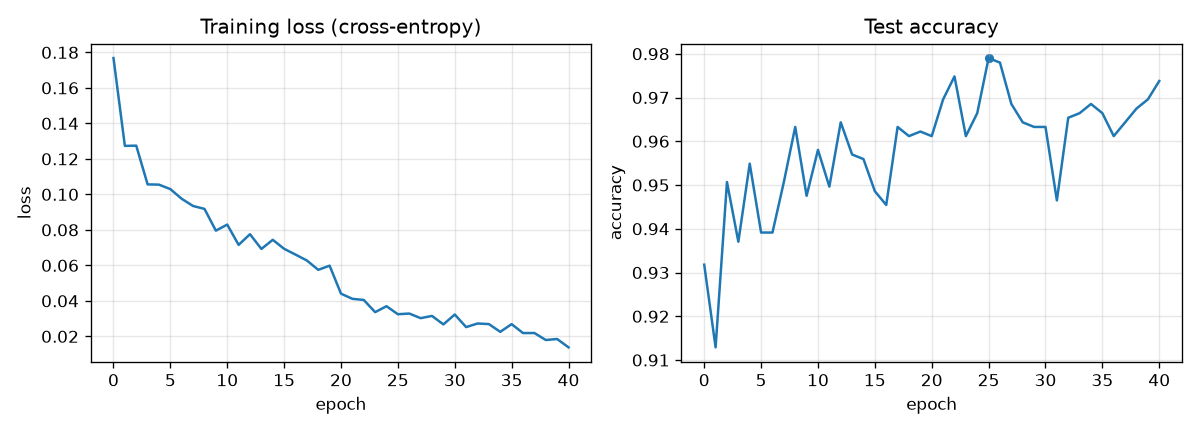
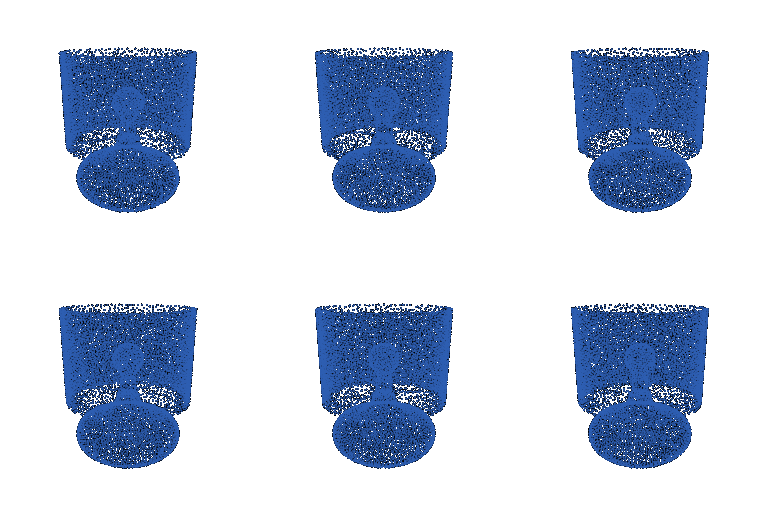
Test accuracy: 97.90% (933 / 953). Per class: chair 100.0%, vase 88.2%, lamp 96.6%.
Random test objects
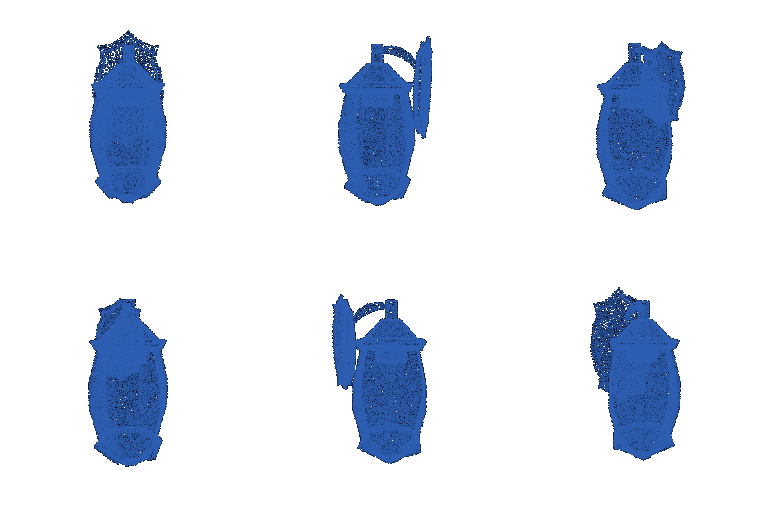
Failure cases
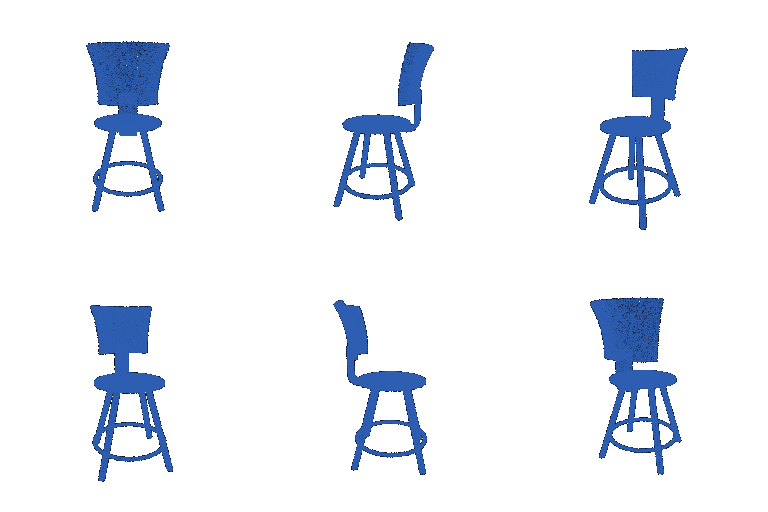
No chair was misclassified, so the chair shown is the one with the lowest predicted chair probability.

- Chair. #290 is a stool with a round back on a single pole over a cross base, the same layout as a desk lamp.
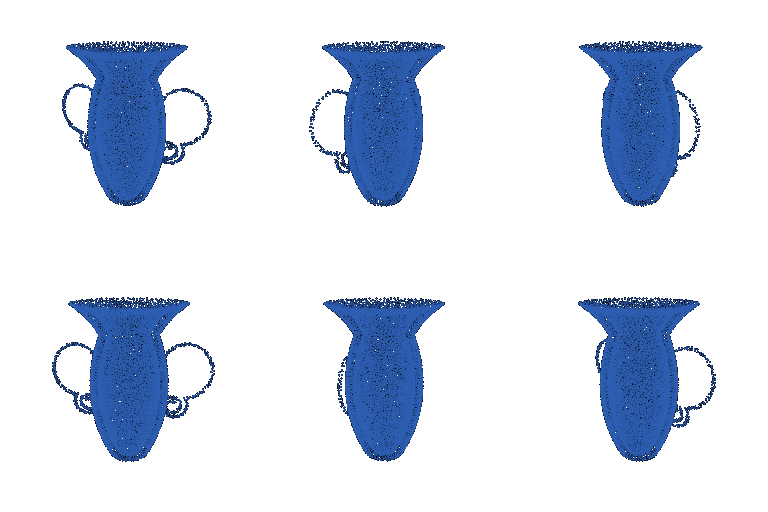
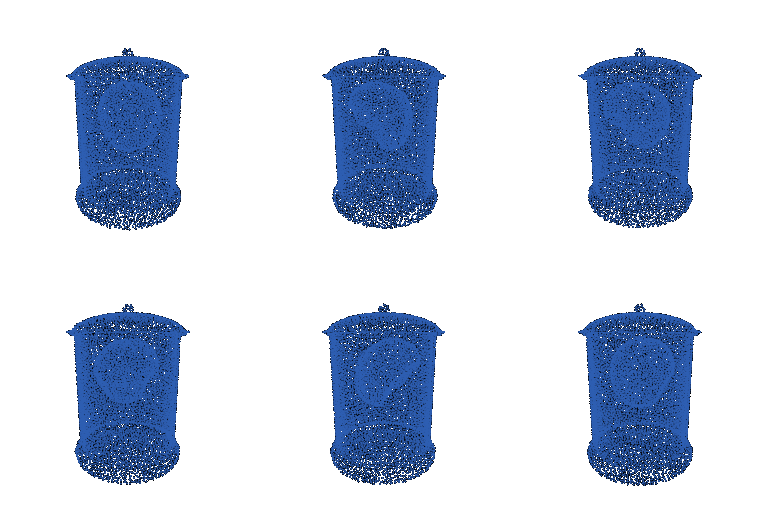
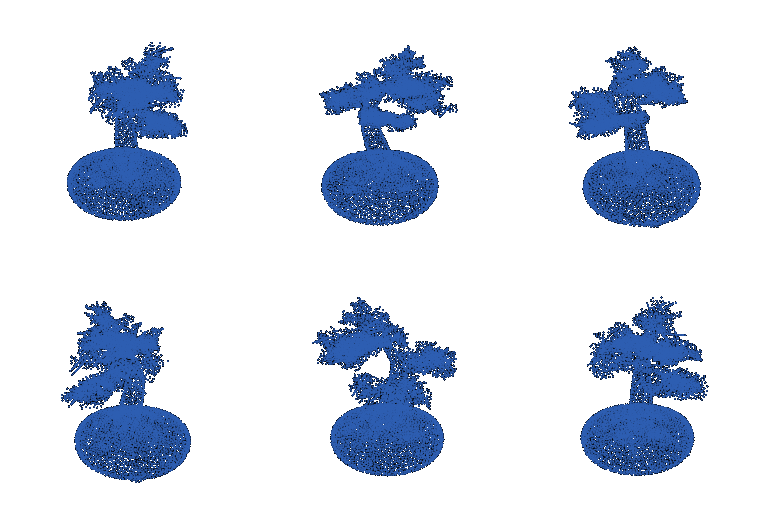
- Vase → lamp. #618 is a lidded cylinder shaped like a lantern; #629 is a plant whose branches rise above the pot like a lamp stem and shade.
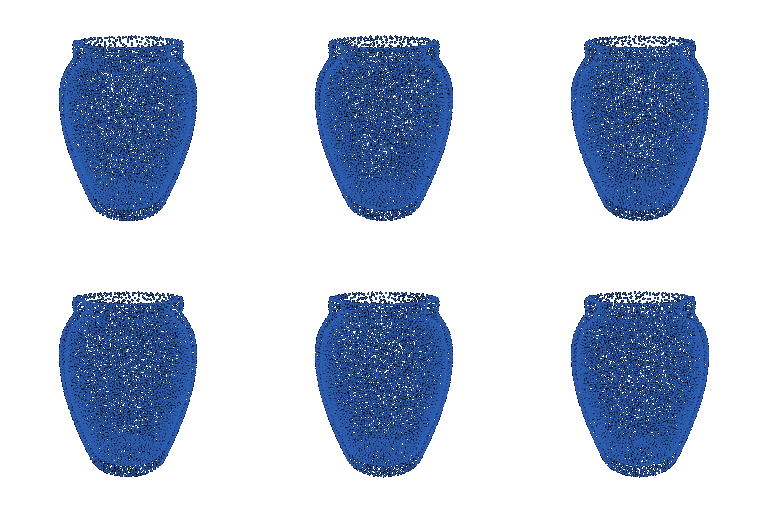
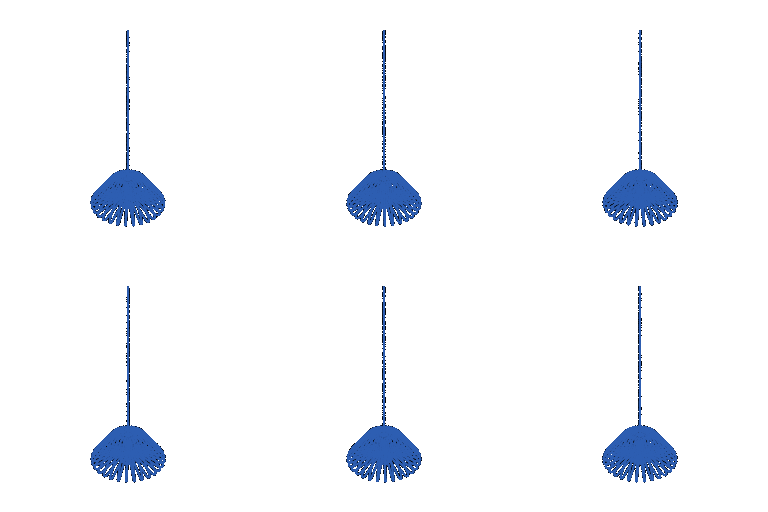
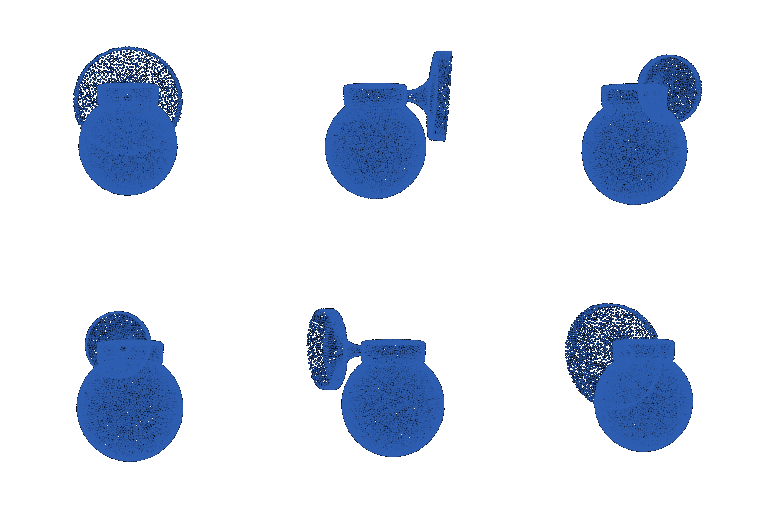
- Lamp → vase. #787 and #796 are wall sconces whose body is a closed, rounded volume with no visible stem, closer to a vase.
2. Segmentation Model
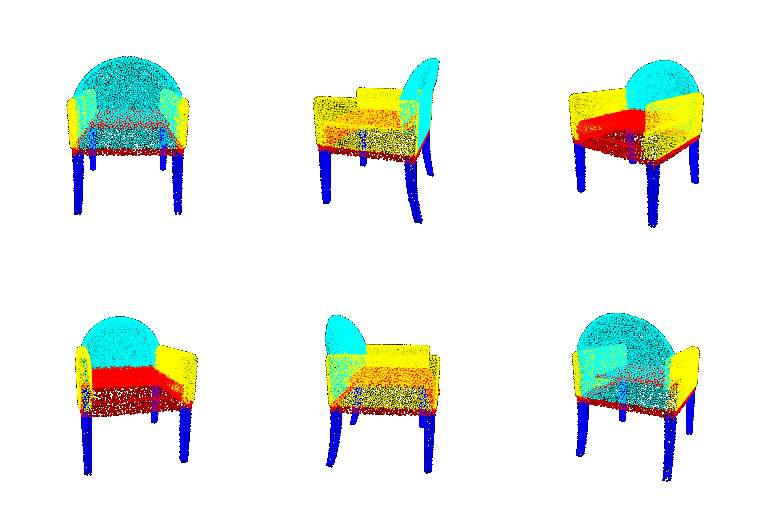
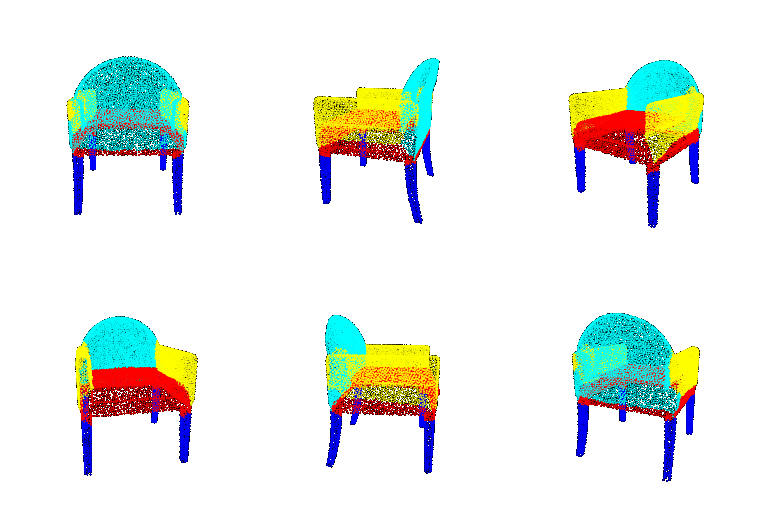
Test accuracy: 89.85% of all test points. Left: ground truth, right: prediction, with per-object accuracy.
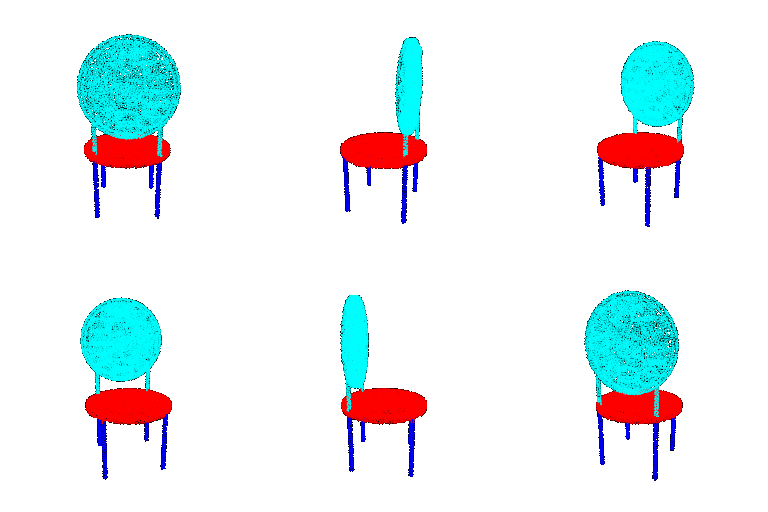
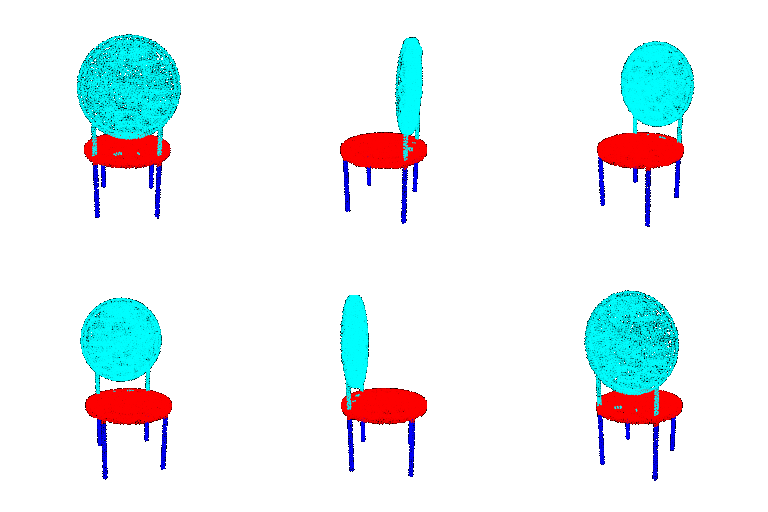
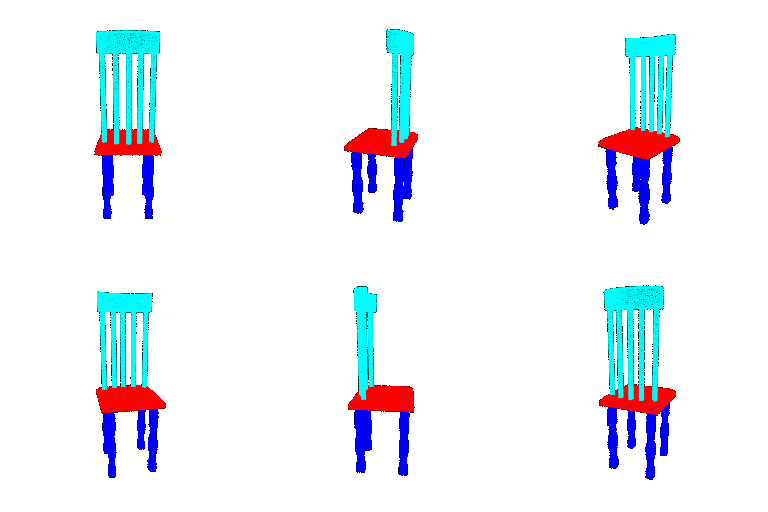
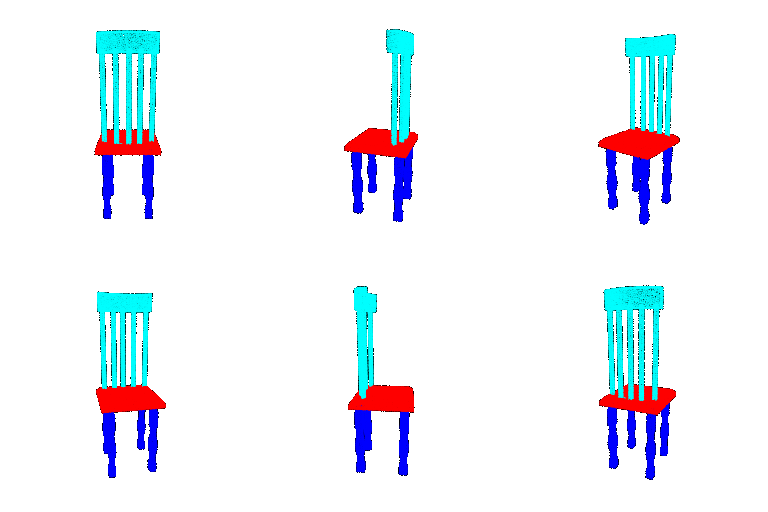

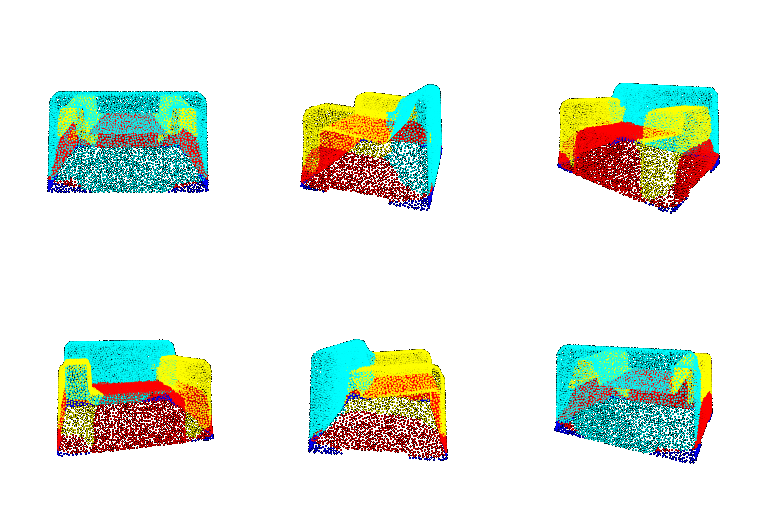
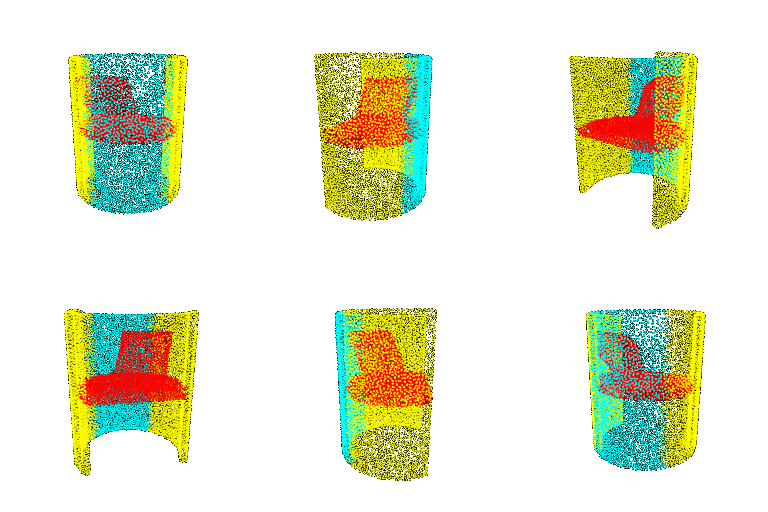
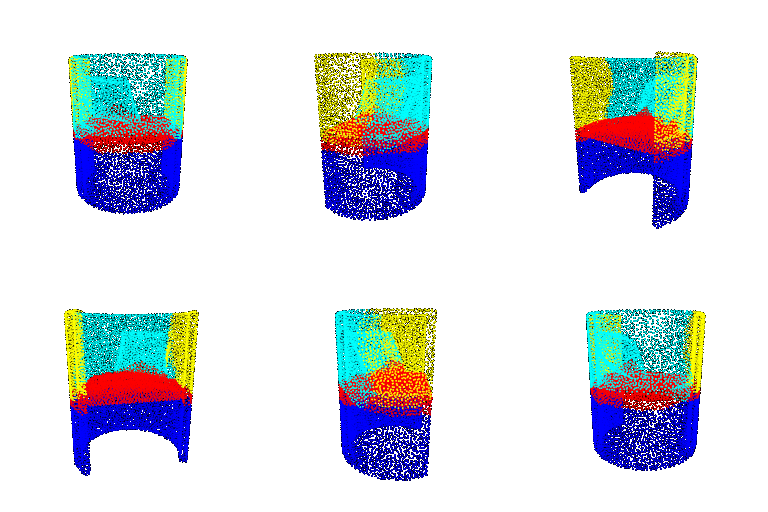
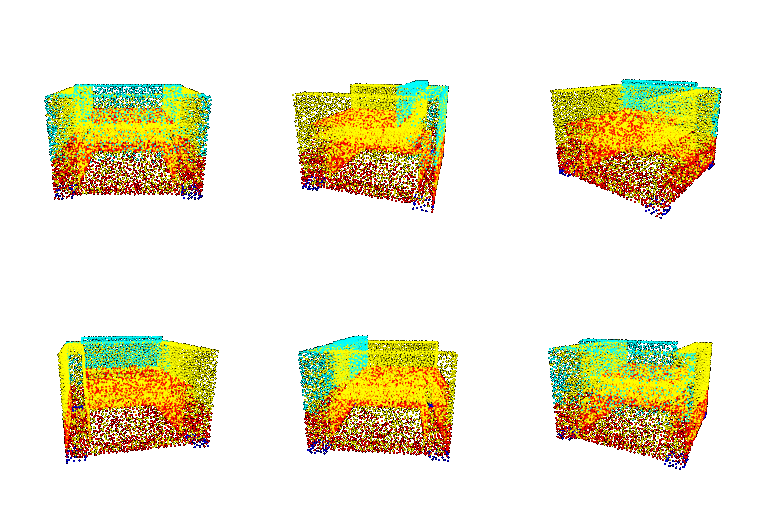
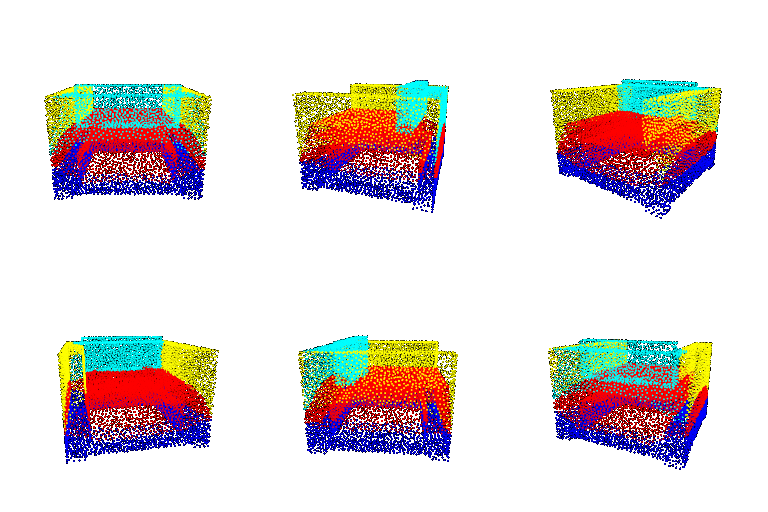
- Ordinary chairs (#471, #381) with thin legs, a flat seat and a separate back are almost perfect; errors are only at the seat–back boundary.
- The bad cases (#351 barrel chair, #235 sofa) have a closed panel below the seat that the ground truth labels as back or arms, but the model labels it as legs (blue): it mostly decides by height, since below the seat is usually legs.
3. Robustness Analysis
Experiment 1: rotation
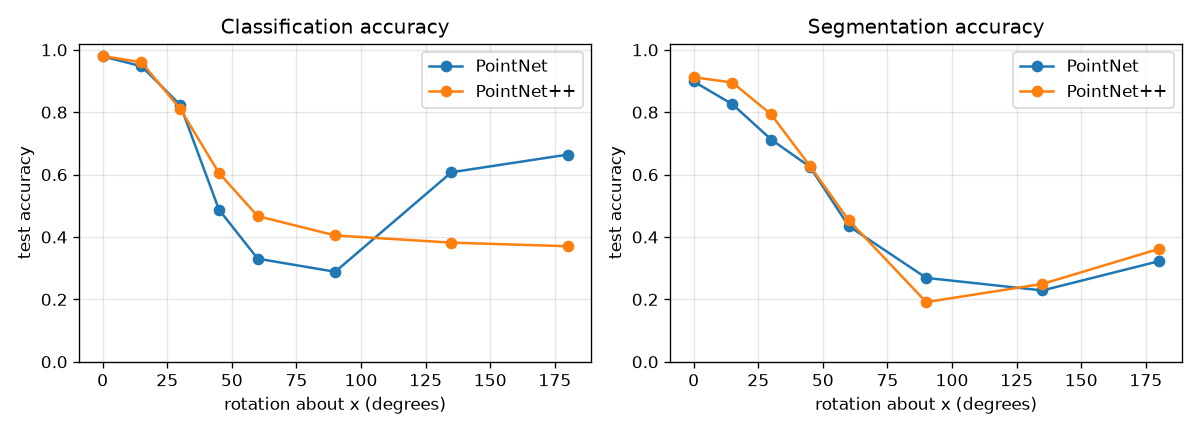
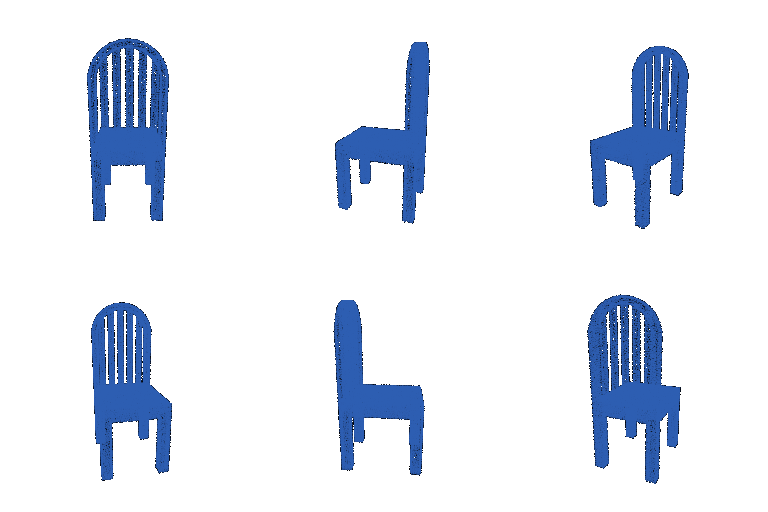
Procedure. Rotate every test cloud about the x axis (tipping it backwards) by a fixed angle, with no retraining (--rotate).
| rotation | 0° (Q1/Q2) | 15° | 30° | 45° | 60° | 90° | 180° |
|---|---|---|---|---|---|---|---|
| classification | 97.9% | 94.8% | 82.4% | 48.8% | 33.1% | 28.9% | 66.4% |
| segmentation | 89.9% | 82.6% | 71.3% | 62.5% | 43.5% | 26.9% | 32.2% |
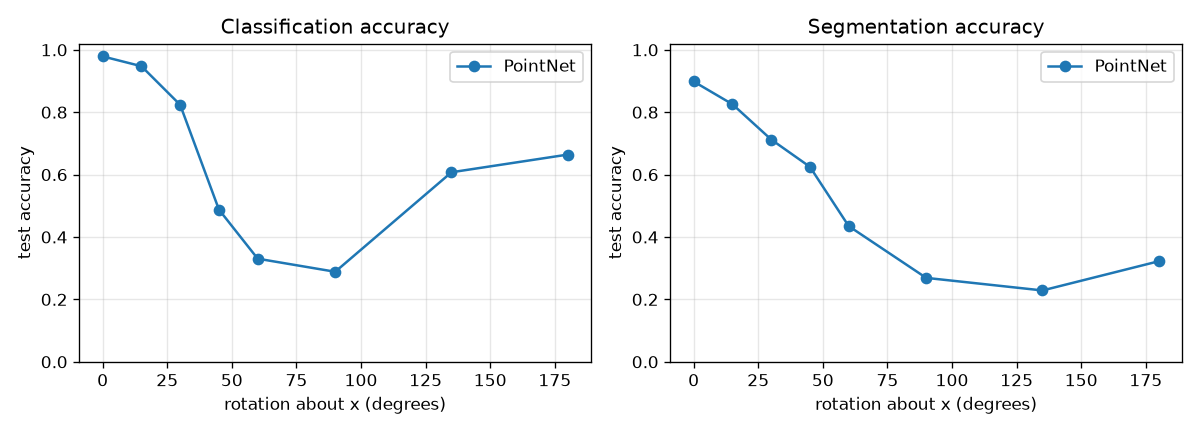
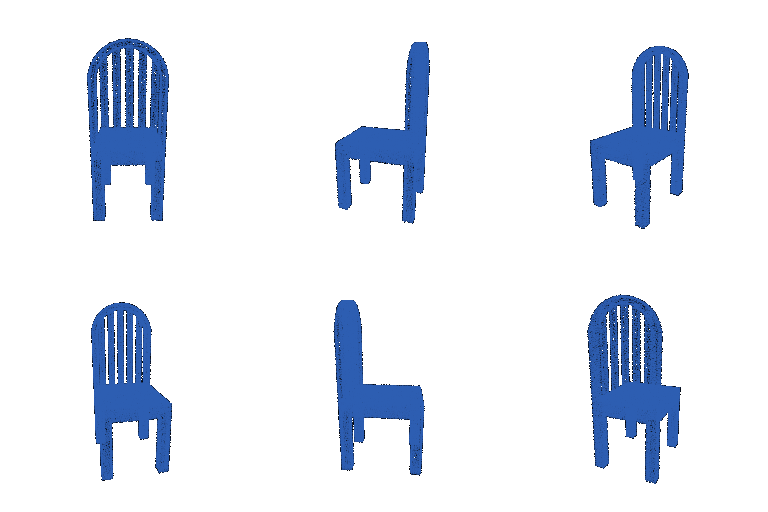
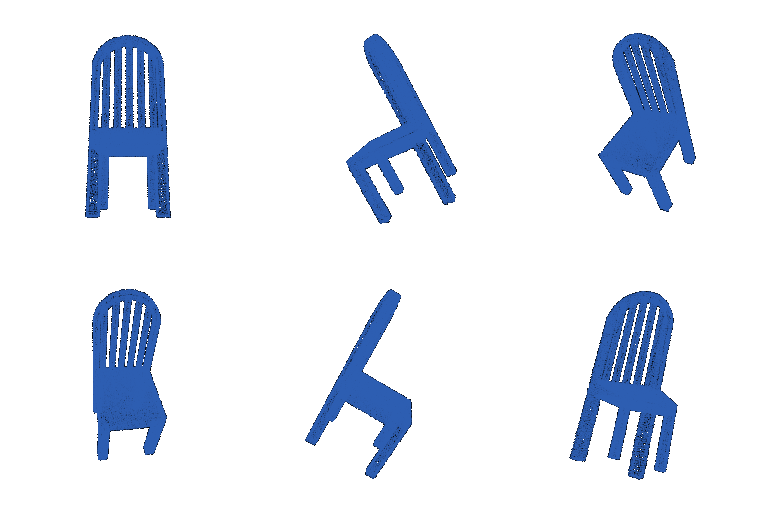
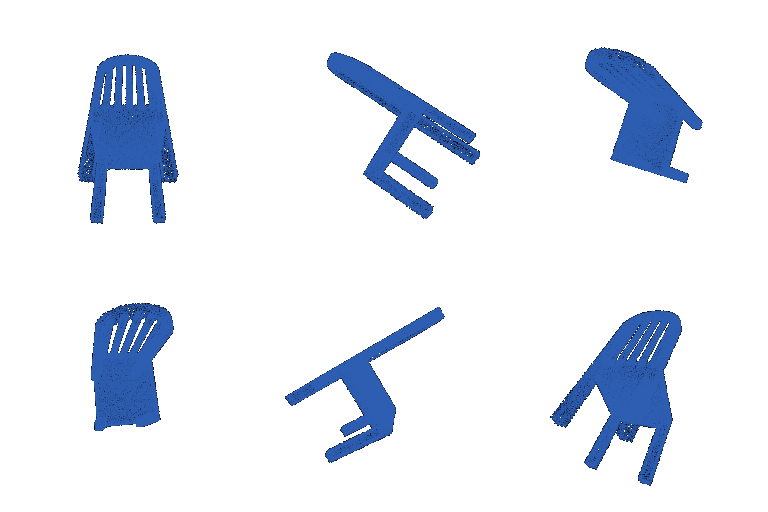
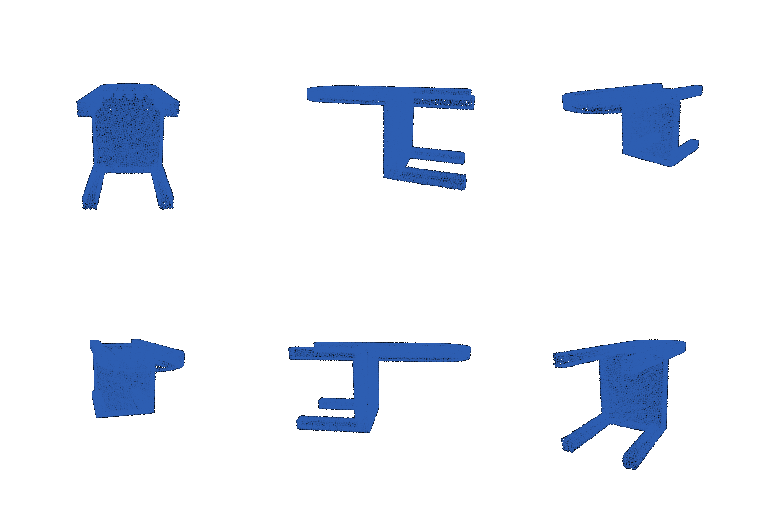


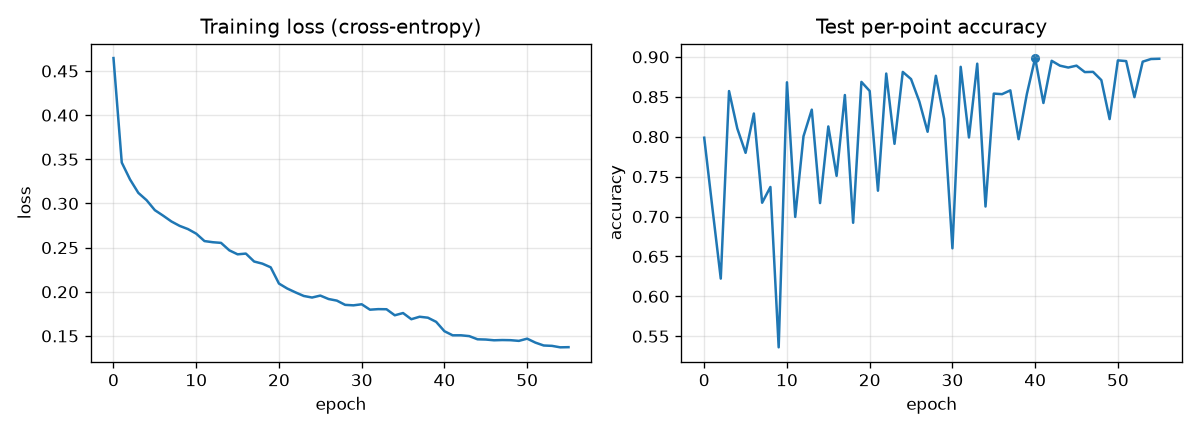
PointNet uses raw coordinates and has no T-Net or rotation augmentation, so accuracy holds up to about 15° and then drops fast. Tipped chairs are mostly called lamps, and segmentation labels points by height (bottom = legs, middle = seat, top = back) whatever the actual part.
Experiment 2: number of points
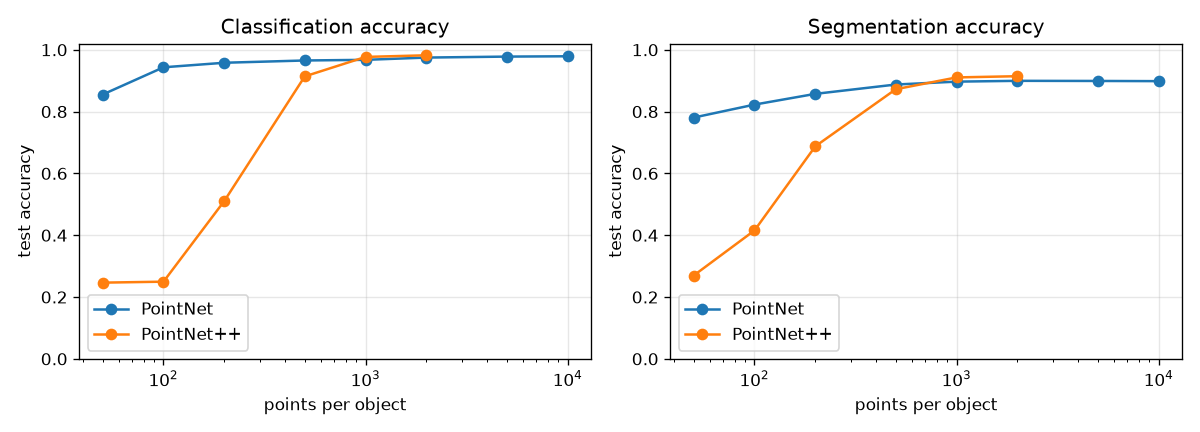
Procedure. Keep the same random n of the 10,000 points for every test object (--num_points).
| points | 10,000 (Q1/Q2) | 5,000 | 1,000 | 500 | 100 | 50 |
|---|---|---|---|---|---|---|
| classification | 97.9% | 97.8% | 96.8% | 96.5% | 94.3% | 85.5% |
| segmentation | 89.9% | 89.9% | 89.7% | 88.8% | 82.3% | 78.1% |
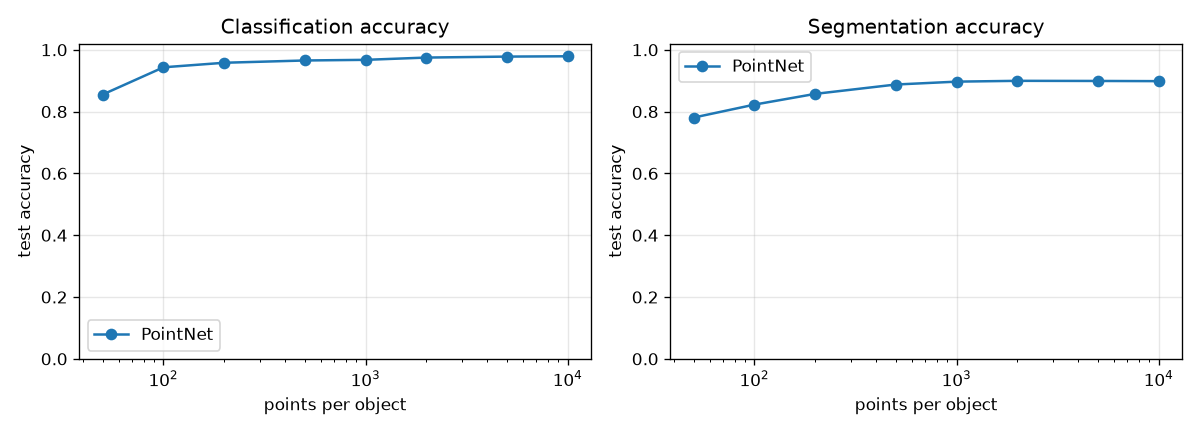


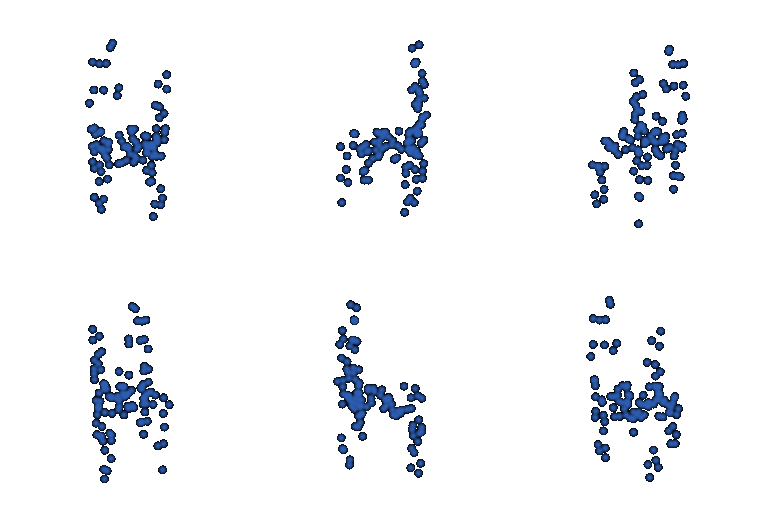
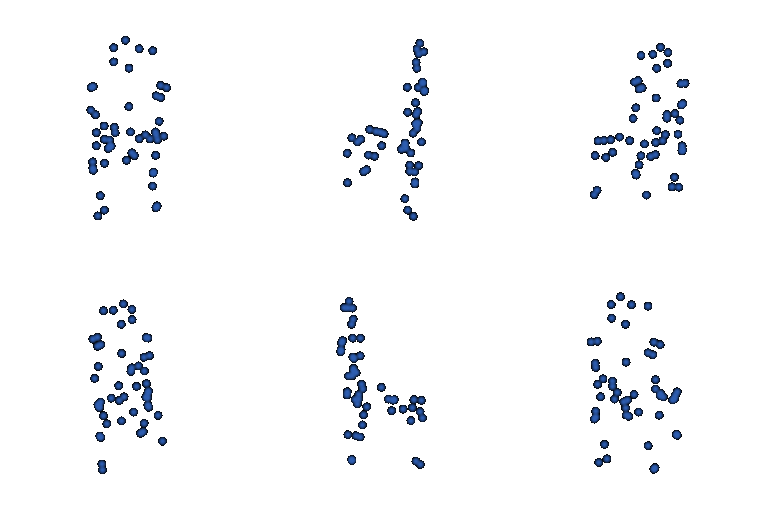


Accuracy barely changes down to 1,000 points: the global feature is a max over points, and a few points per region already reach the same max. Below a few hundred points thin parts lose most of their points, so segmentation degrades first.
4. Bonus: Locality with PointNet++
Model. PointNet++ with single-scale grouping, in plain PyTorch. Three set-abstraction levels (farthest point sampling of 512 and 128 centers, ball query with radius 0.2 / 0.4, and a small PointNet on each neighborhood in relative coordinates, then one global level) build features from local neighborhoods. Segmentation adds feature propagation (3-nearest-neighbor interpolation with skip connections) back to every point. Trained and tested on 2,048 points per object; PointNet is also evaluated on the same 2,048 points for comparison.
| model | classification | segmentation |
|---|---|---|
| PointNet (Q1/Q2), 10,000 points | 97.90% | 89.85% |
| PointNet (Q1/Q2), 2,048 points | 97.59% | 90.00% |
| PointNet++, 2,048 points | 97.80% | 91.25% |


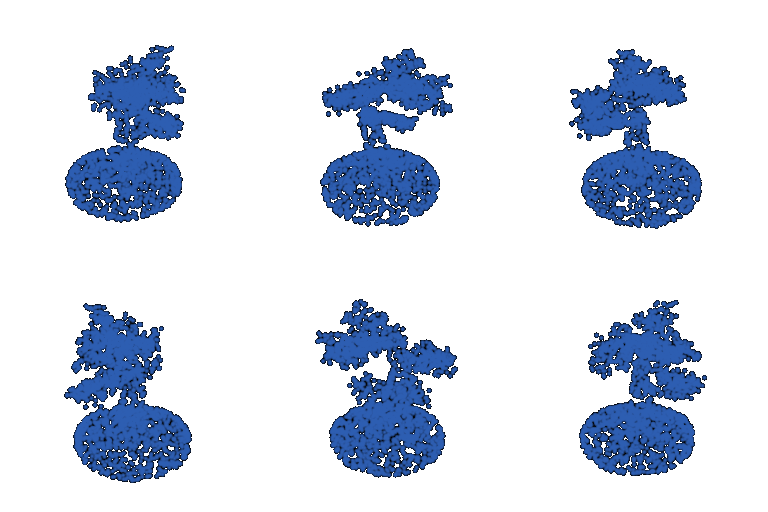
PointNet lamp · PointNet++ vase
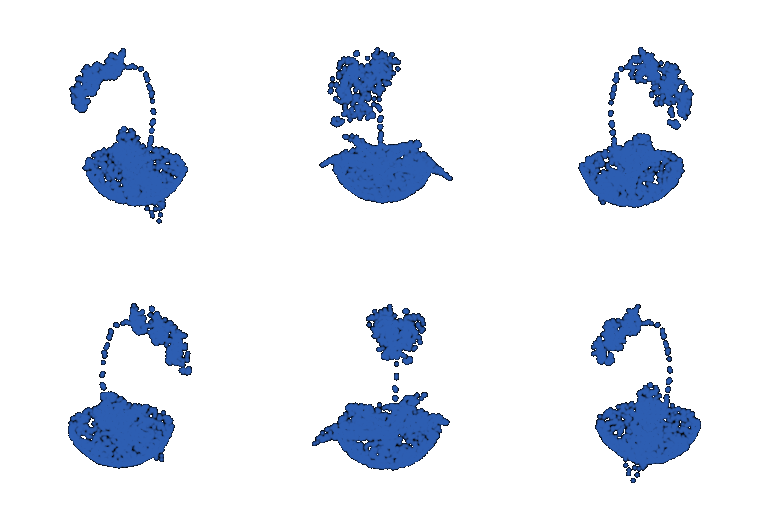
PointNet lamp · PointNet++ vase
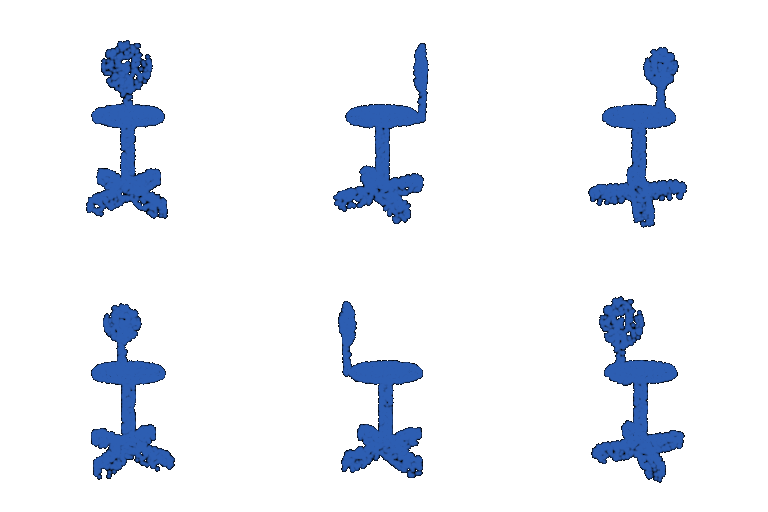
PointNet chair · PointNet++ lamp
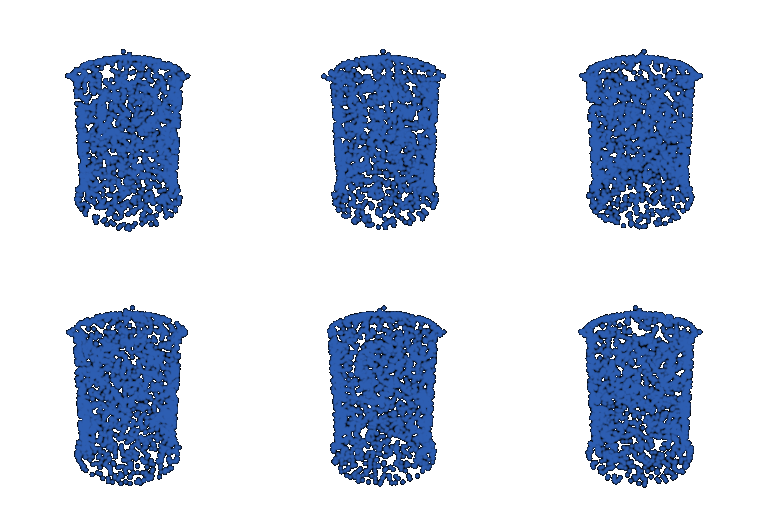
PointNet lamp · PointNet++ lamp


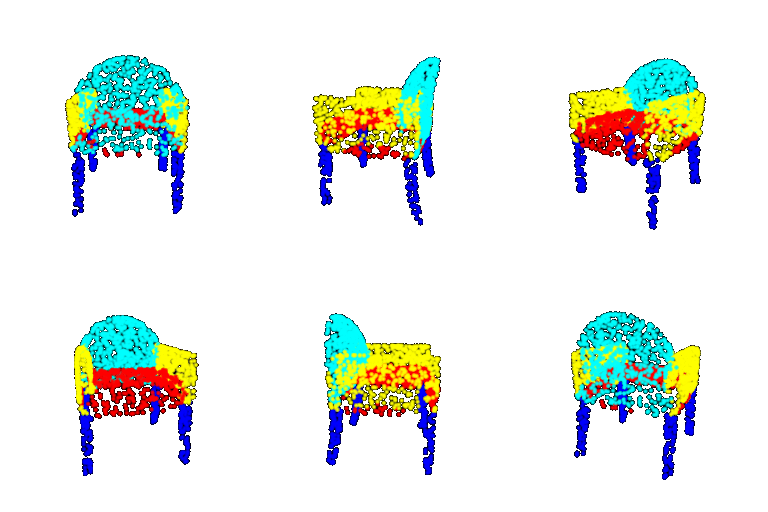


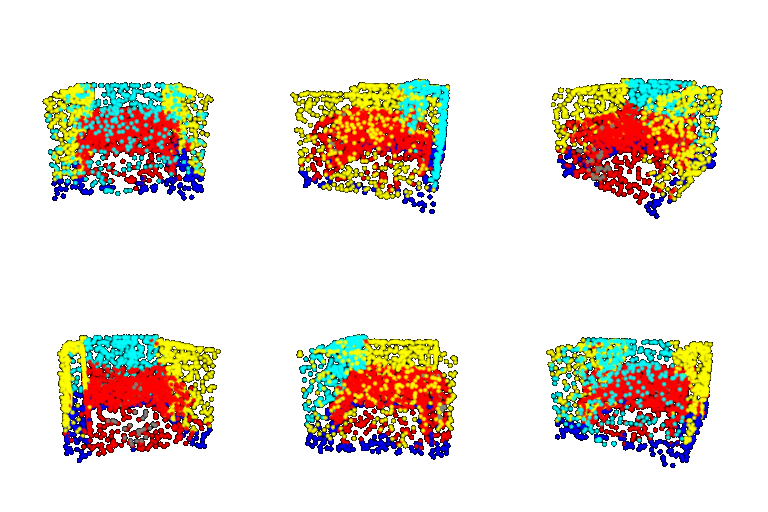
Segmentation improves by 1.25 points (better on 426 of 617 chairs), most on hard shapes such as sofa #235, because each part label now comes from the local neighborhood instead of mainly from height. Classification is essentially tied: PointNet++ fixes some vase→lamp errors (#629, #651) but adds others (#290).