Assignment 3
1. Differentiable Volume Rendering
1.3. Ray sampling
| XY grid visualization | Ray bundle visualization |
|---|---|
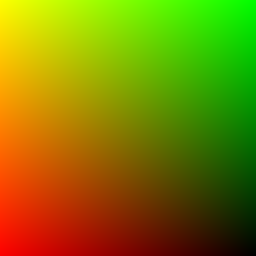 |
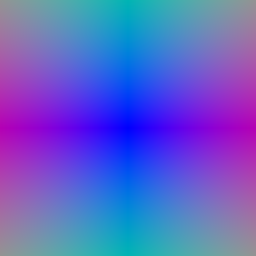 |
1.4. Point sampling
| Point samples visualization |
|---|
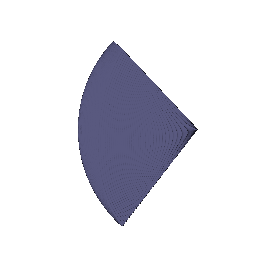 |
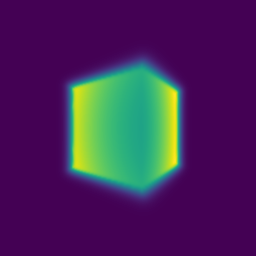
1.5. Volume rendering
| Volume rendering visualization | Depth visualization |
|---|---|
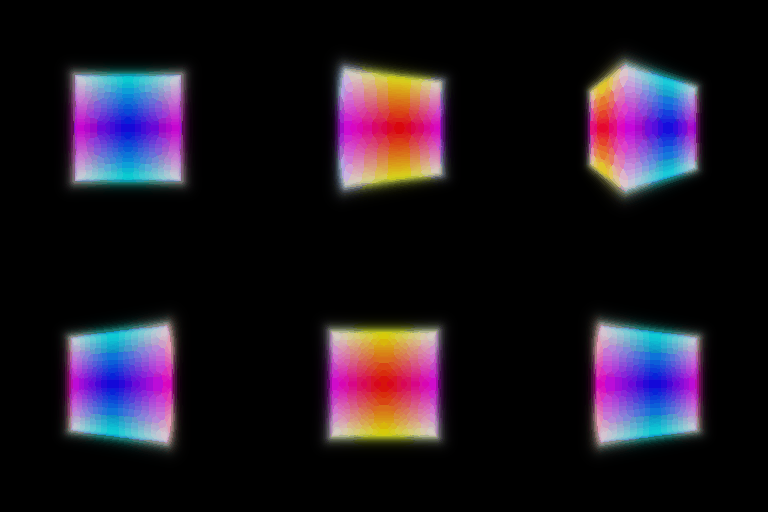 |
 |
2. Optimizing a basic implicit volume
2.2. Loss and training
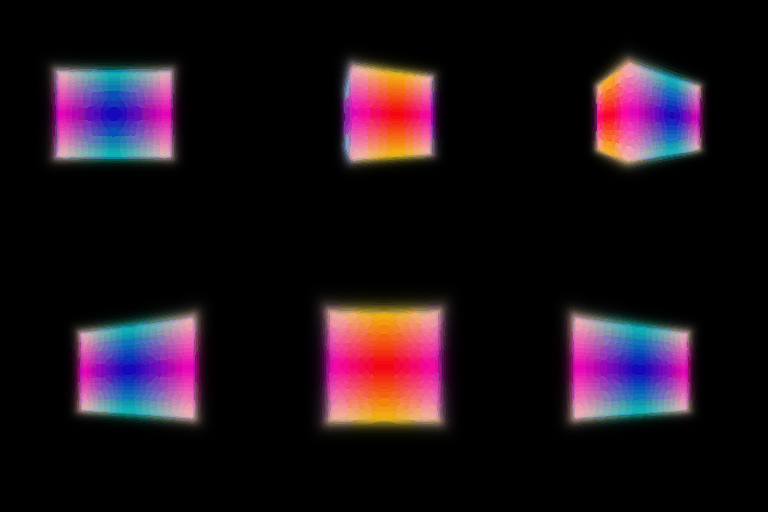
Box center: (0.25023552775382996, 0.250581294298172, -0.00045761160436086357)
Box side lengths: (2.0051209926605225, 1.5035855770111084, 1.5033137798309326)
2.3. Visualization
| Optimized volume visualization |
|---|
 |
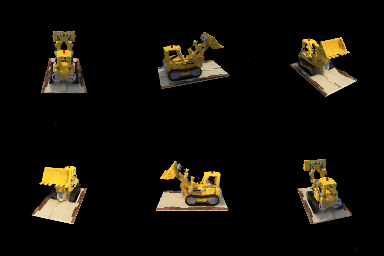
3. Optimizing a Neural Radiance Field (NeRF)
| NeRF visualization |
|---|
 |
4. NeRF Extras
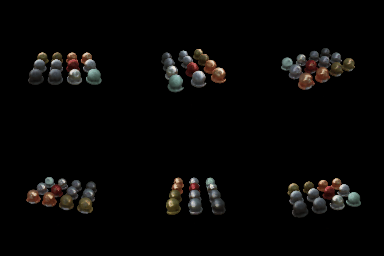
4.1 View Dependence
| NeRF visualization |
|---|
 |
5. 3D Gaussian Rasterization
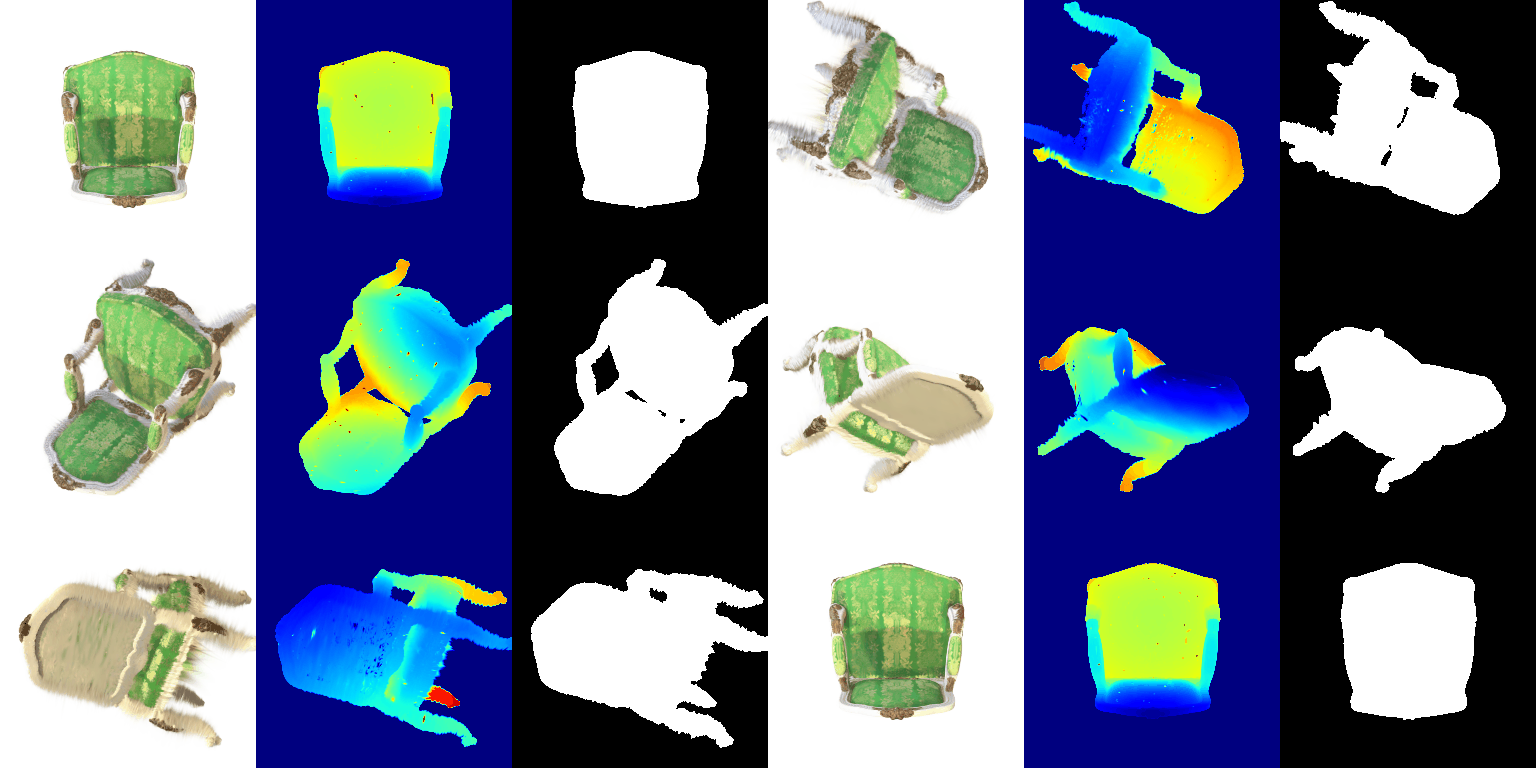
5.5 Perform Splatting
| Chair splatting |
|---|
 |
6 Training 3D Gaussian Representations
Learning rates:
 opacities: 0.05
 scales: 0.005
 colours: 0.001
 means: 0.0001
 quats: 0.05
Iterations: 1000 (default value)
Mean PSNR: 28.906
Mean SSIM: 0.934
Training progress:
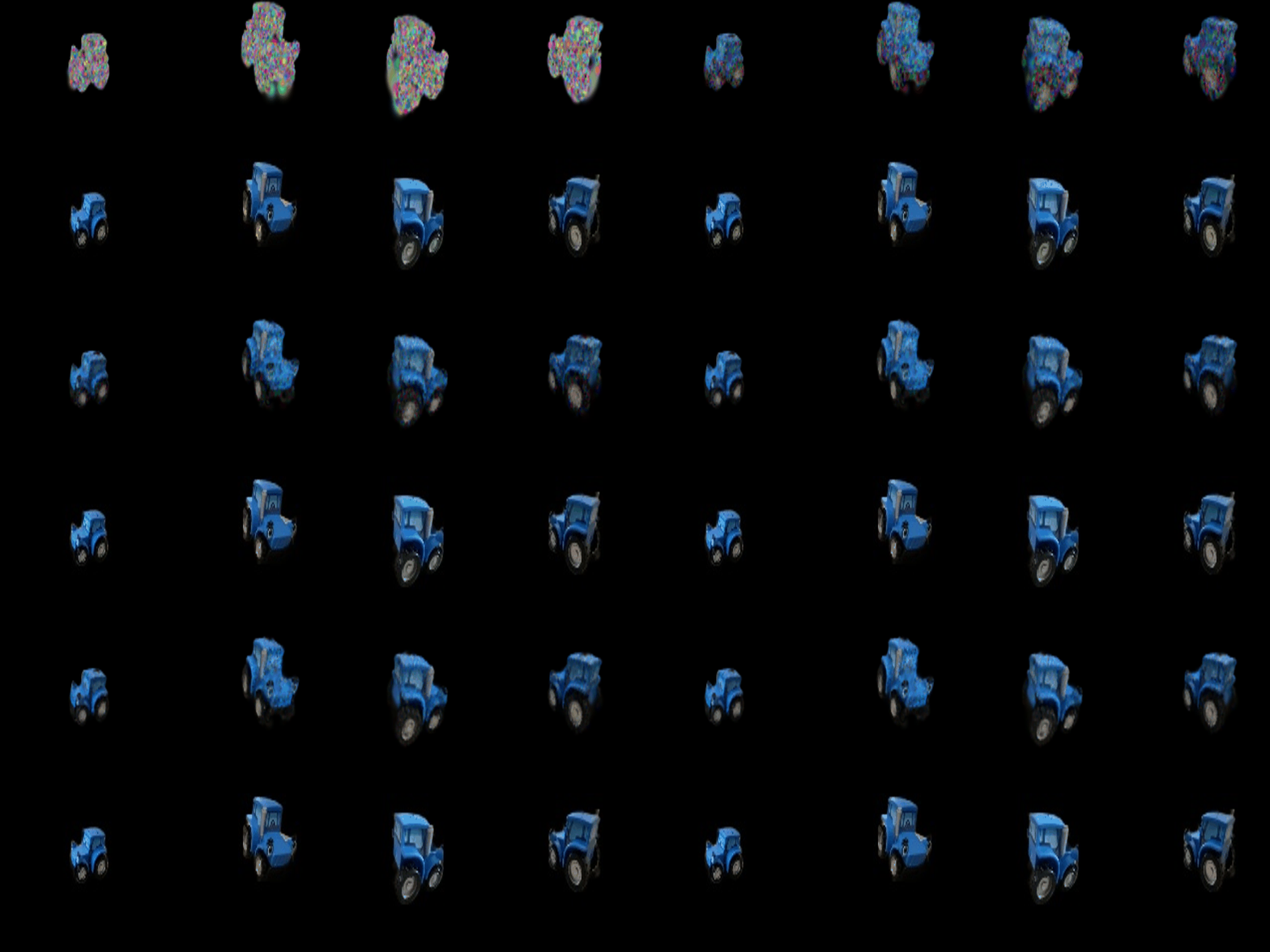
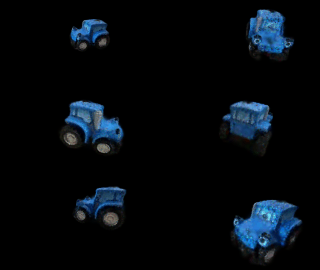
Final render:
7.1 Rendering Using Spherical Harmonics
| Chair splatting without spherical harmonics |
|---|
|
| Chair splatting with spherical harmonics |
|---|
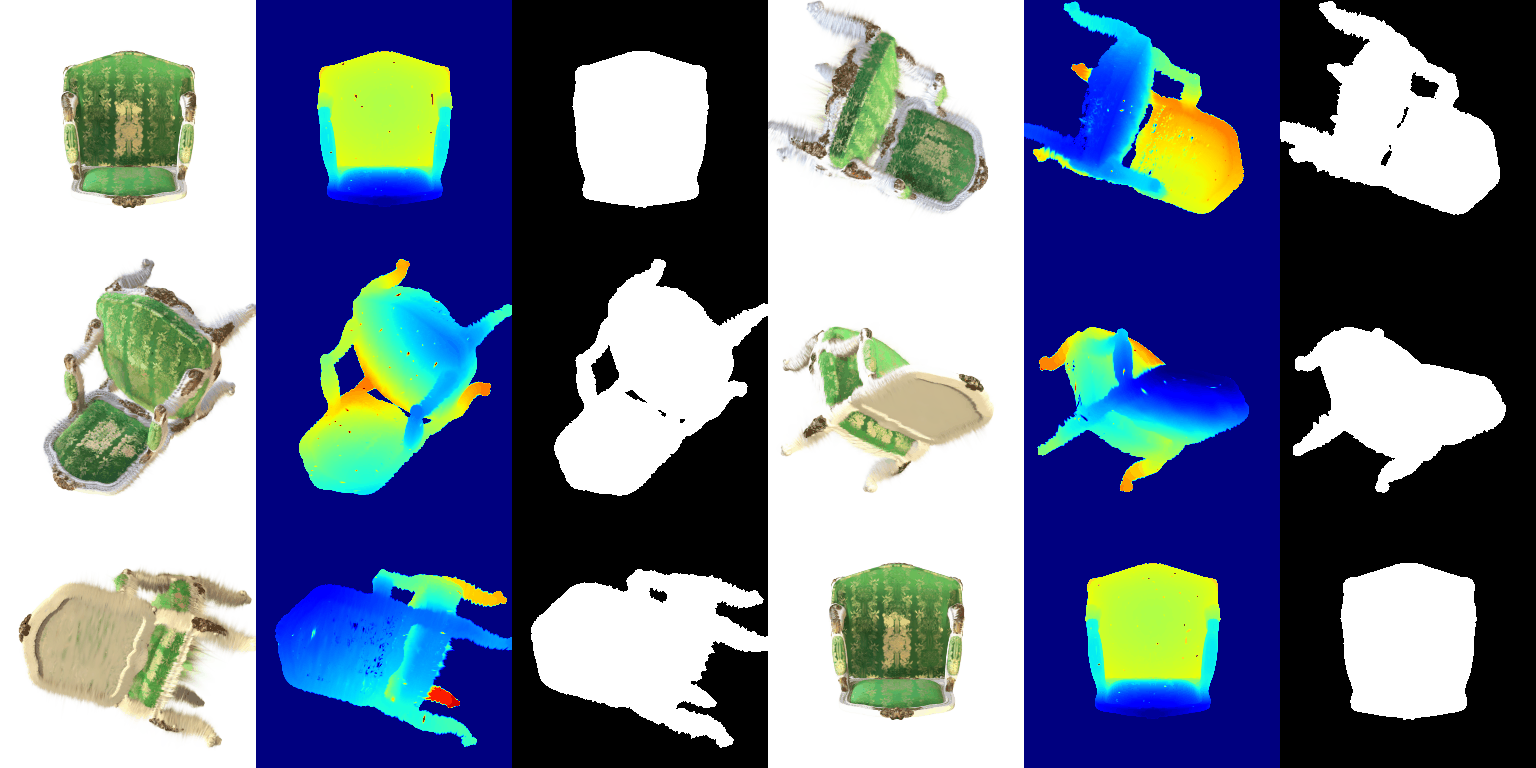 |
Comparing frame 10 (top is without spherical harmonics, bottom is with):
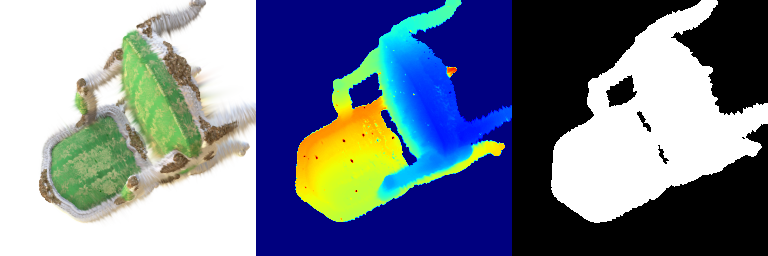
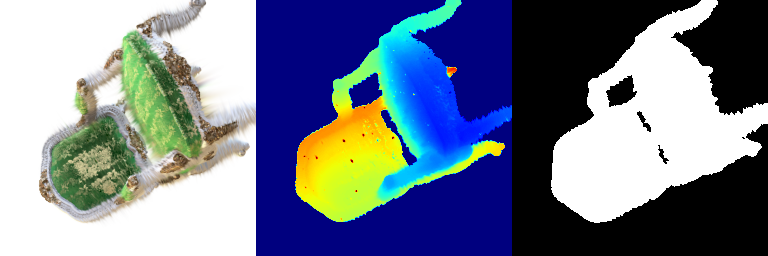
The green cushions are relatively flat-coloured in the top image where spherical harmonics are not used. In the bottom image where they are used, a realistic gradient appears. This suggests that without view dependency, the colours of gaussians are optimized to be the average of the observed point colours across view directions. For example, if a thin signboard was blue in one hemisphere of direction and red in another hemisphere of direction it would optimize to a purple colour due to lack of expressivity. This suggests how view dependency allows for not only responsive realism, but it also reduces artifacts in situations with challenging view-dependent lighting (such as sun-flares).
Comparing frame 15 (top is without spherical harmonics, bottom is with):
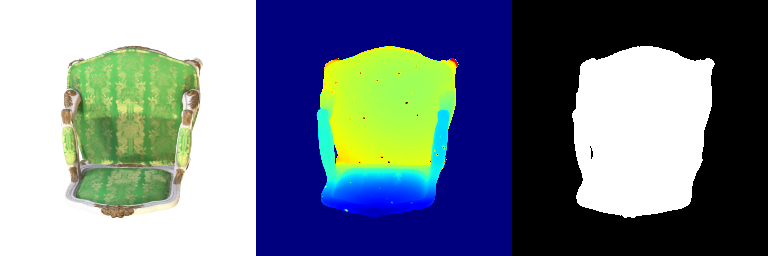
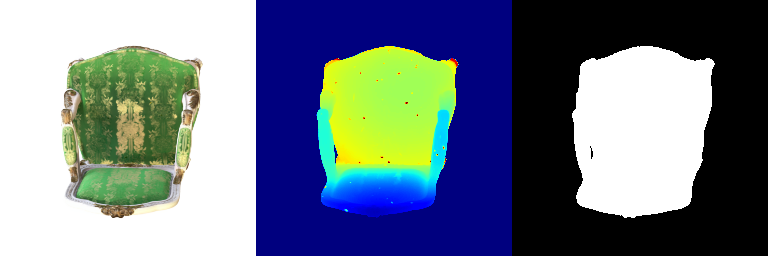
Similar to the above observation, we also see how in the bottom image, the shadows on the cushion are more realistic and can convey soft lighting while the shadows in the top image convey a very harsh lighting which seems almost unrealistic.
7.2 Training On a Harder Scene
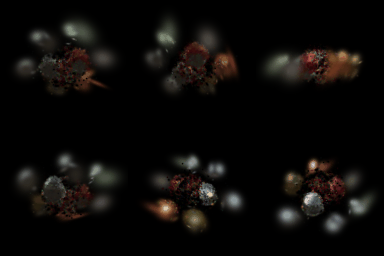
Baseline
Learning rates (unchanged between baseline and improved):
 opacities: 0.05
 scales: 0.005
 colours: 0.001
 means: 0.0001
 quats: 0.05
Iterations: 1000 (unchanged between baseline and improved)
Mean PSNR : 17.862
Mean SSIM: 0.647
Training progress:
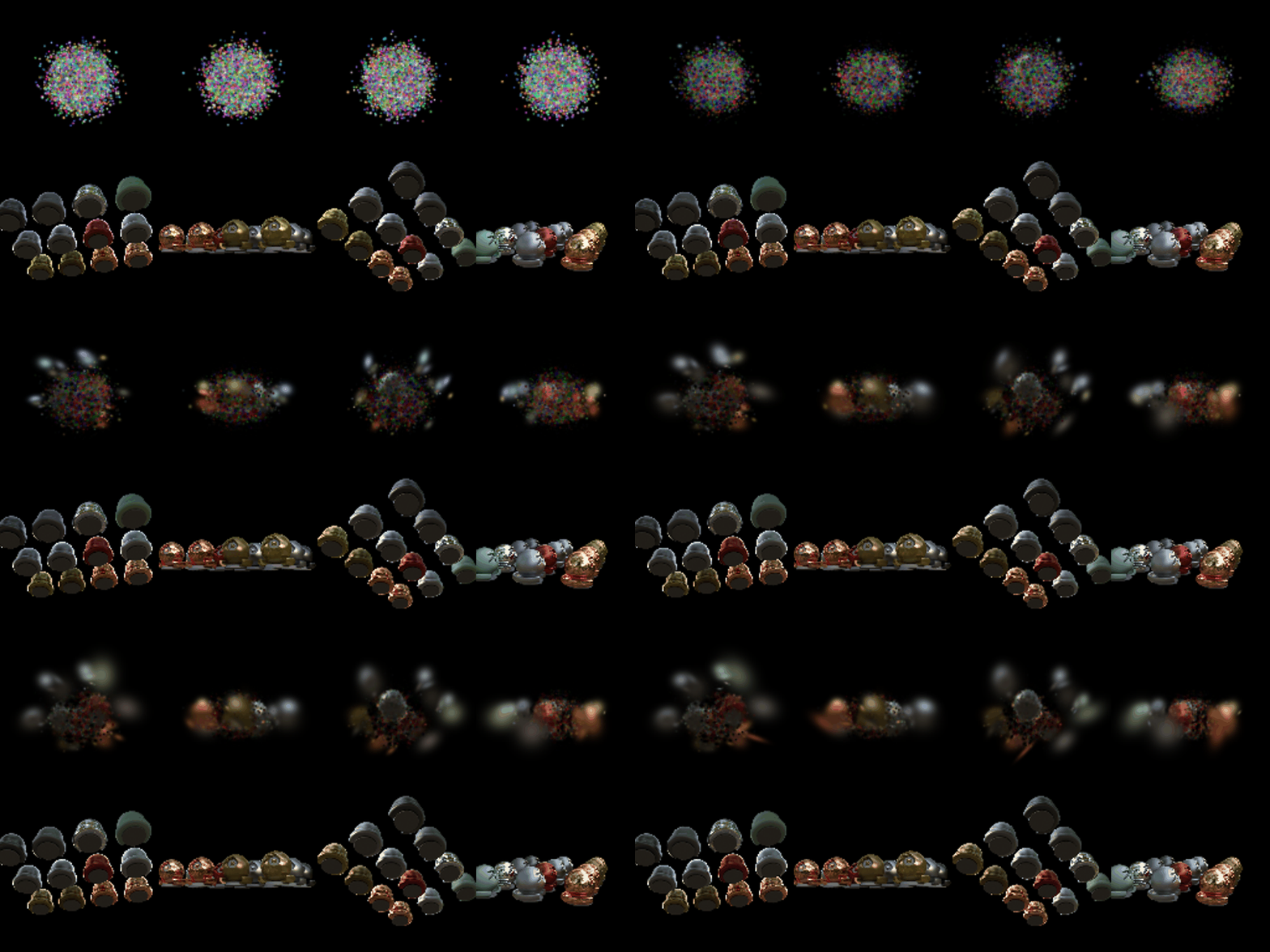
Final render:
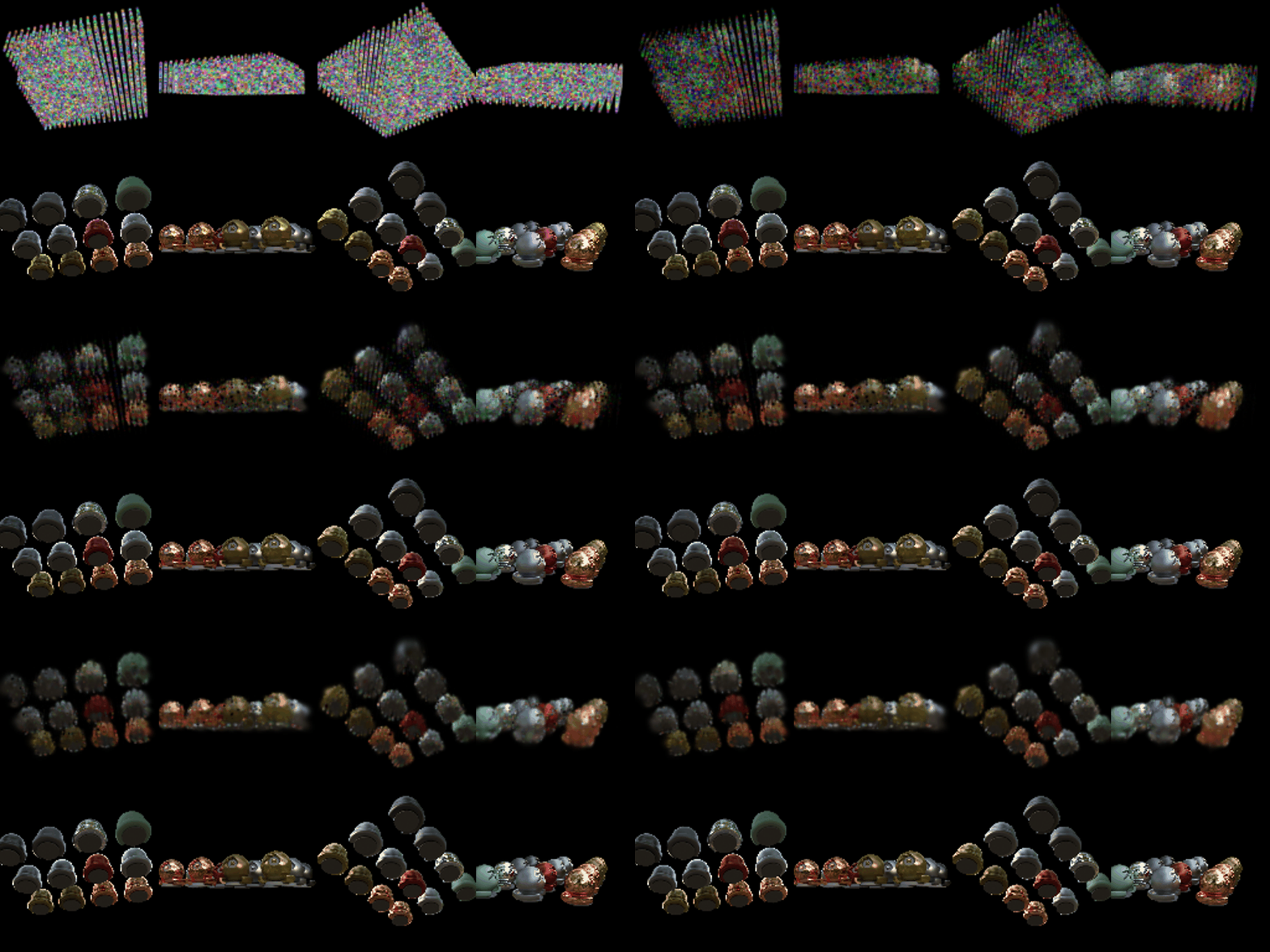
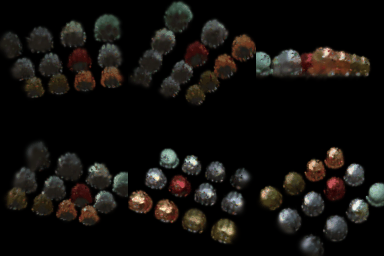
Improved
Mean PSNR : 22.699 (up from 17.862)
Mean SSIM: 0.822 (up from 0.647)
Training progress (improved):
Final render (improved):
Improvements made:
- The gaussians were initialized in a flat grid cuboid as opposed to a random sphere.
- The gaussians were made to be anisotropic instead of isotropic.