
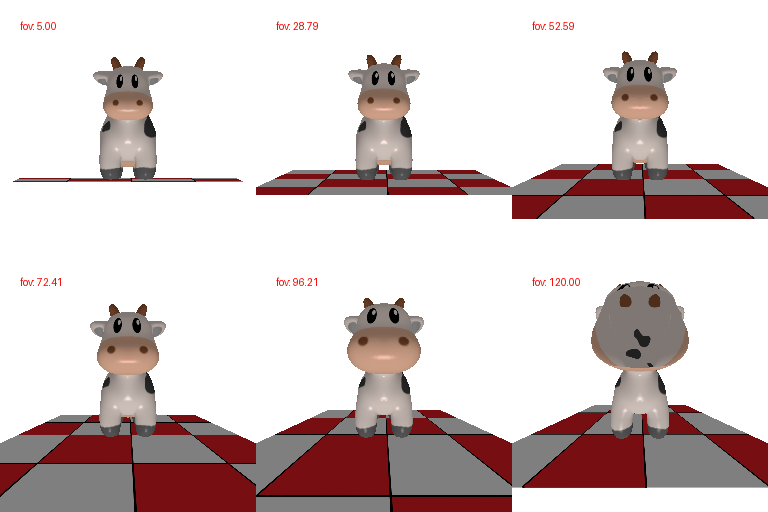

The mesh has 4 vertices and 4 triangle faces.
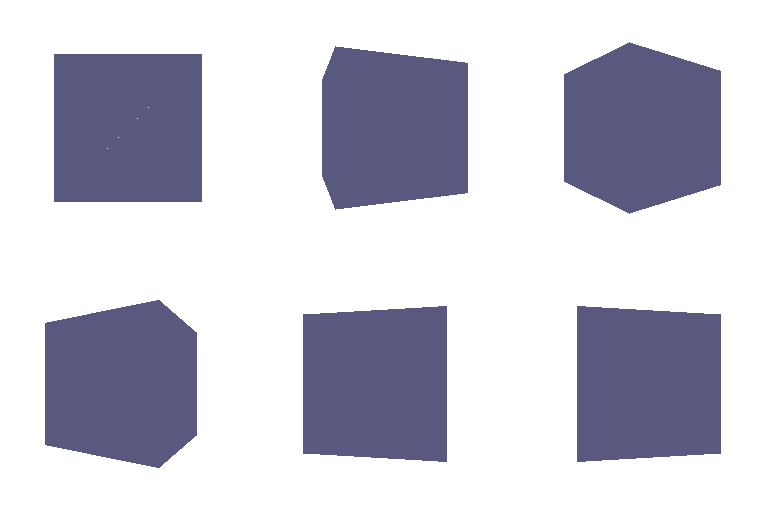
The mesh has 8 vertices and 12 triangle faces (6 square faces, each split into 2 triangles).

color1 = [0, 0, 1] (blue) at the front of the cow and
color2 = [1, 0, 0] (red) at the back.
They share no colour channel, so the gradient passes through a clearly visible purple midpoint.
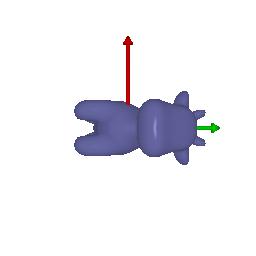
R_relative rolls the camera 90° about its own optical axis, rotating the image clockwise. T_relative is zero: the camera does not move, so the cow stays the same size and distance.
R_relative = [[0,1,0], [-1,0,0], [0,0,1]] T_relative = [0, 0, 0]
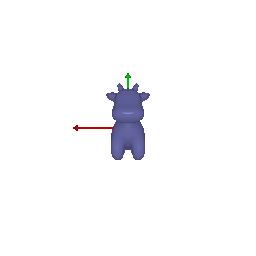
R_relative is the identity - the orientation is unchanged. T_relative pushes the camera backwards along its own viewing direction, from 3 to 5 units away, so the cow only gets smaller.
R_relative = I T_relative = [0, 0, 2]
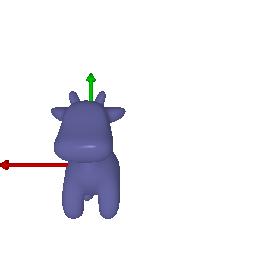
R_relative is the identity again. T_relative slides the camera within its own image plane, shifting the cow left and down in frame without changing its size or orientation.
R_relative = I T_relative = [0.5, -0.5, 0]
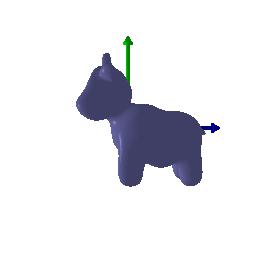
R_relative yaws the camera 90° about the vertical axis to look at the cow from its side. That rotation alone would swing the cow out of frame, so T_relative translates the camera around to the side as well, putting the cow back on the optical axis at the original distance.
R_relative = [[0,0,1], [0,1,0], [-1,0,0]] T_relative = [-3, 0, 3]
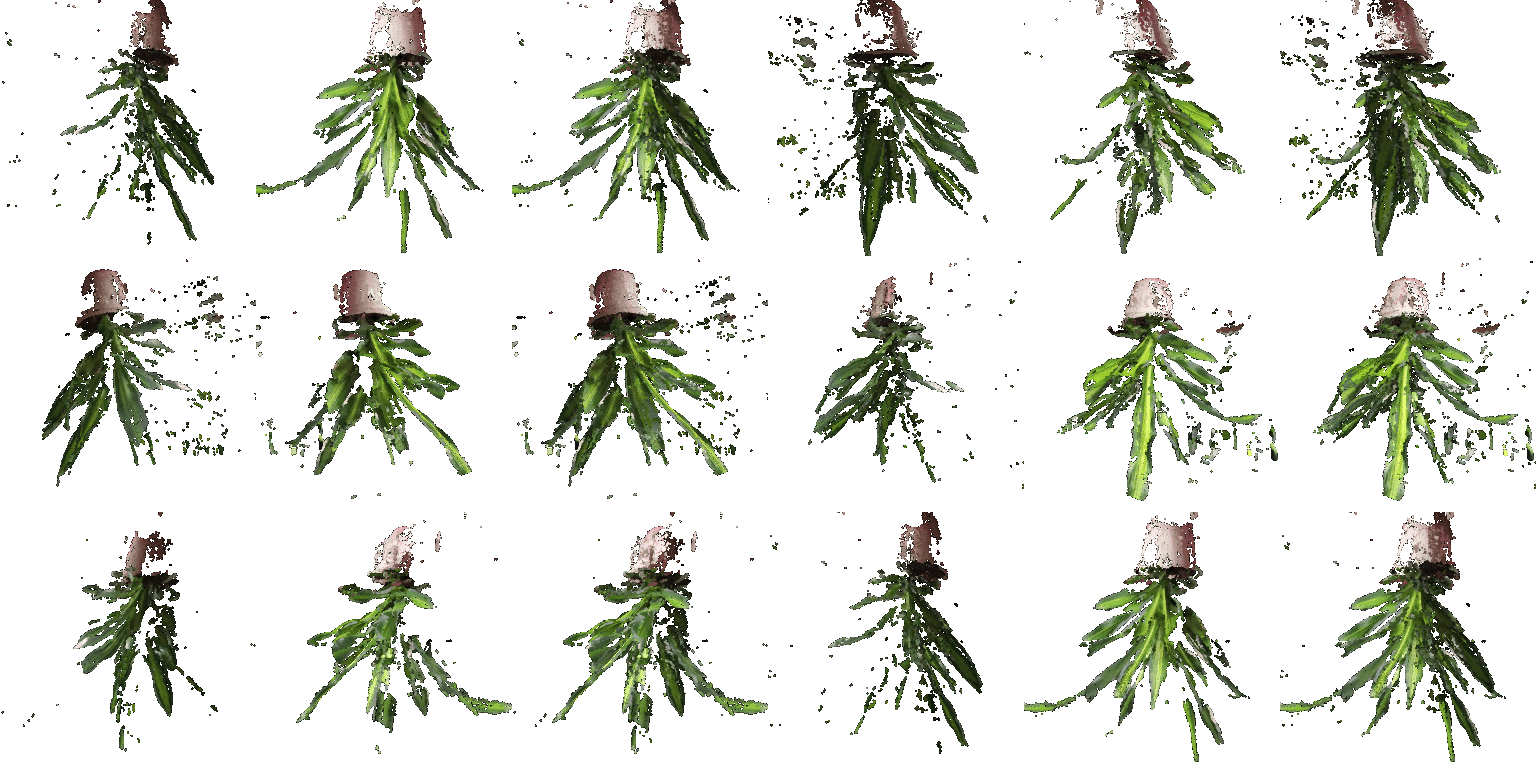
Left: first image. Centre: second image. Right: the union of both.
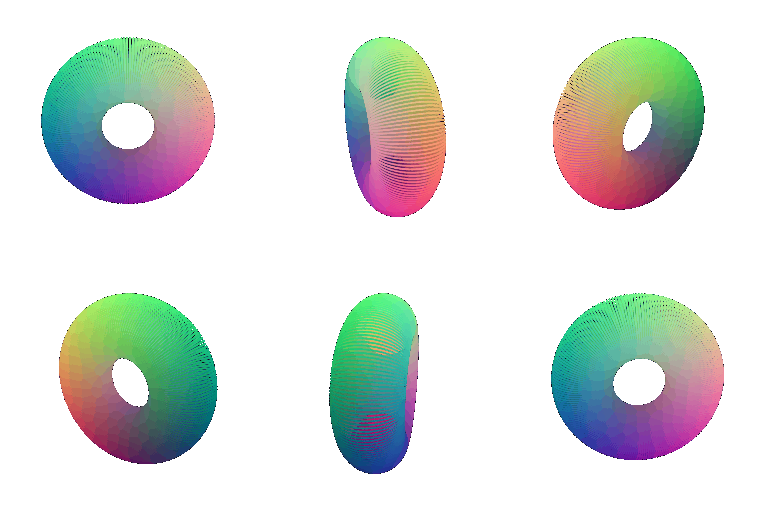
Torus point cloud.

New object: trefoil knot.
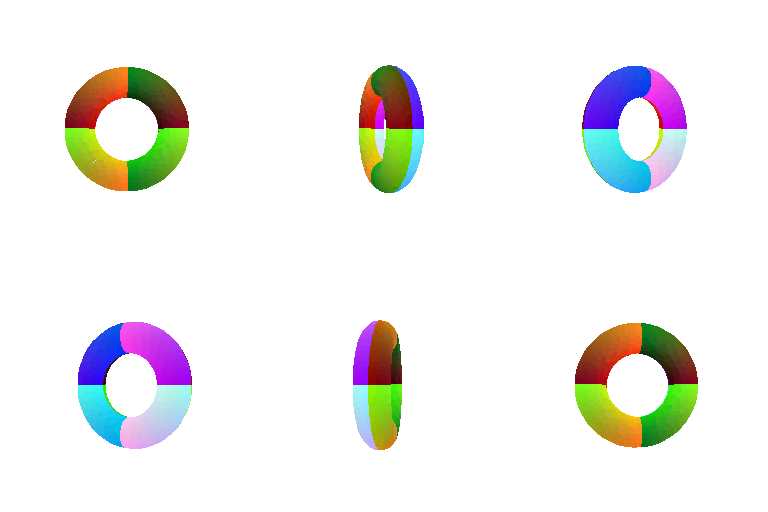
Torus mesh, extracted with marching cubes.

New object: five-pointed star.
| Point cloud | Mesh | |
|---|---|---|
| Memory | Only positions and colours - no connectivity stored, so cheaper at equal vertex count. | Vertices plus a face list. Marching cubes also produces far more vertices than a tuned parametric sampling would. |
| Rendering speed | Cheap per primitive, but a convincing surface needs far more primitives. | More expensive per primitive, but a coarse mesh already looks solid, so fewer are needed. |
| Quality | No real surface - gaps appear when sampling is sparse or the camera is close, and you can see through the object. Splat radius must be tuned by hand. | Watertight and correctly occluding. Supports normals, so it can be properly shaded and lit. |
| Ease of use | Trivial to build: sample a function or unproject a depth map. The natural output of sensors. | Needs connectivity. For an implicit function that means a voxel grid and an extraction step, adding a resolution parameter and grid artefacts on thin features. |
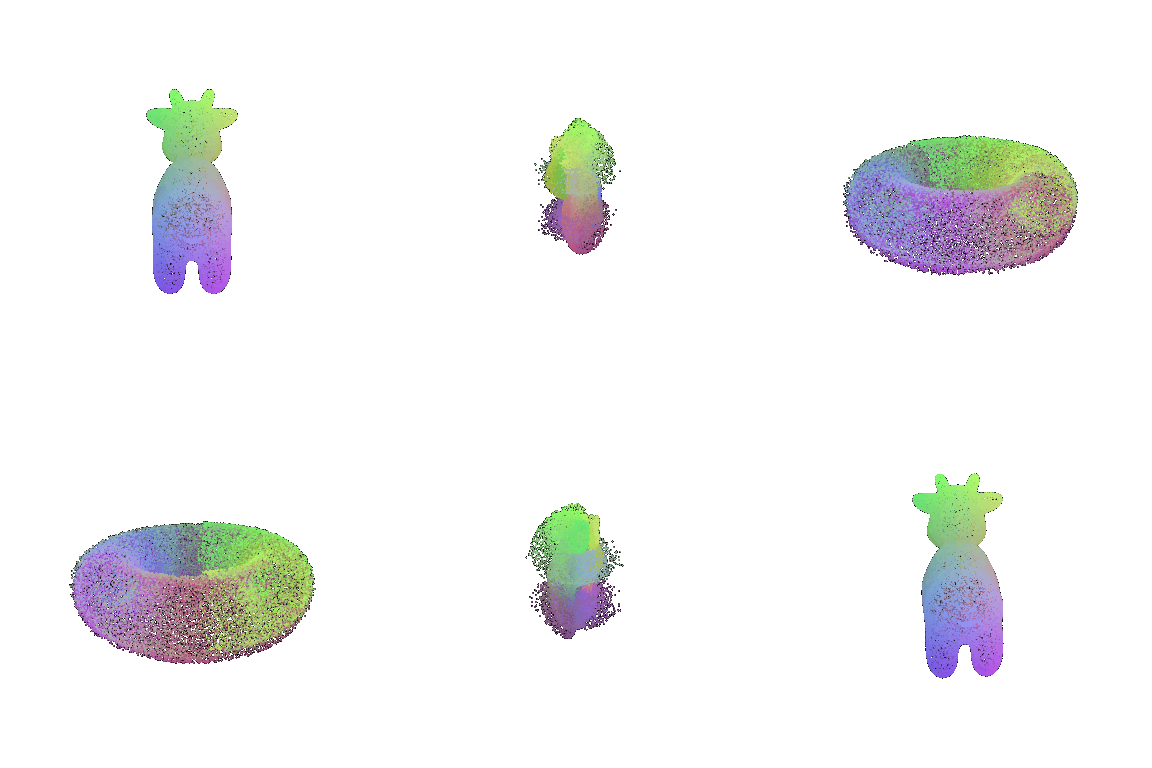
The cow mesh is sampled into a 40,000-point cloud and morphed into a parametric torus and back, with a twist that peaks mid-transition. Points are paired by azimuth so the swirl stays coherent, and each point keeps the colour of where it started on the cow.
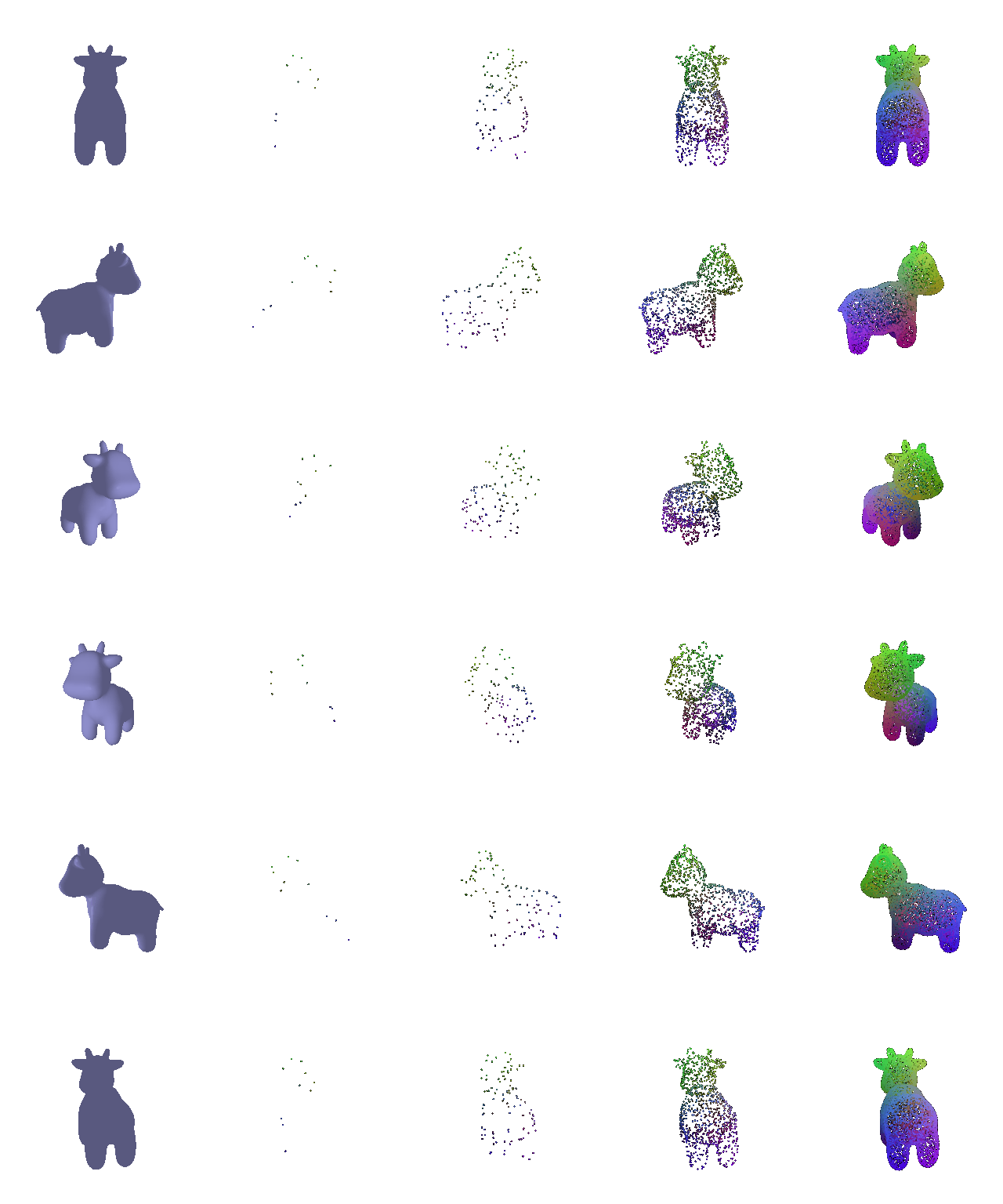
Left to right: original mesh, then 10, 100, 1,000 and 10,000 sampled points.