
Voxel: source; target

Point cloud: source; target

Mesh: source; target

RGB | pred | GT

RGB | pred | GT

RGB | pred | GT

F1

RGB | pred | GT

RGB | pred | GT

RGB | pred | GT

F1

RGB | pred | GT

RGB | pred | GT

RGB | pred | GT

F1
| Representation | F1@0.05 |
|---|---|
| Voxel grid | 73.9 |
| Point cloud | 72 |
| Mesh | 69.7 |
The three models' performances are close. Voxel is the best, then point cloud and and then mesh. Voxel is the best because it's just a binary classification problem, which is easiest to train. The point cloud is the second best, because the points can move freely, making it harder. Mesh is the worst, because it deform an icosphere. The faces cannot change and only the vertices move. The smoothness loss may make the model miss some details.
F1@0.05: 66.2 (500), 71.4 (1000), 73.2 (1500). More points cover the surface better. When the number is over 1000, the improvement of more points is less significant.

Interprete by starting the training from scratch, predict the same target every some steps, and visualize how the icospher is gradually deformed.
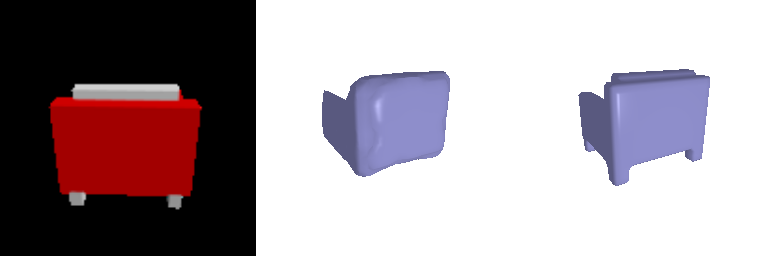
RGB | pred | GT
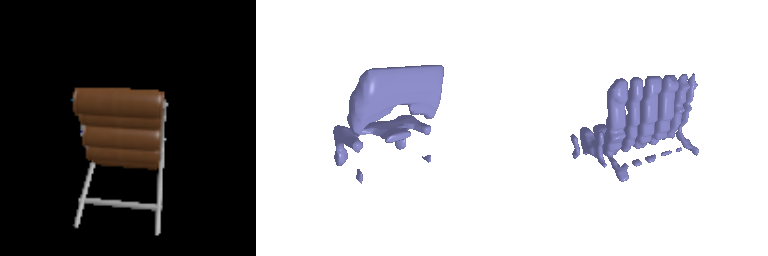
RGB | pred | GT
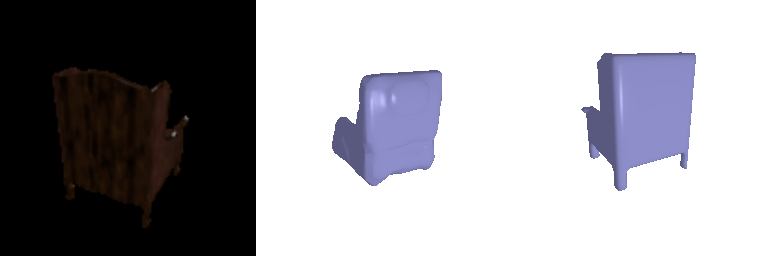
RGB | pred | GT
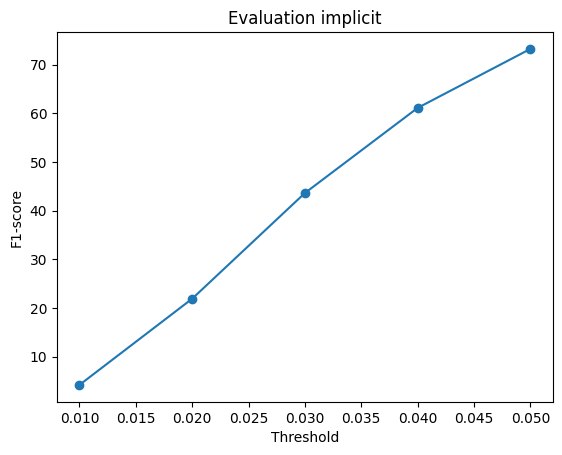
F1