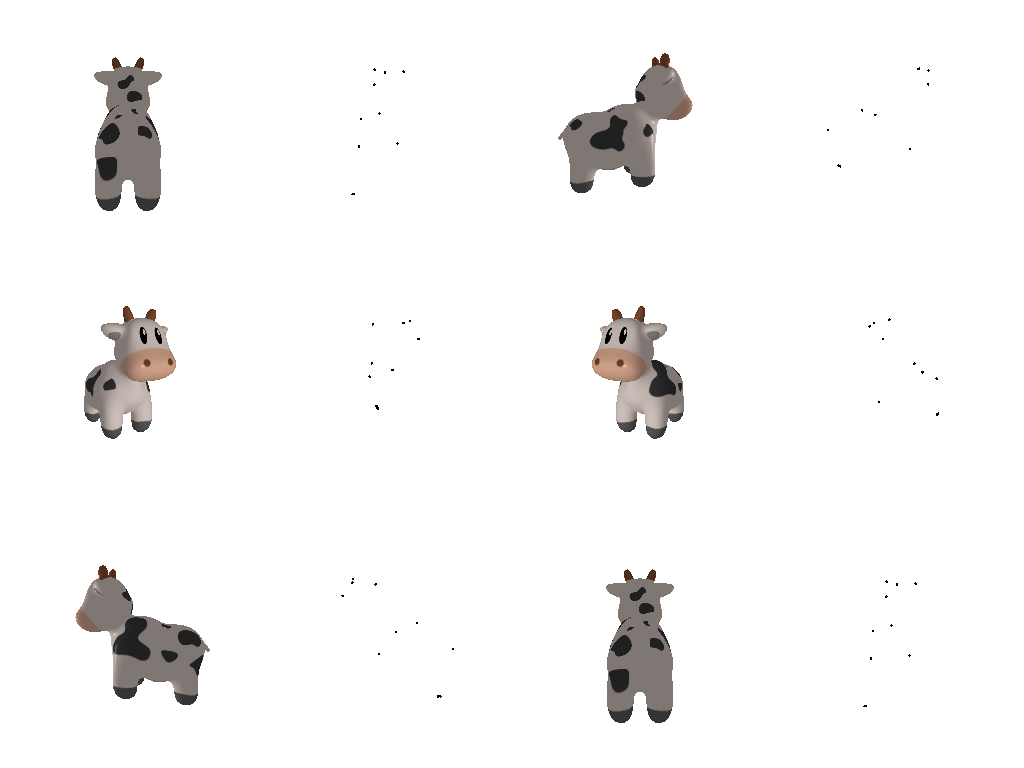
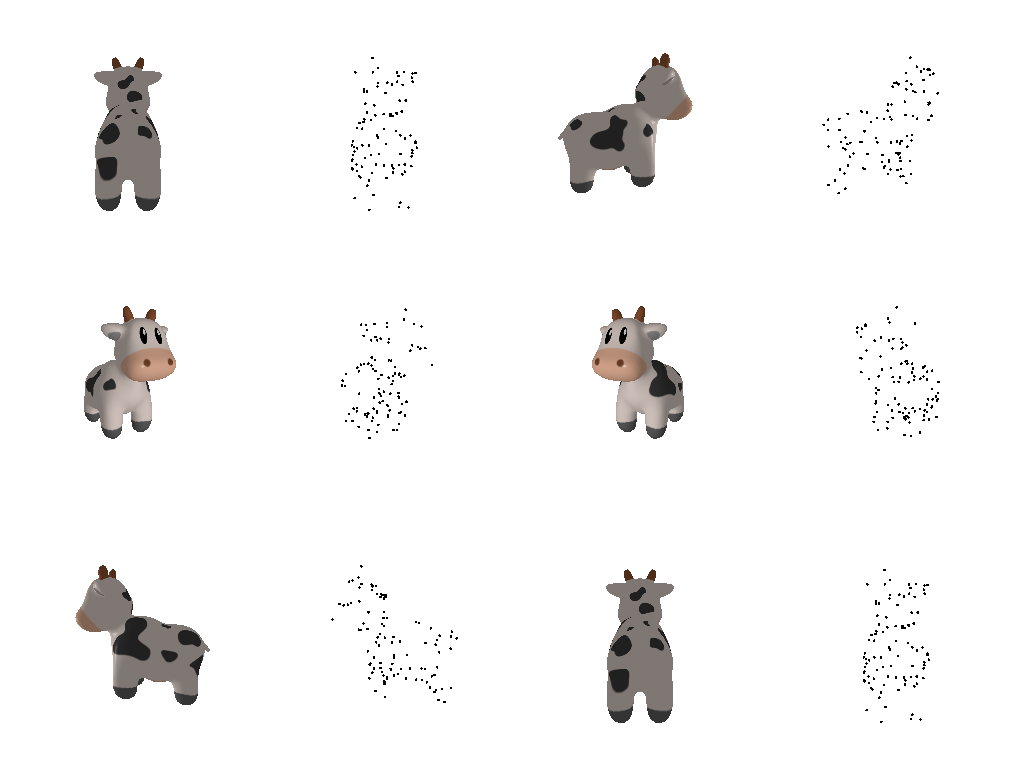
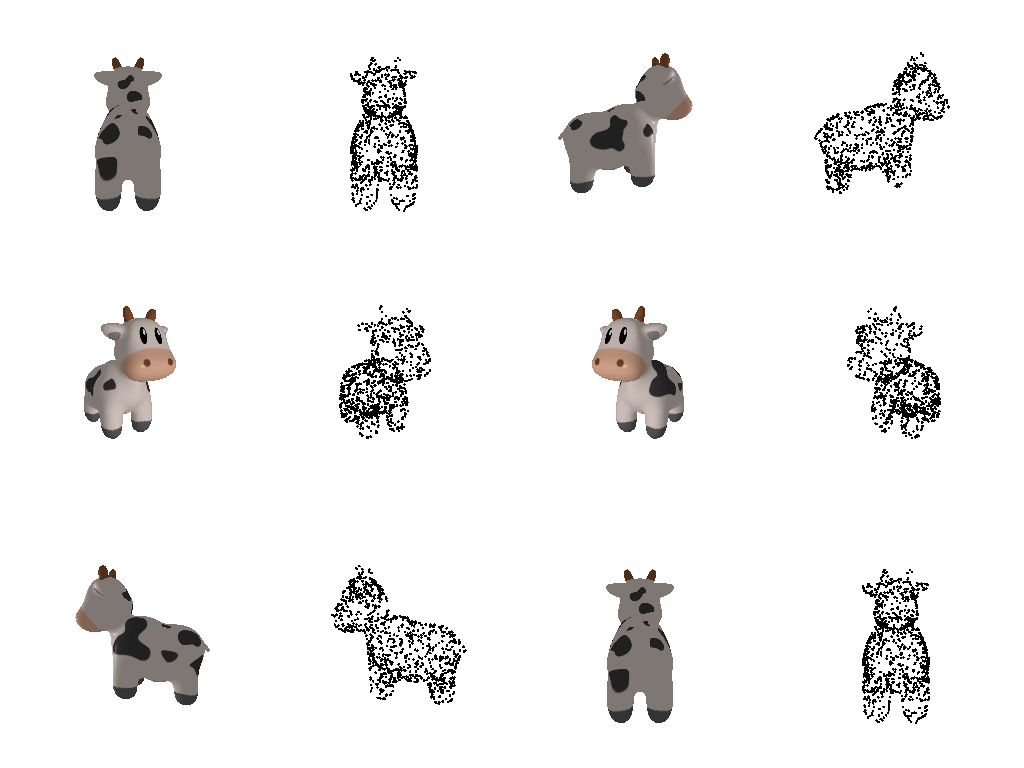
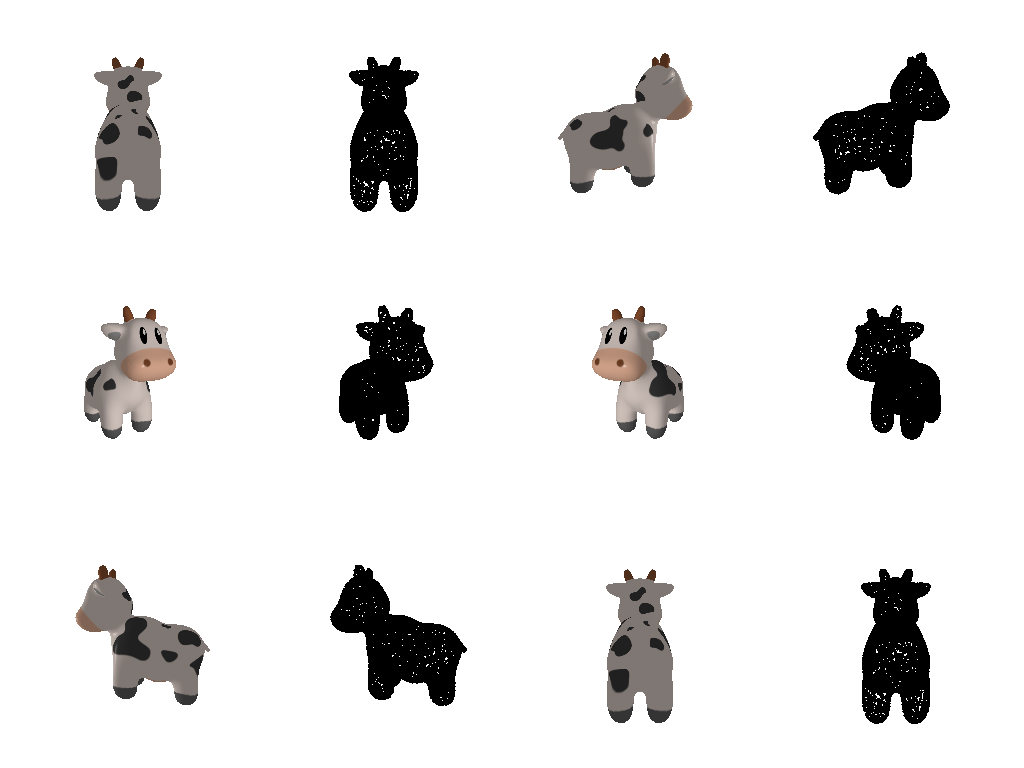
Assignment 1: Rendering Basics with PyTorch3D
16-825 · Learning for 3D Vision
1. Practicing with Cameras
1.1 360° Renders

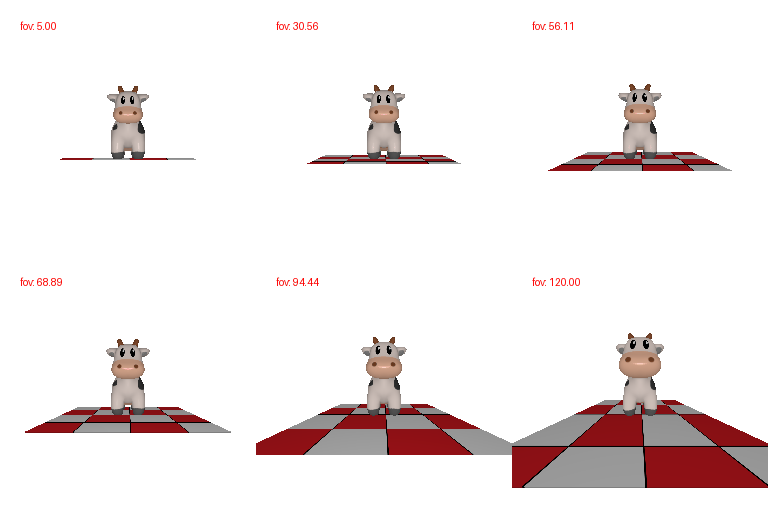
1.2 Re-creating the Dolly Zoom
2. Practicing with Meshes
2.1 Constructing a Tetrahedron

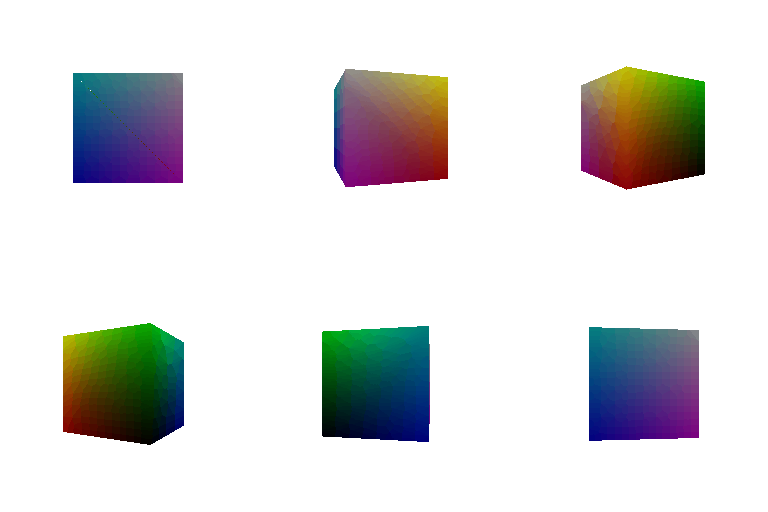
2.2 Constructing a Cube
3. Re-texturing a Mesh
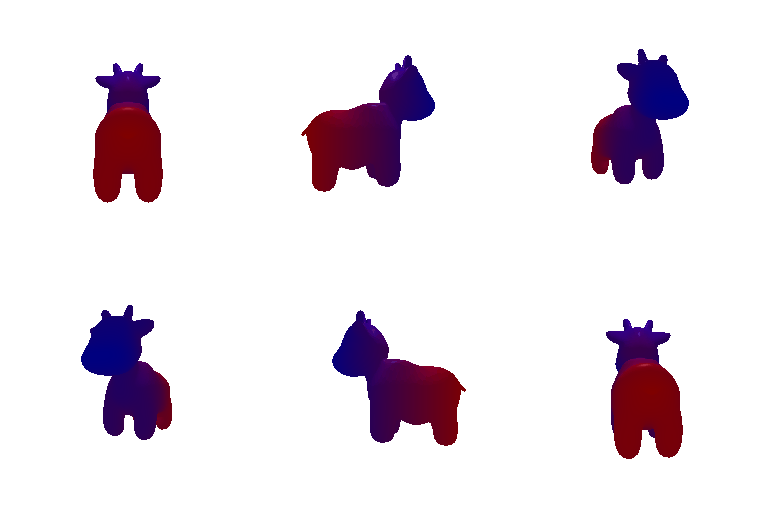
color1 = [0, 0, 1] and color2 = [1, 0, 0]
4. Camera Transformations
Transform 1

R_relative = [[0,1,0],[-1,0,0],[0,0,1]], T_relative = [0,0,0]
This R_relative is a −90° rotation about the camera's z-axis, with no translation change
Transform 2

R_relative = identity, T_relative = [0,0,3]
With no rotation, adding 3 units to the z-translation pushes the camera 3 additional units back along its viewing axis, roughly doubling the camera-to-object distance and making the cow appear smaller and farther away.
Transform 3

R_relative = identity, T_relative = [0.5,-0.5,0]
With no rotation, the x-component of T_relative shifts the camera 0.5 units sideways, which moves the cow horizontally in the frame, while the negative y-component shifts the camera 0.5 units downward, which makes the cow appear lower in the frame.
Transform 4

R_relative = [[0,0,1],[0,1,0],[-1,0,0]], T_relative = [-3,0,3]
R_relative is a +90° rotation about the camera's y-axis, swapping the x and z axes so the camera looks at the cow from the side. T_relative then repositions the camera along these new axes to bring it closer and keep the cow centered, producing a close side-profile view of the cow.
5. Rendering Generic 3D Representations
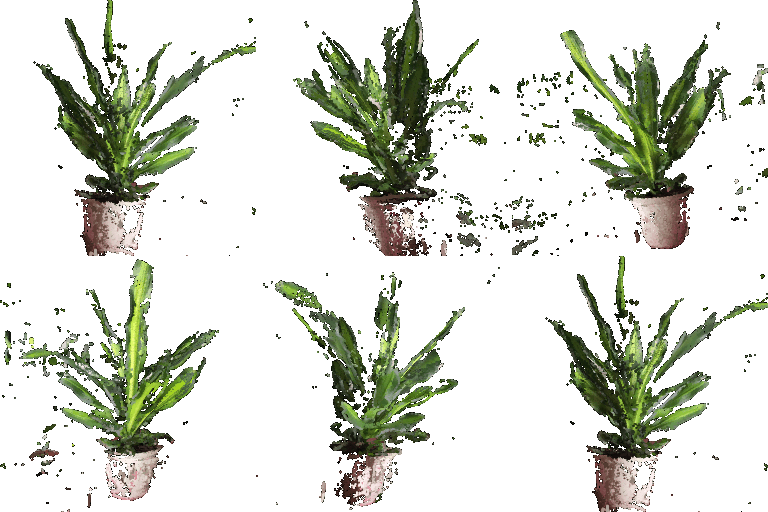
5.1 Rendering Point Clouds from RGB-D Images


5.2 Parametric Functions
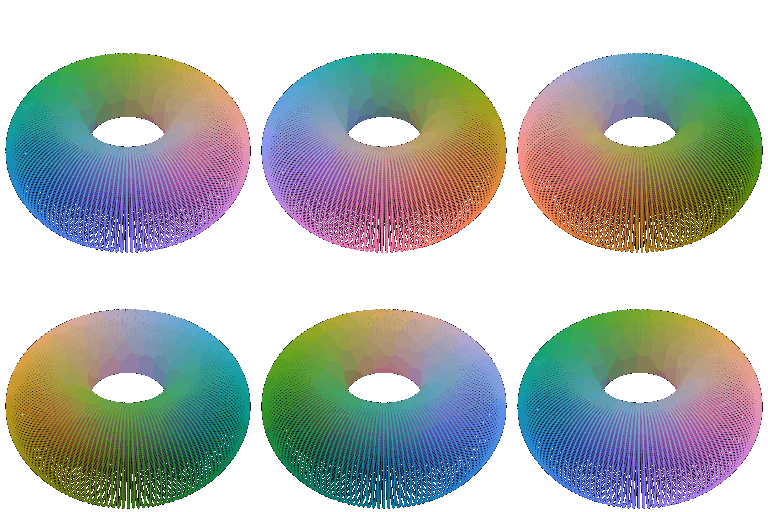
Torus point cloud (10 pts)
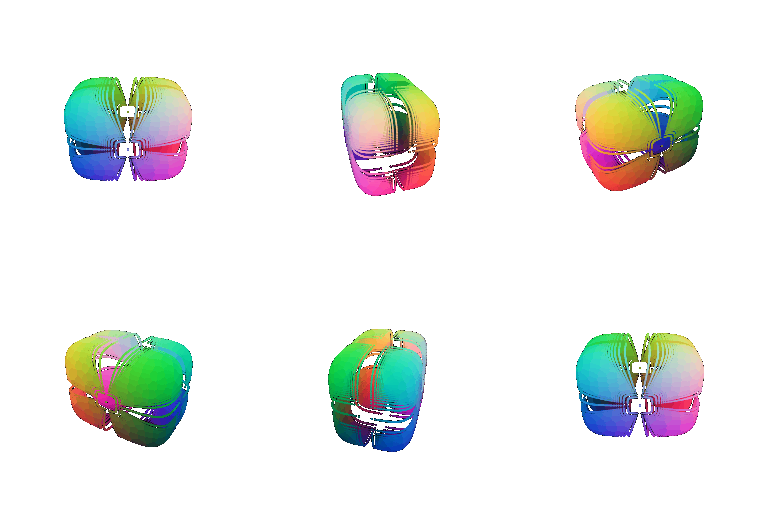
Extra object of choice (+5 pts)
5.3 Implicit Surfaces
Torus mesh (15 pts)

Mesh vs. point cloud tradeoffs:
Rendering Speed: Point clouds are generally simpler to render because each point can be rendered independently. Meshes require rasterizing triangles and handling their connectivity, which can be more computationally expensive.
Rendering quality: Meshes usually produce higher-quality and more continuous-looking surfaces because triangles explicitly define the surface between vertices. They also support smooth shading, textures, and lighting naturally. Point clouds can look sparse or have visible gaps, when the number of points is small.
Ease of use: Point clouds are easier to construct because we only need a set of 3D coordinates. Meshes require both vertices and faces, so we need to keep track of how vertices are connected to form surfaces.
Memory usage: Point clouds only need to store the coordinates and features of each point, whereas meshes need to store both vertex data and face connectivity. Thus, meshes generally require more memory.
Representation and editing: Meshes provide explicit surface and connectivity information, which makes them better for representing continuous surfaces. Point clouds are more flexible for representing raw 3D measurements, such as LiDAR or RGB-D data, where surface connectivity may not be available.
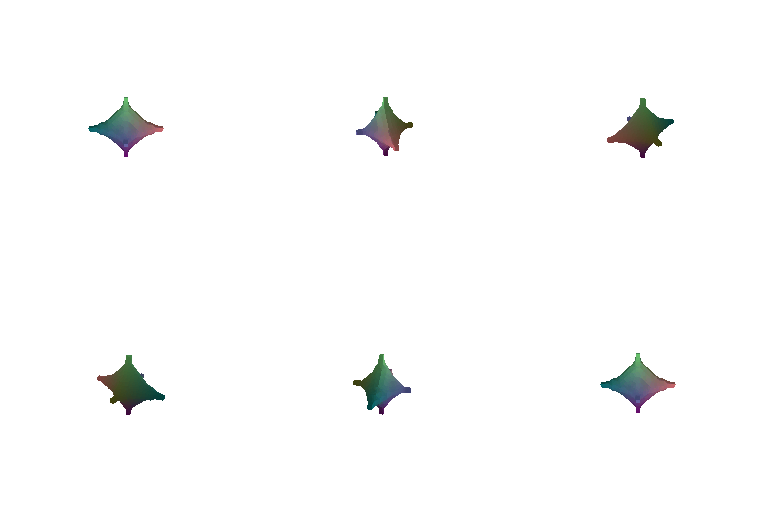
Extra object of choice (+5 pts)
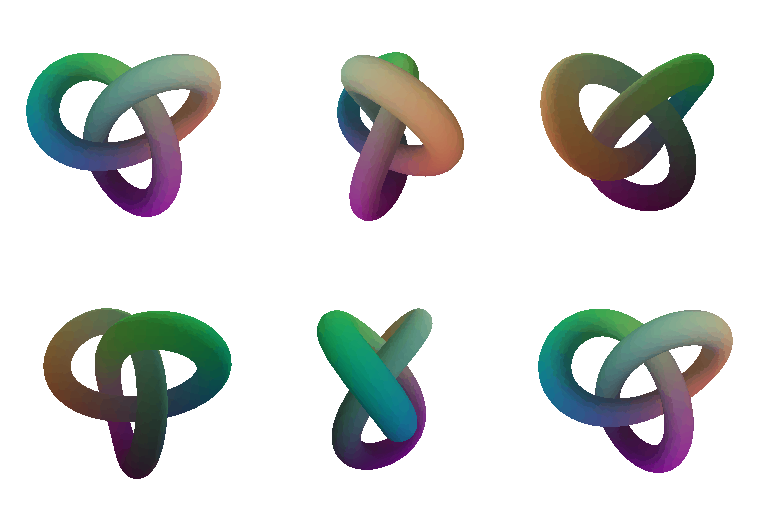
6. Do Something Fun extra credit
7. Sampling Points on Meshes extra credit