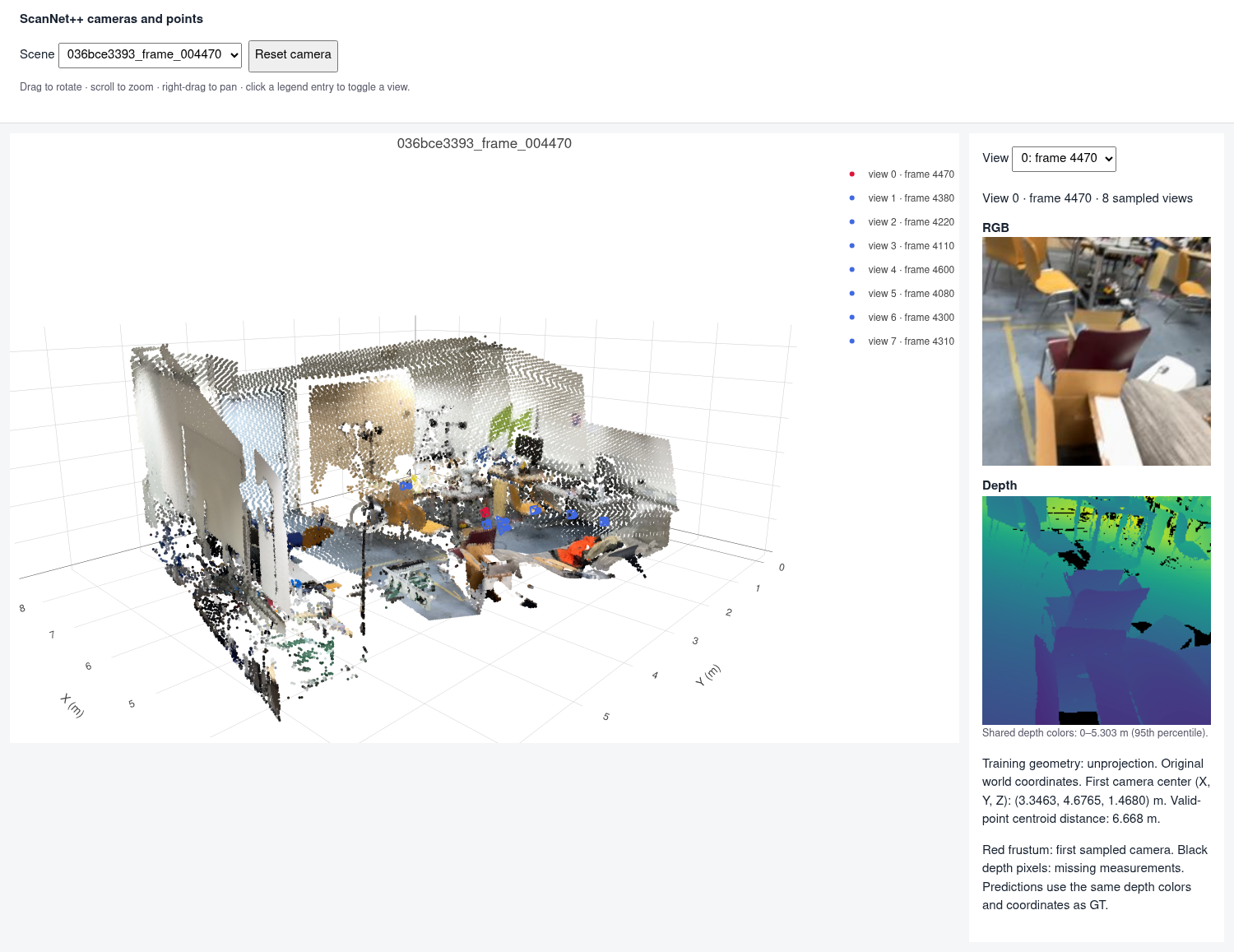
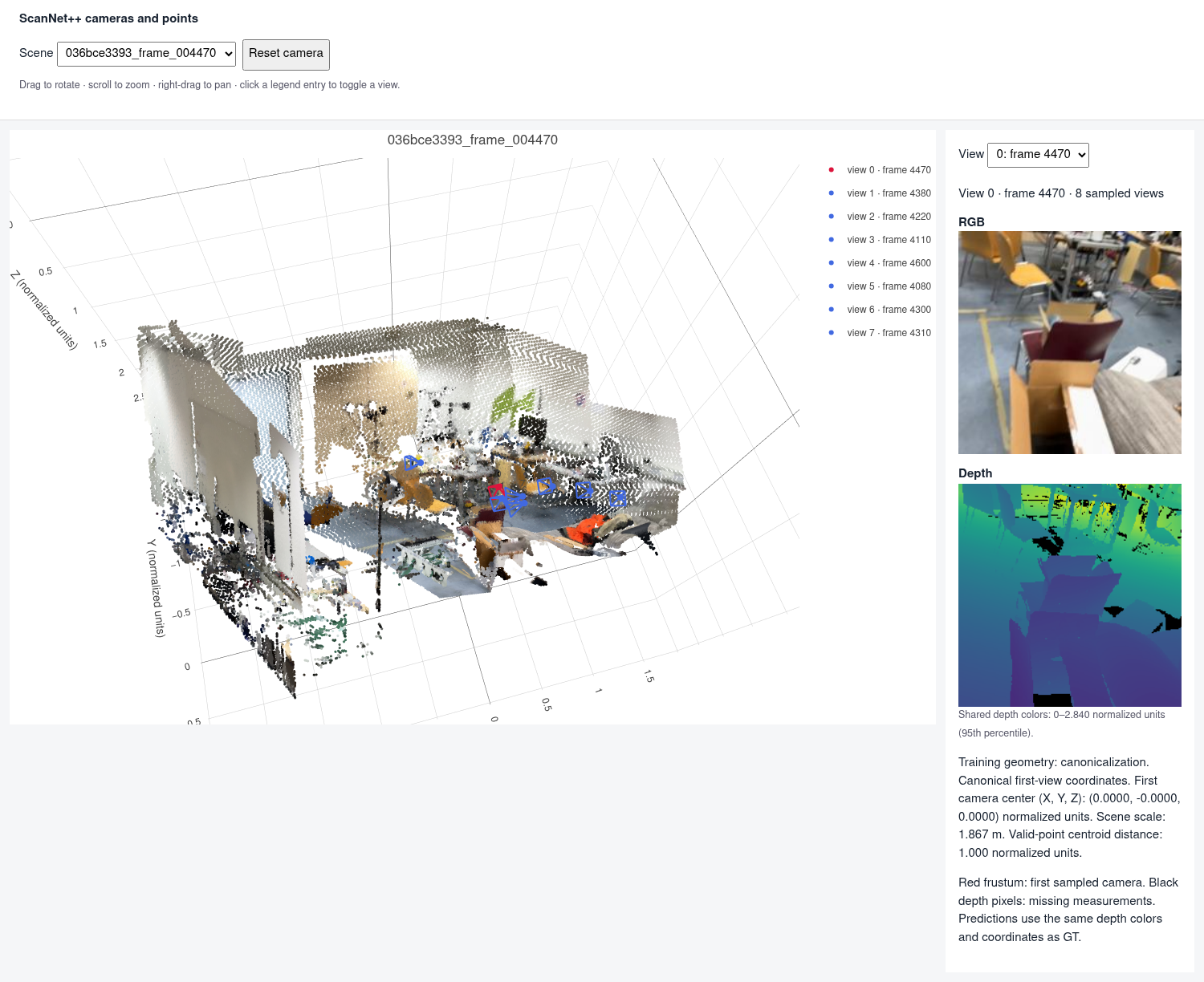
| scene | valid depth | max reproj err (px) | max ray reproj err (px) | centroid dist |
|---|---|---|---|---|
| e050c15a8d_frame_007080 | 0.978 | 1.13e-4 | 1.09e-4 | 1.000 |
| 5f99900f09_frame_002820 | 0.990 | 1.23e-4 | 1.11e-4 | 1.000 |
| 47b37eb6f9_frame_002720 | 0.961 | 9.88e-5 | 8.90e-5 | 1.000 |
| 4c5c60fa76_frame_006690 | 0.752 | 1.16e-4 | 1.07e-4 | 1.000 |
Canonicalization: We express camera poses as related to camera 0, then we normalize translations, depth and points by dividing them by the distance from camera 0 to the centroid of valid points.
World-space ray directions: d = normalize(R K⁻¹ [u, v, 1]ᵀ), the pixel's back-projected direction rotated into the canonical world frame, and the origin is the camera center.
Plücker moment: m = o × d. It encodes both direction and position of the ray.
Final overfit PSNR: 30.86 dB (SSIM 0.869), 2000 steps.

Settings: patch 8, width 384, 8 layers, head dim 64, 2 source / 6 target views, batch 4, 100 epochs, AdamW lr 2e-4, wd 0.05, warmup 200, bf16.
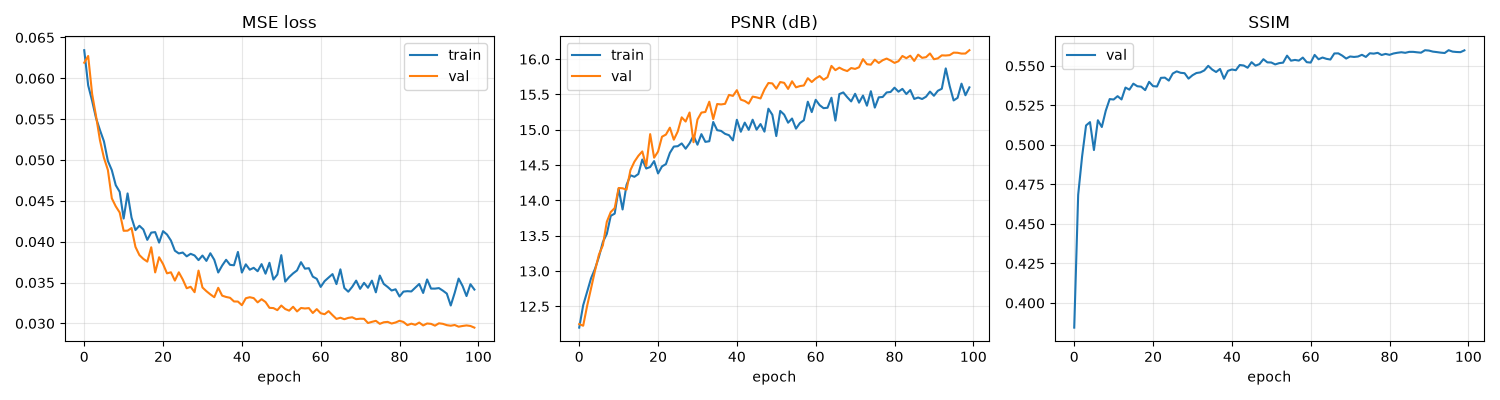
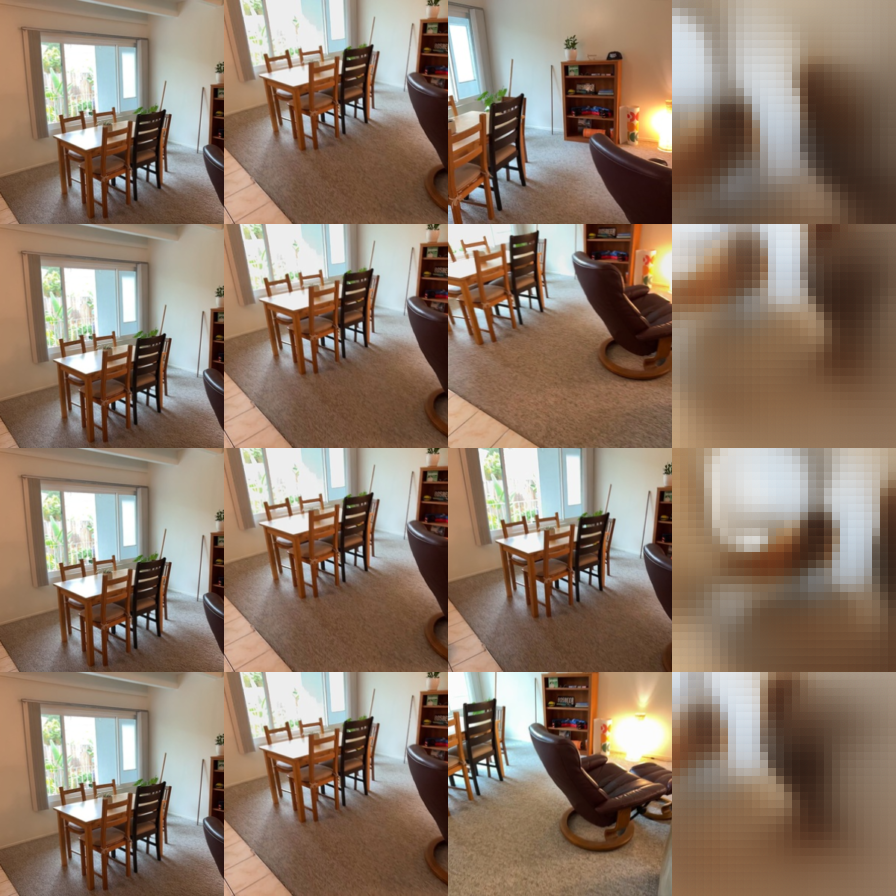
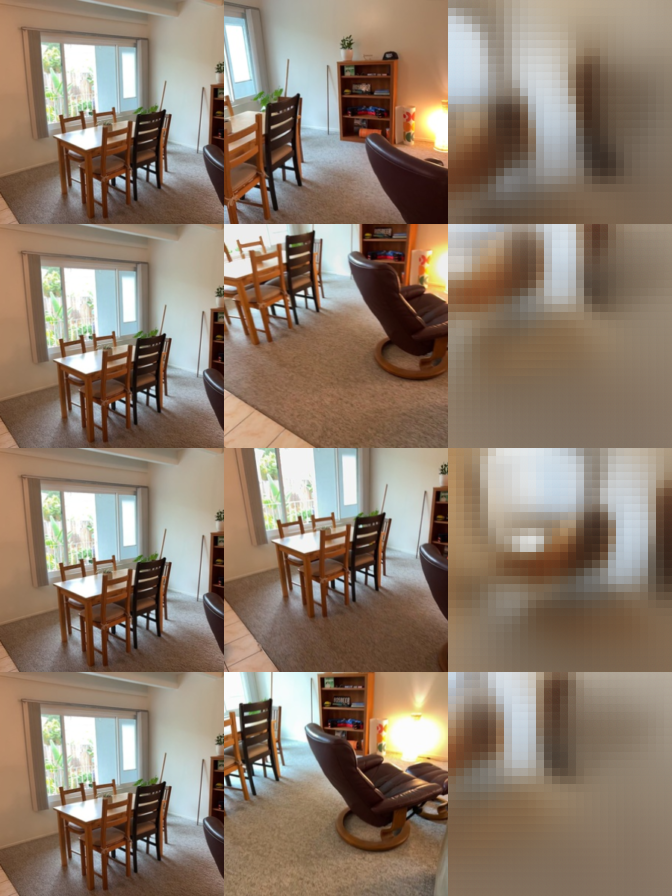
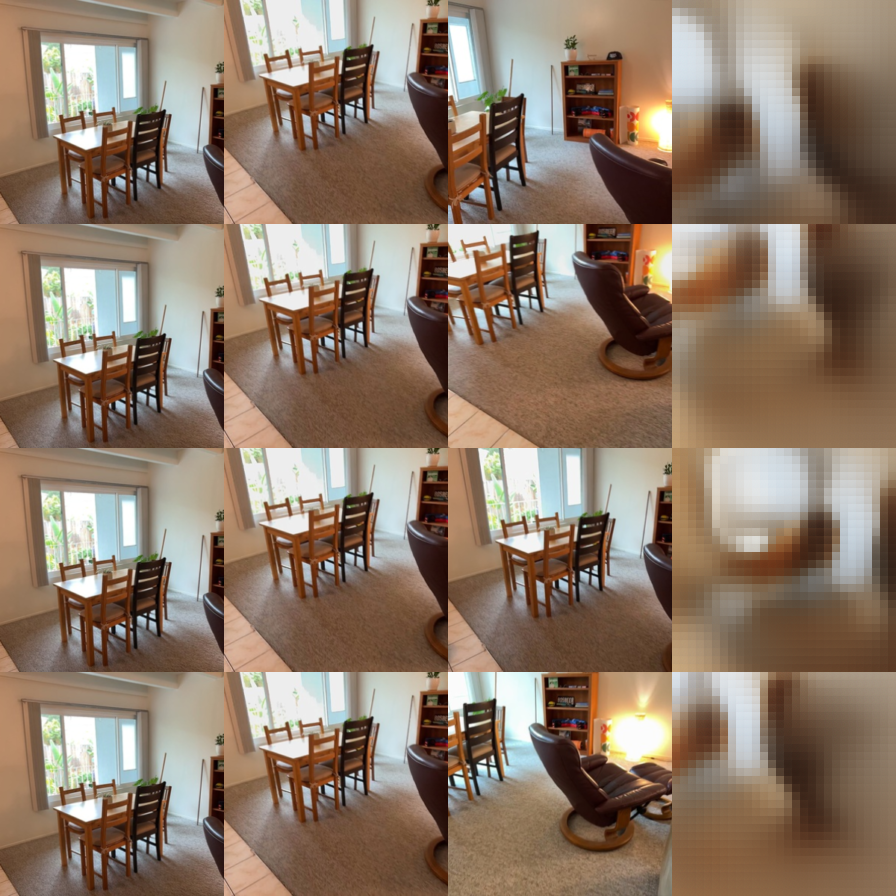
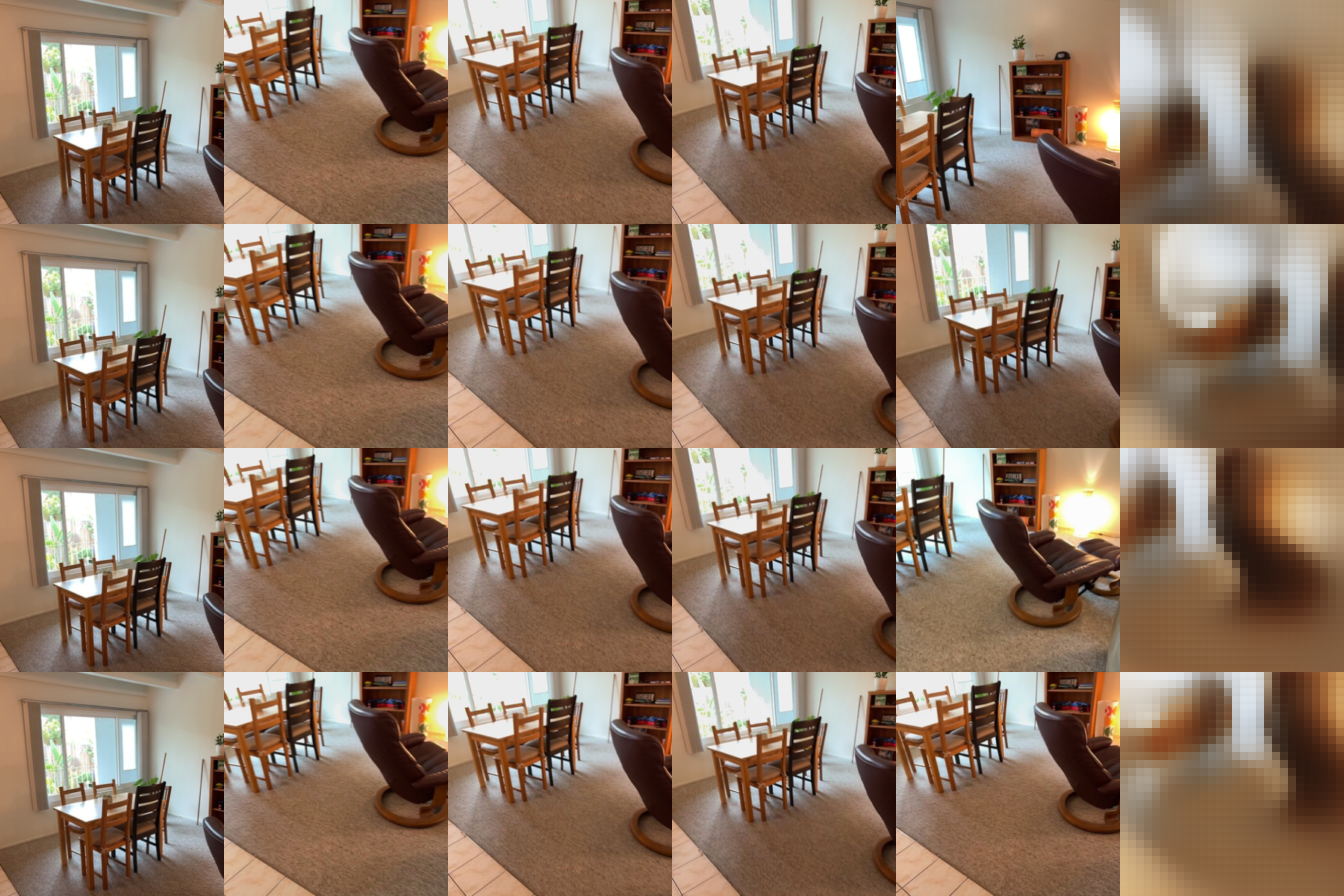
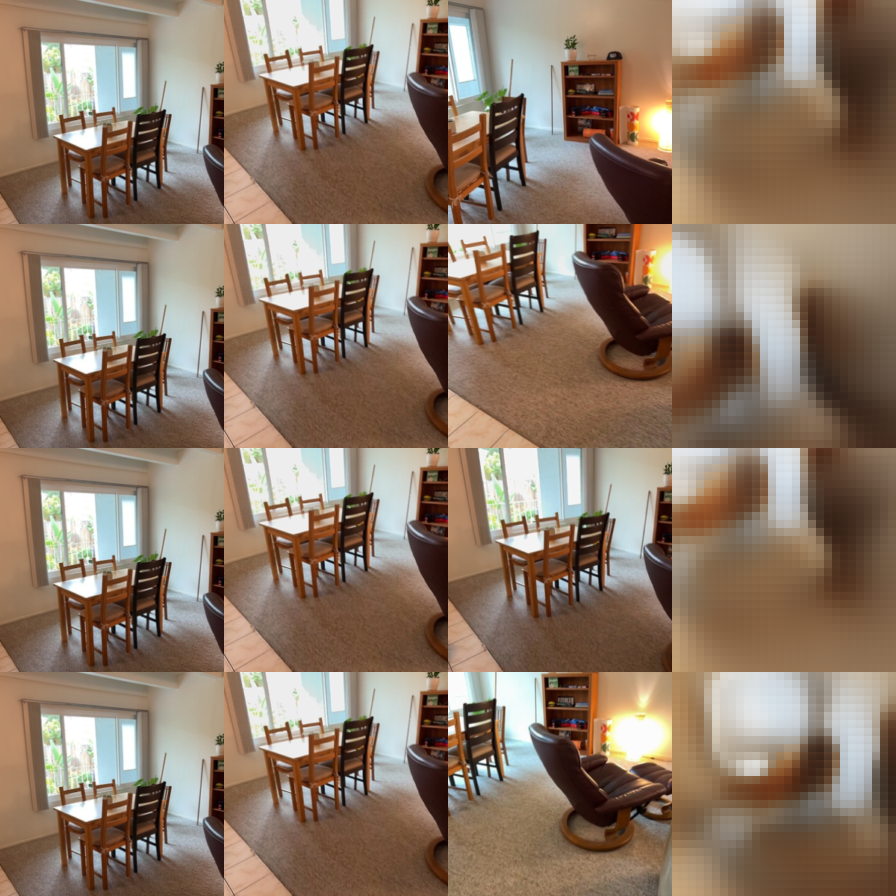
Training visualization (epoch 95):
| source views | conditioning | PSNR | SSIM |
|---|---|---|---|
| 1 | correct | 15.19 | 0.558 |
| 1 | shuffled | 11.81 | 0.487 |
| 1 | none | 12.46 | 0.530 |
| 2 | correct | 16.13 | 0.560 |
| 2 | shuffled | 11.48 | 0.472 |
| 2 | none | 12.43 | 0.528 |
| 4 | correct | 16.87 | 0.575 |
| 4 | shuffled | 11.60 | 0.473 |
| 4 | none | 12.44 | 0.538 |
| S=1, correct | S=2, correct | S=4, correct |
|---|---|---|
 |
 |
 |
| S=2, shuffled | S=2, none |
|---|---|
 |
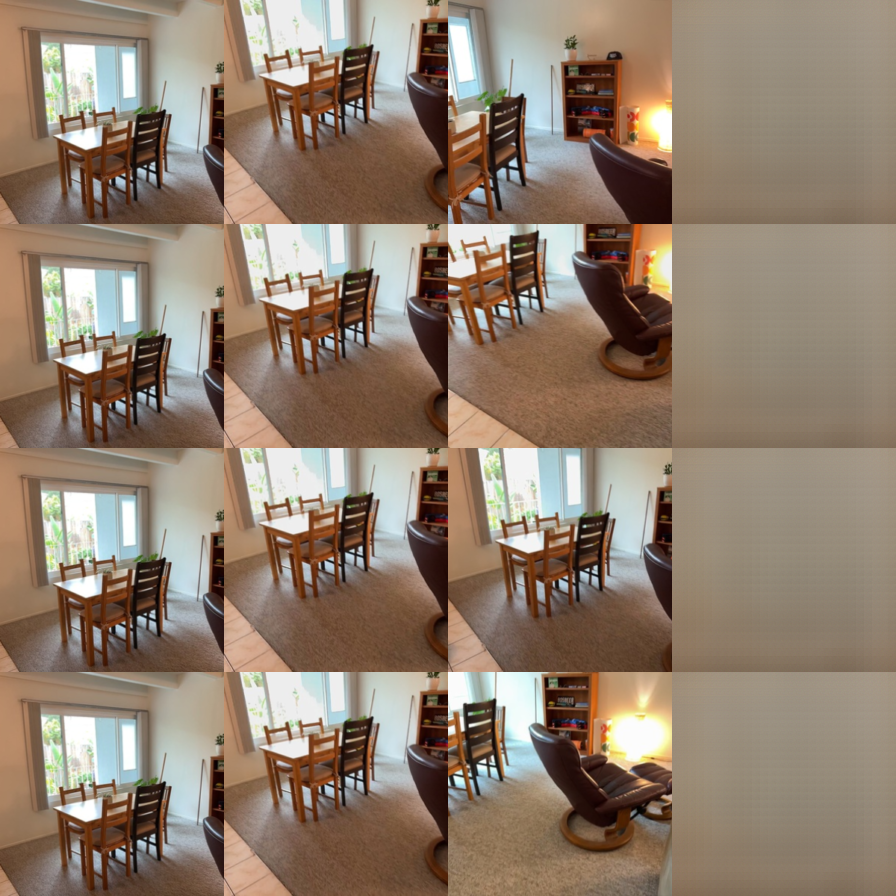 |
Source views: More source views raise PSNR since more of the target is observed, even when the model was trained with 2 views only.

GT (left) vs. prediction (right):
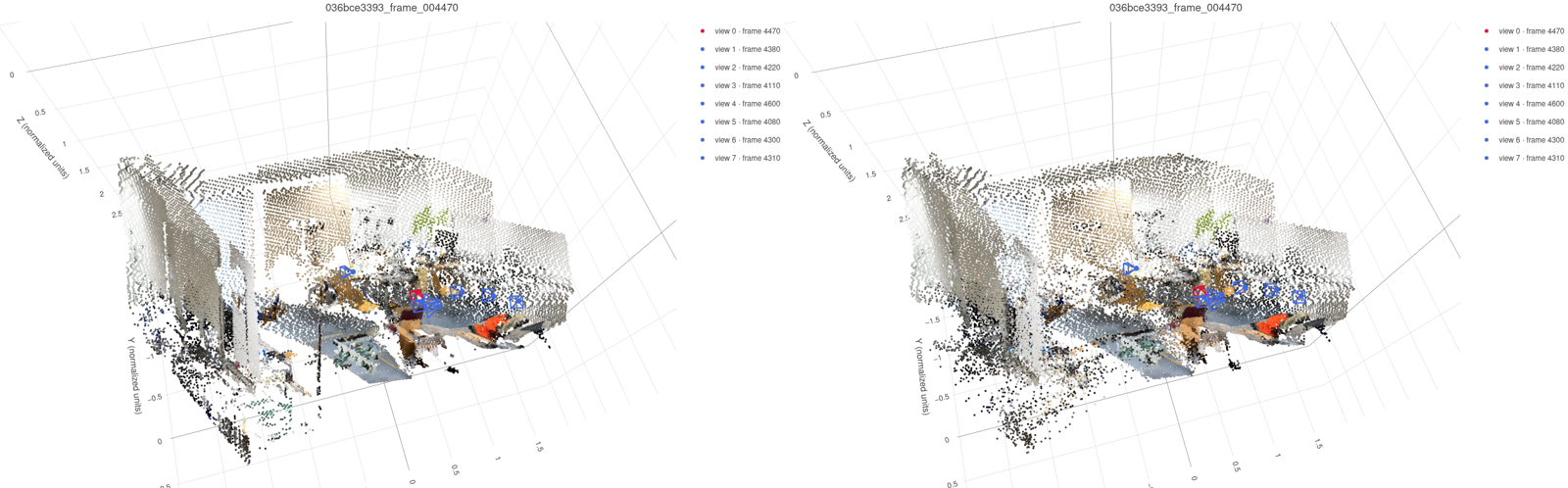
Settings: frozen DINOv2 ViT-B/14, 8 frame/global pairs, width 384, 6 heads, 8 views, sampling range 32, batch 16, 1000 epochs, lr 6e-4, wd 0.01, warmup 10, loss weights camera 5 / depth 1

| split | AbsRel ↓ | δ1 ↑ | Rot AUC 5/15/30 ↑ | Trans AUC 5/15/30 ↑ | Pose AUC 5/15/30 ↑ |
|---|---|---|---|---|---|
| val | 0.159 | 0.793 | 0.174 / 0.505 / 0.694 | 0.012 / 0.087 / 0.192 | 0.003 / 0.068 / 0.170 |
| test | 0.171 | 0.765 | 0.205 / 0.545 / 0.722 | 0.011 / 0.061 / 0.170 | 0.003 / 0.046 / 0.153 |
GT (left) vs. prediction (right):
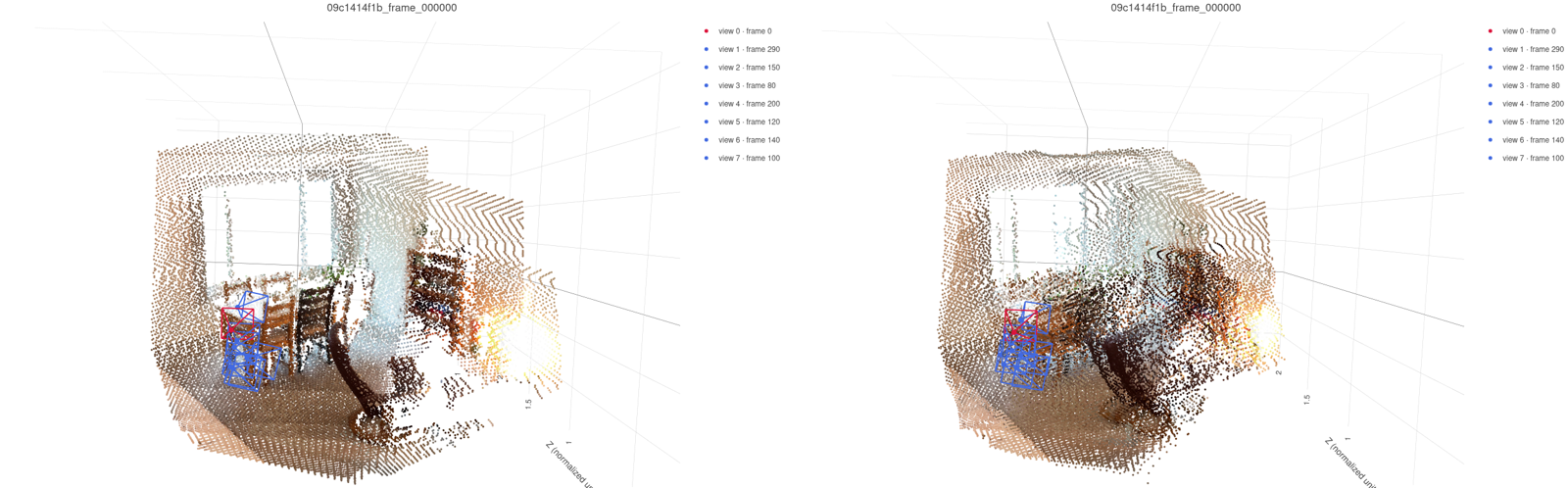
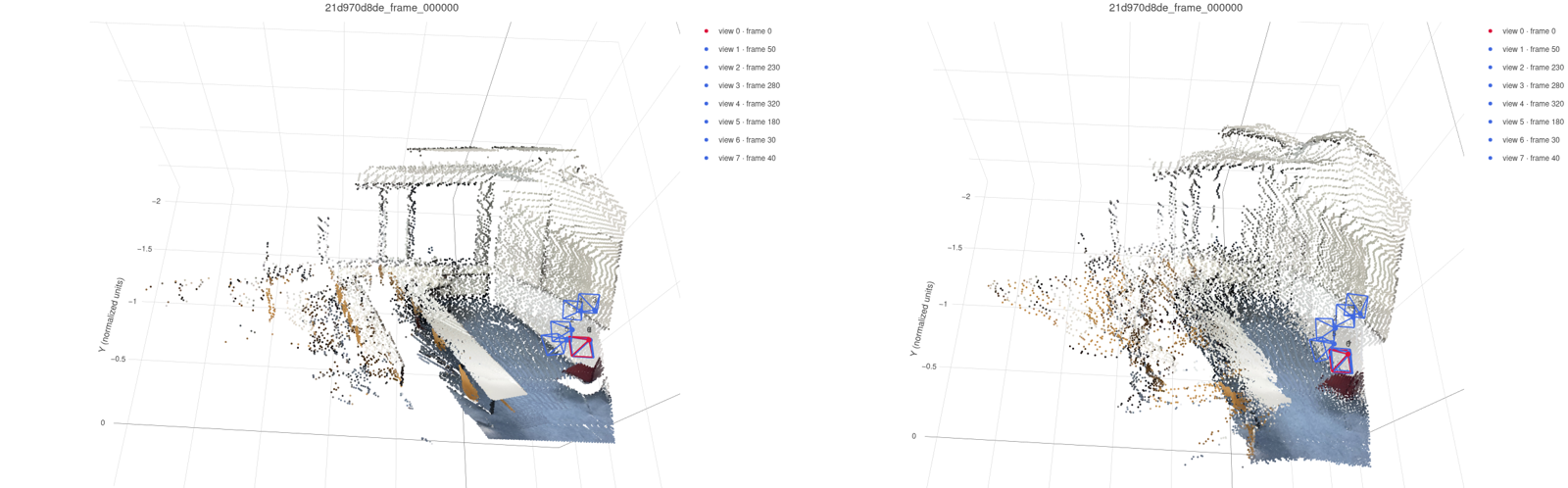
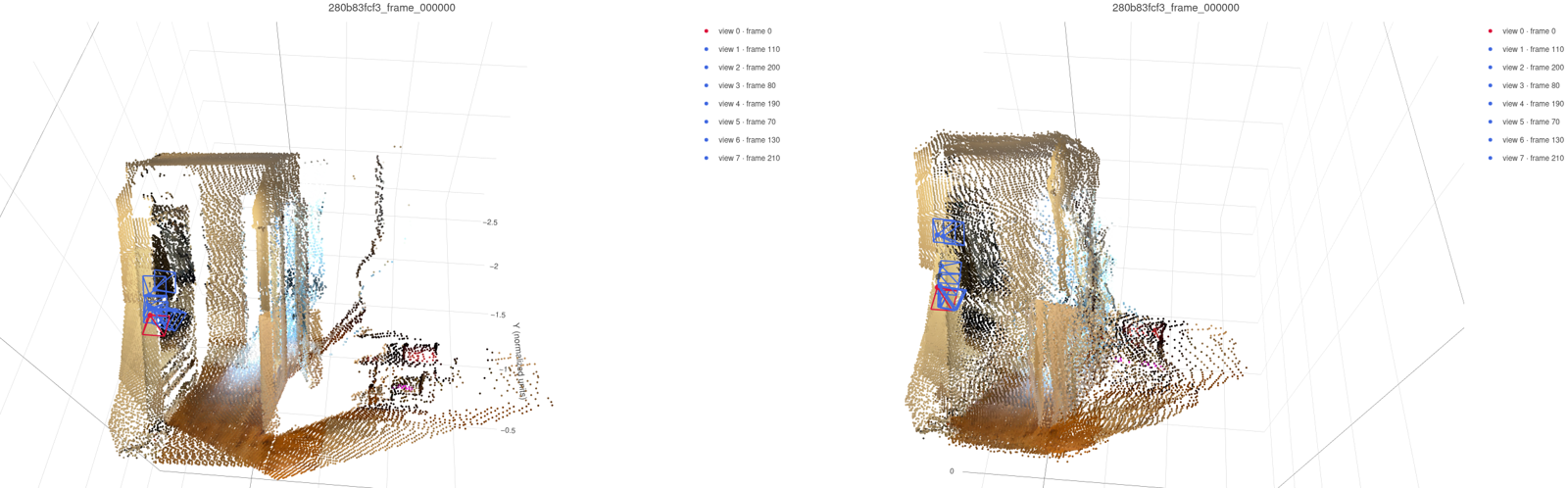
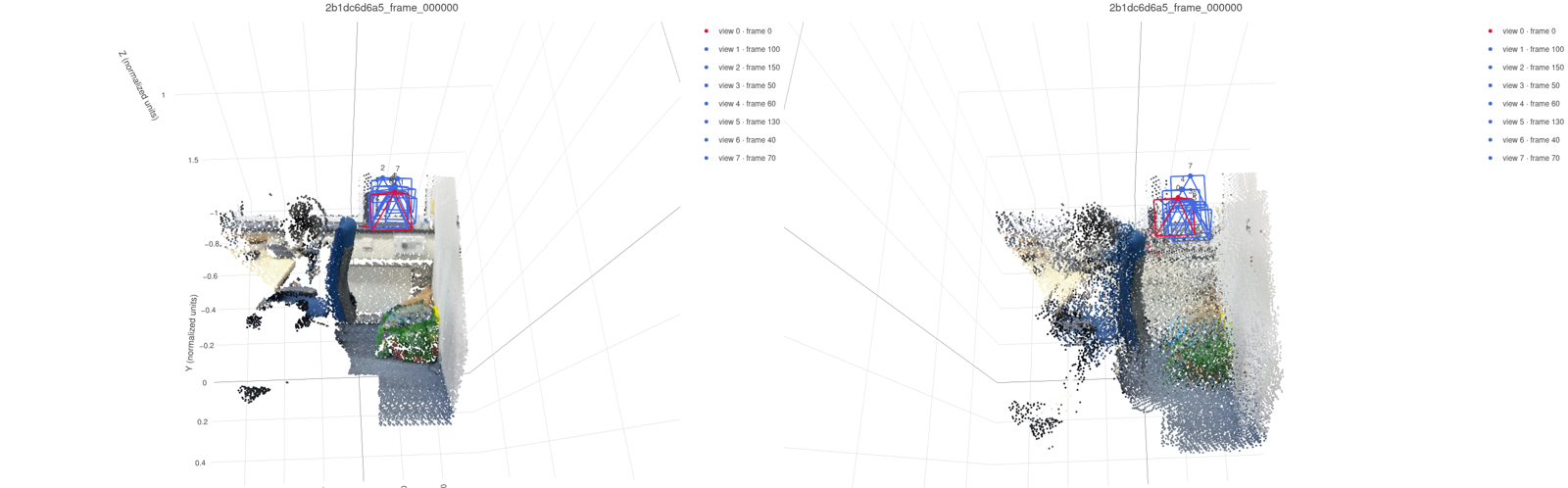
Errors on held-out scenes: Depth, rotation, and the room's layout generalizes well, but point clouds are smoother, and reconstructions looks bad on thin structures. Since the input cameras are close to each other, so small position errors give large angle errors and poor translation/pose AUC. But camera loss was still dropping at 1000 epochs, so longer training might help improve the performance.