
There should be four faces and four vertcies in this mesh

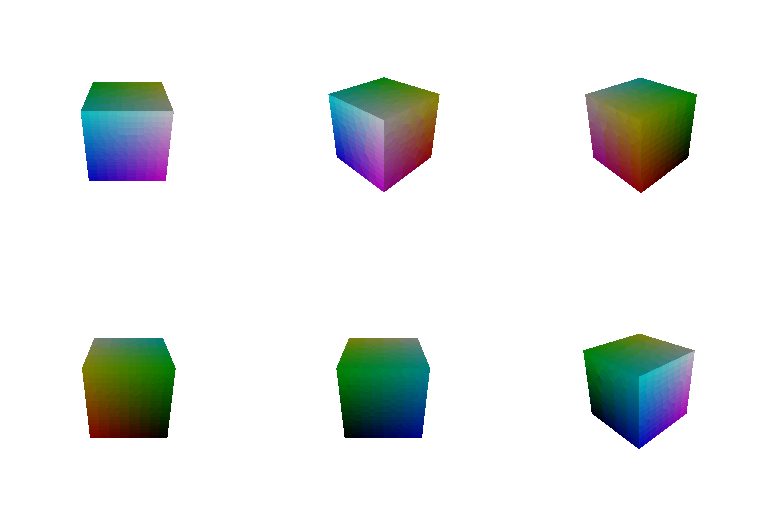
There should be 8 vertices but 12 faces in this mesh since each square face takes two faces
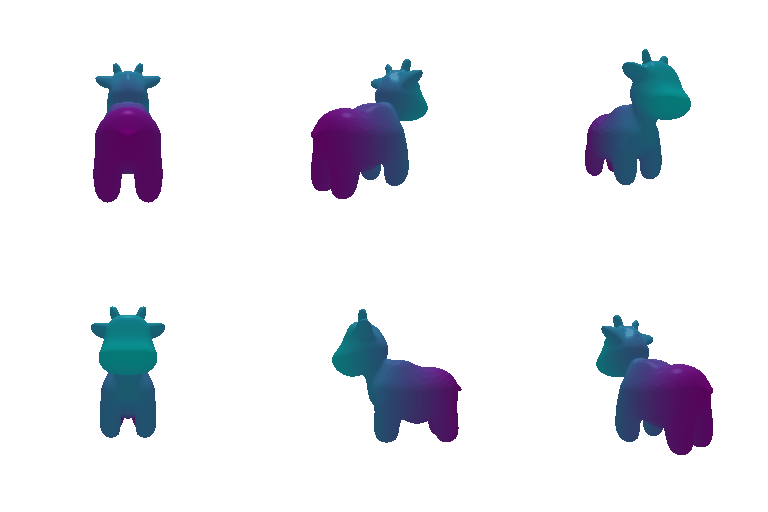
I went into an RGB picker online and scrolled through the wheels to find a pretty purple and teal color and got the RGB values from them. I just used those colors because they were pretty.

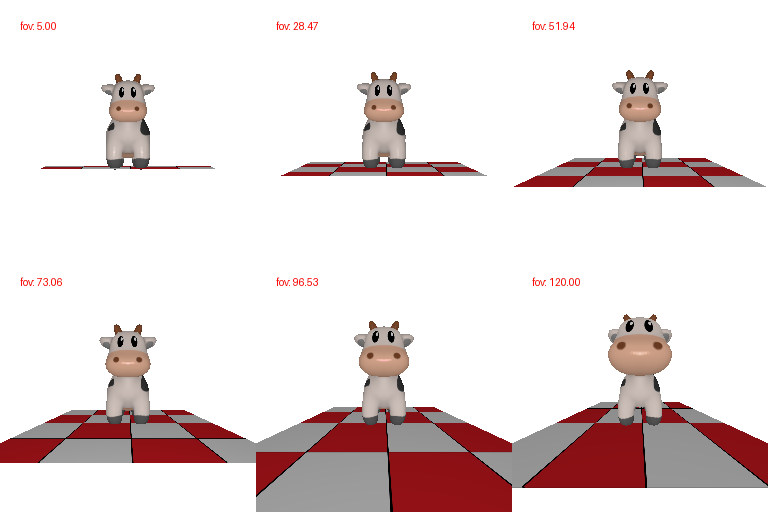
T_relative should not be doing anything, but R_relative should be swapping the y and x axes so that the cow is rotated on the xy plane counterclockwise. The direction of rotation is determined by the negative direction of the axes, and where to put the -1 in the rotation matrix that defines this swap

T_relative should be moving the camera backwards away from the object on the z axis, but the R_relative should not be doing anything

R_relative should not be doing anything but the T_relative should be moving toward the object on the z-axis, moving the camera slightly right on the x axis, and slightly up on the y-axis to get that angle.

R_relative should be swapping the z and x axes so the cow is being rotated clockwise around the y axis and the T_relative should be correcting the distance along the z axis so we are sitting at 0 on the z axis and putting the distance d instead on the x axis so we are sitting at distance d units away from the cow on the x axis.
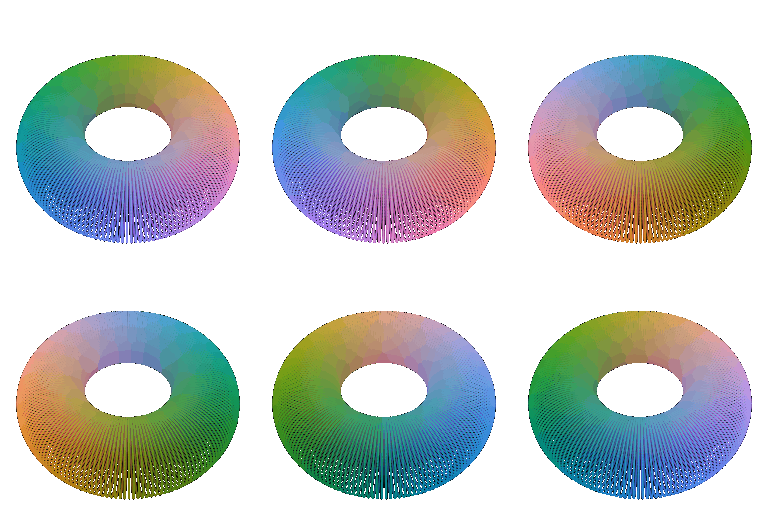
Torus point cloud
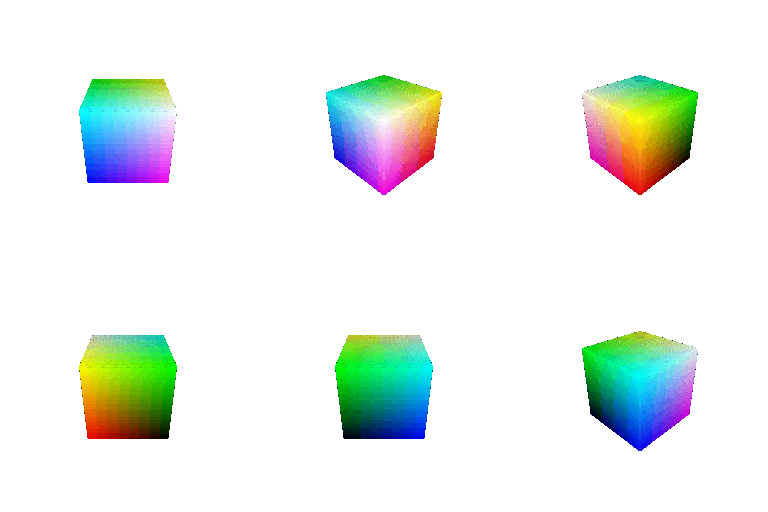
New object: cube point cloud
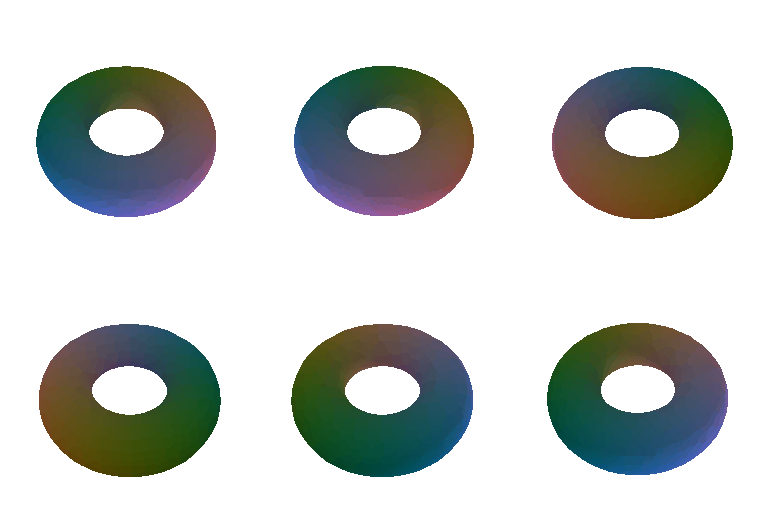
Torus mesh
New object: cube mesh
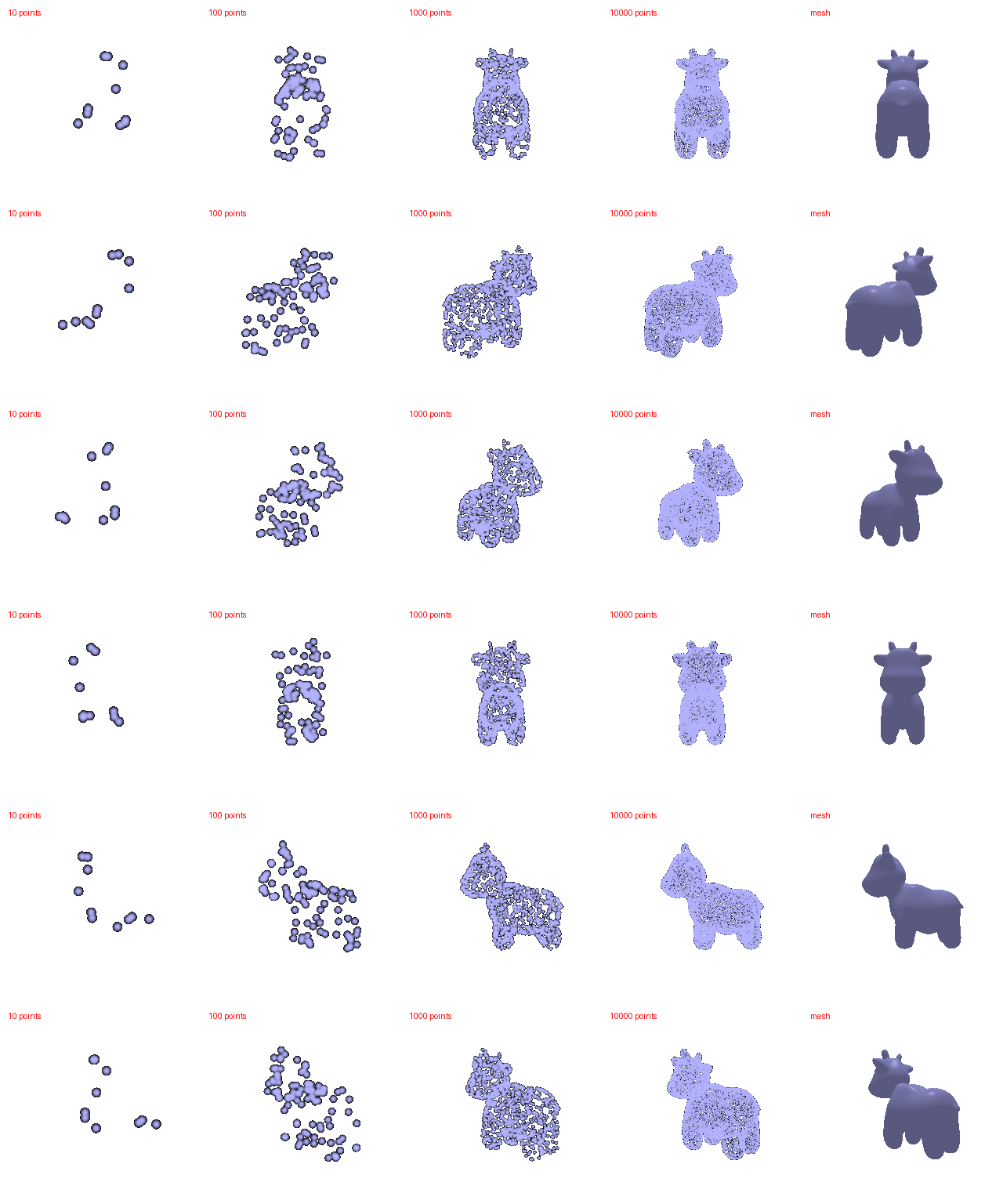
Meshes are often lighter and easier to store than point clouds because faces can replace clusters of points on flat surfaces. Because they can model edges and faces, they can be used in video games and to model physics (because they can act as barriers). Rendering them can be fast as well with GPU parallelism, and it is easier to add textures. But creating meshes themselves can be very expensive because it requires a lot of processing, and they are not easily obtainable from sensor data, need heavy algorithms to generate meshes from data, and they cannot model complicated geometries well, like hair or tree branches and leaves. Points are easier to visualize and gather from sensor data and can handle these more complex shapes better but they cannot be rendered with things like texture or lighting, and they are harder to interpret in visualizations as zooming in too much can make the visualization unreadable. In general, mesh clouds are not great for applications that need fast real-time latency from sensor input to final result.

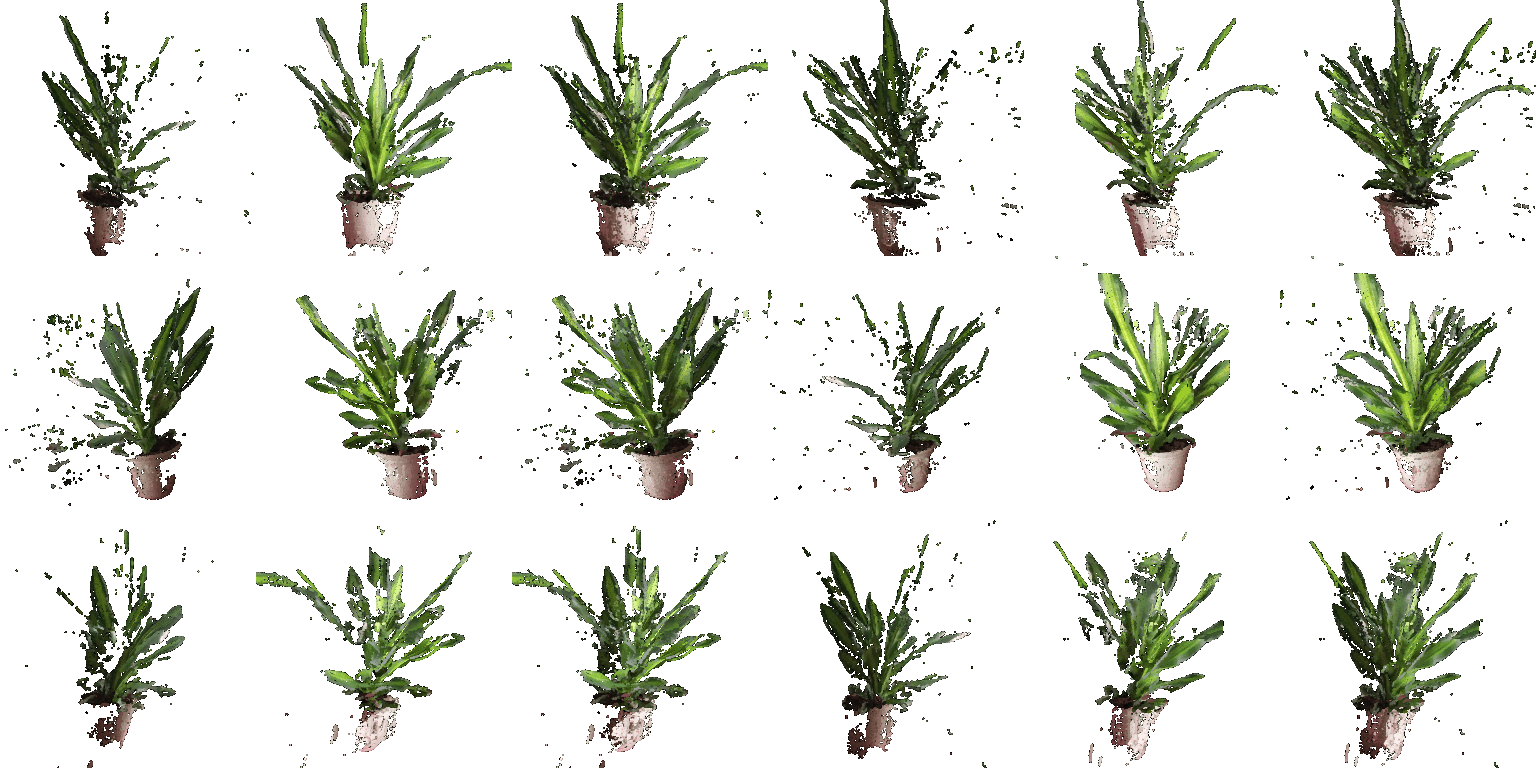
I am pretty jet lagged from ECCV so I took an image of my advisor and found where her face was located on the image, took a sphere implicit function centered around where her face was on the image, projected rays to obtain a partial depth map of one side of a sphere aligned with her face, and then projected her face onto the sphere as a point cloud and rendered it in 360 views.