1 Differentiable volume rendering
1.3 Ray sampling
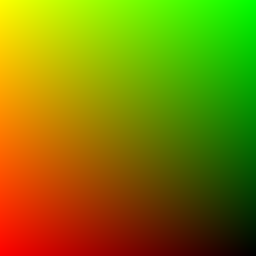
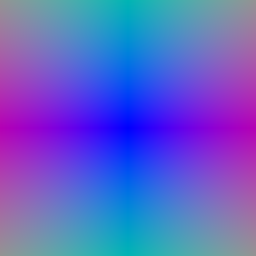
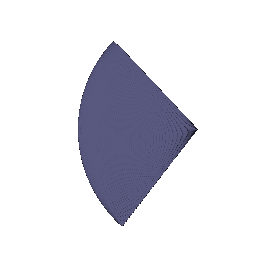
1.4 Point sampling
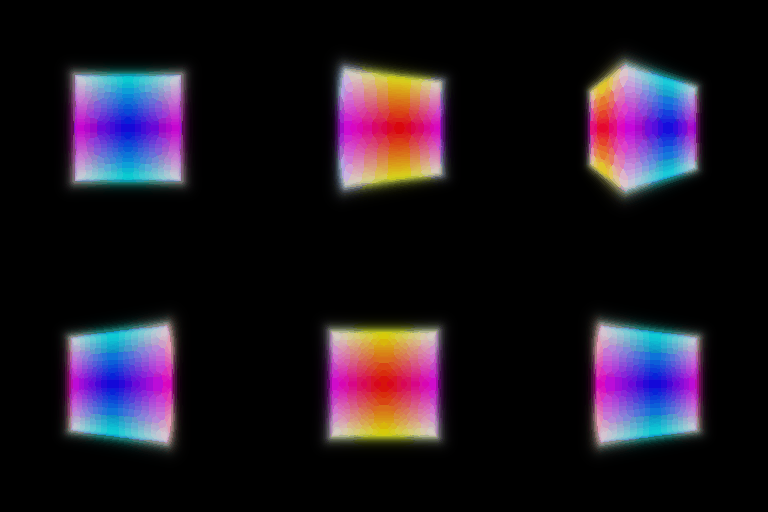
1.5 Volume rendering
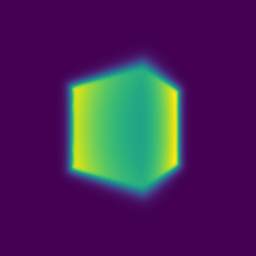
2 Optimizing a basic implicit volume
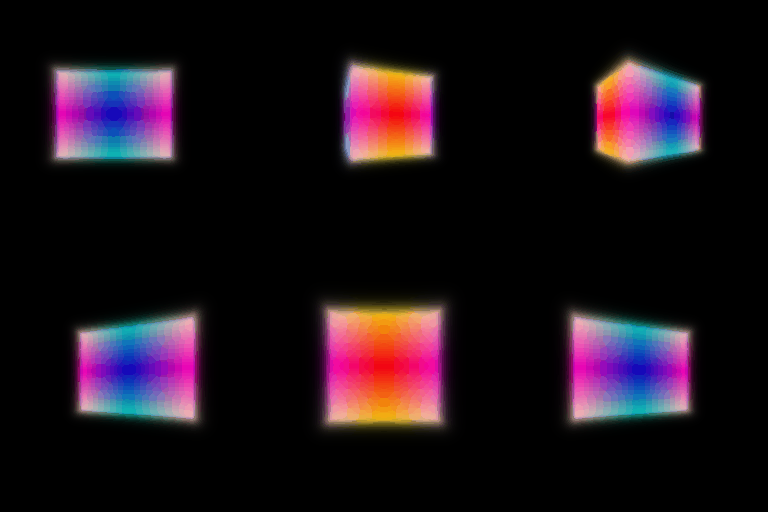
3 Neural Radiance Field
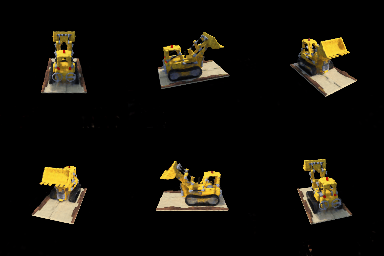
4.1 View dependence
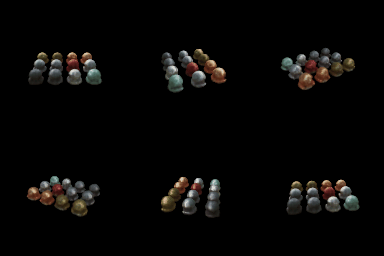

Trade-off. View dependence lets the model get the shiny highlights on the spheres right, which a plain NeRF can't do. But if color depends too much on direction, the network can cheat: instead of learning the right shape, it just changes the color for each training view. That looks fine on training images but breaks on new views. To avoid this I kept density position-only, added the direction late, and used only a couple of frequencies for it.
4.3 VolSDF
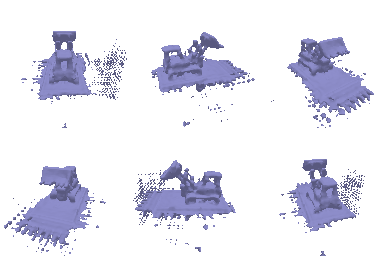
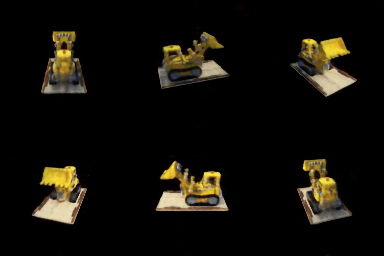
α and β
α is how dense the inside of the object is, so it controls how solid it looks. β controls how sharp the surface is. Small β means density jumps from 0 to α right at the surface. Large β means it fades in slowly, like a fuzzy shell.
- How does high β bias the SDF? What about low β? High β makes the surface blurry, so the learned shape ends up smooth and a bit puffy, and thin parts get lost. Low β gives a sharp surface that has to be in exactly the right place.
- Easier to train with high or low β? High β. Density is spread out, so lots of points along each ray get gradients even when the surface is in the wrong spot. With low β only points right at the surface get any signal.
- More accurate surface with high or low β? Low β. The density sits right on the surface, so what gets rendered matches where the SDF is actually zero.
Settings
I used α = 10, β = 0.05 and an eikonal weight of 0.02. β = 0.05 is small compared to the object, so the surface comes out sharp, but it's still wide enough to train without trouble. α = 10 makes the inside solid after just a few samples. The eikonal weight keeps the SDF valid without drowning out the color loss.
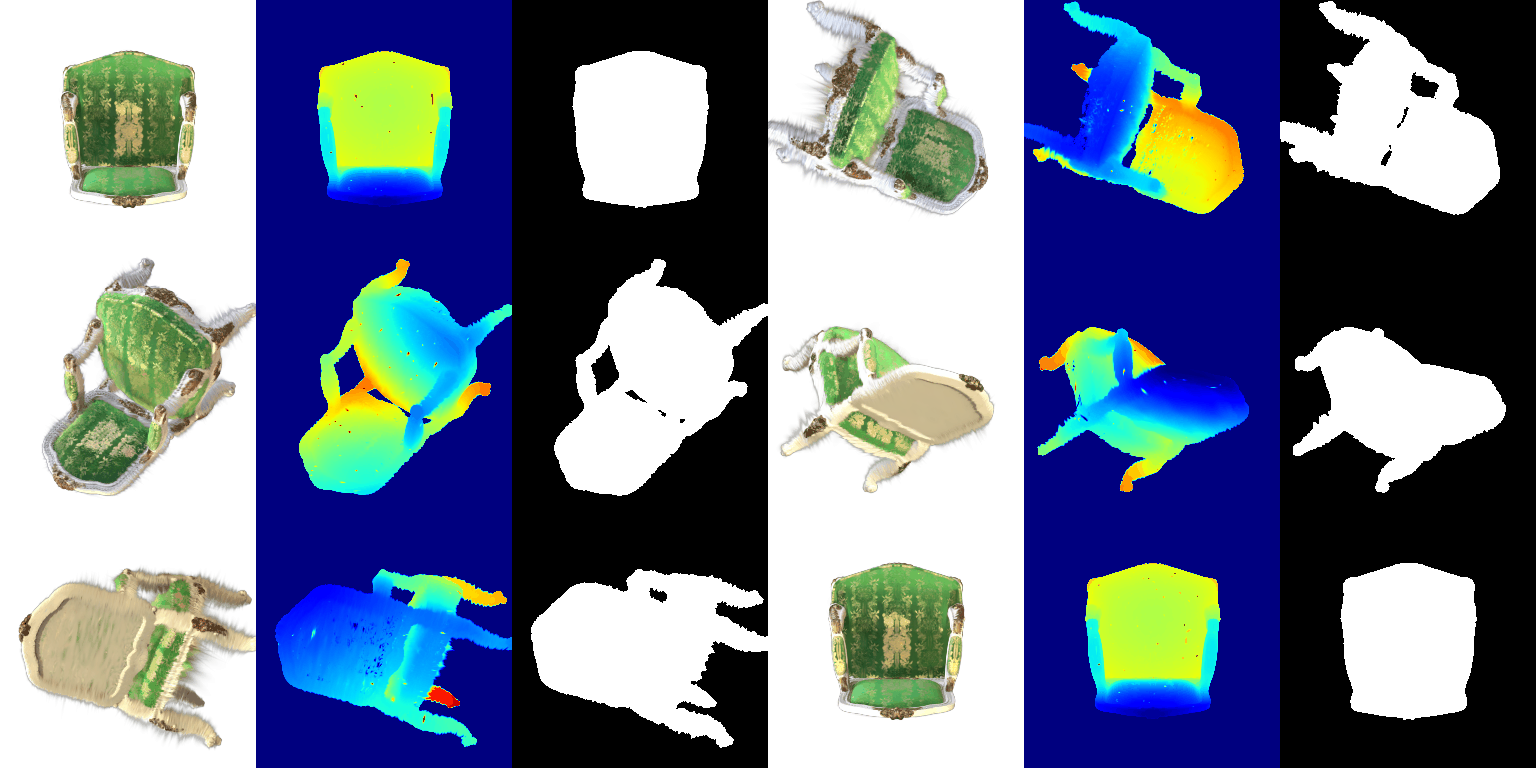
5 3D Gaussian rasterization
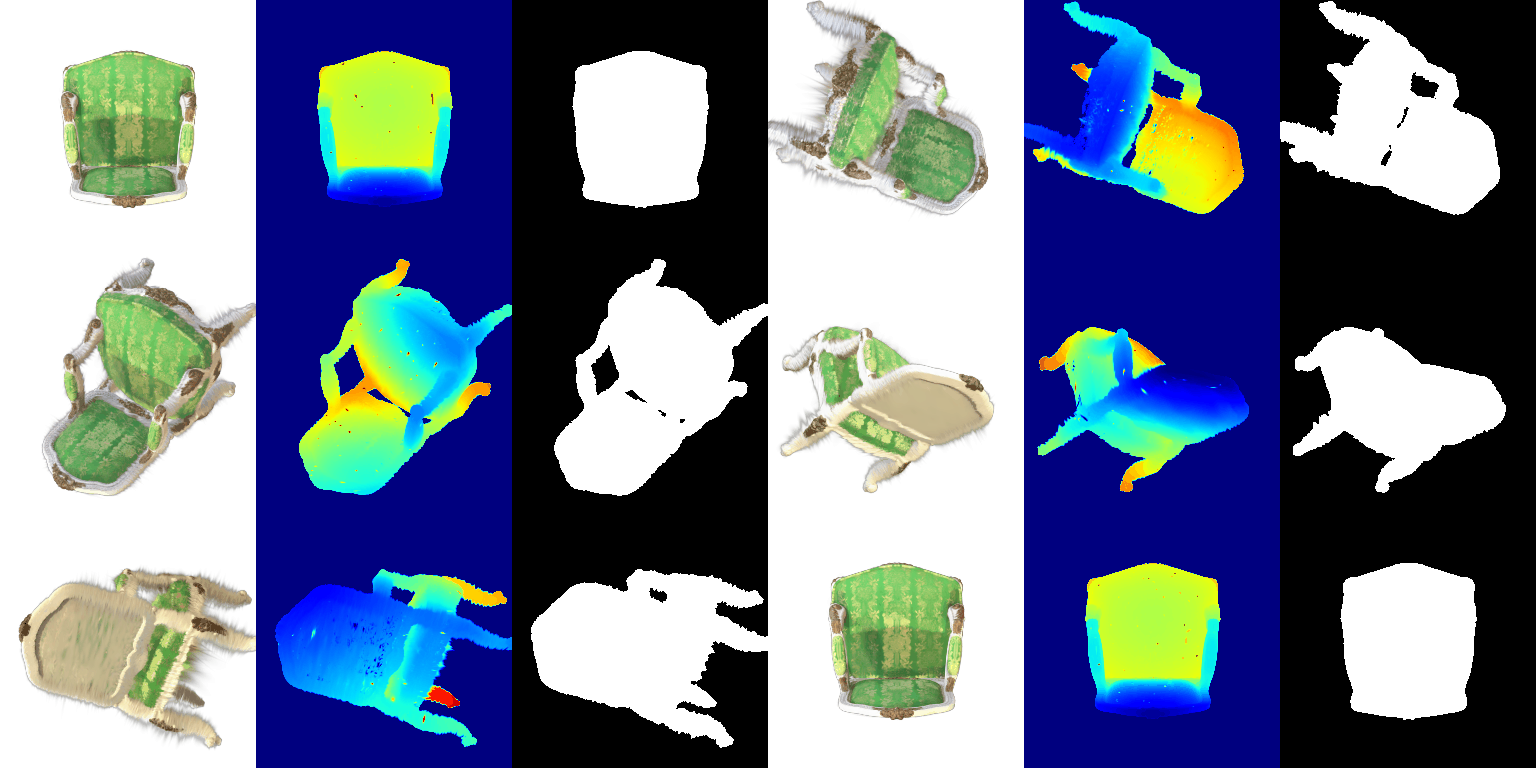
6 Training 3D Gaussians
| Learning rates | Iterations | PSNR | SSIM |
|---|---|---|---|
| opacities 0.05 · scales 0.005 · colours 0.0025 · means 0.0001 | 1000 | 29.25 | 0.938 |

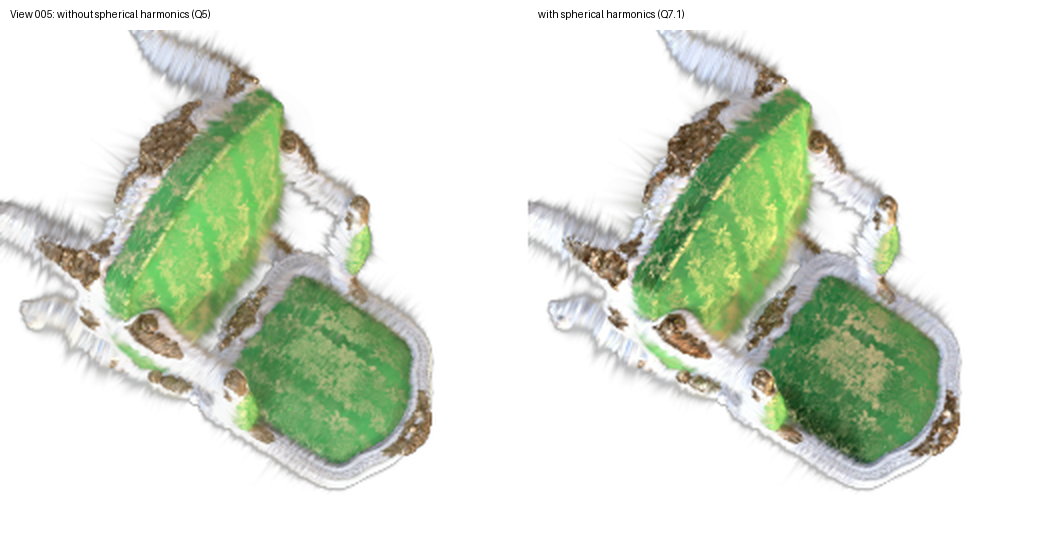
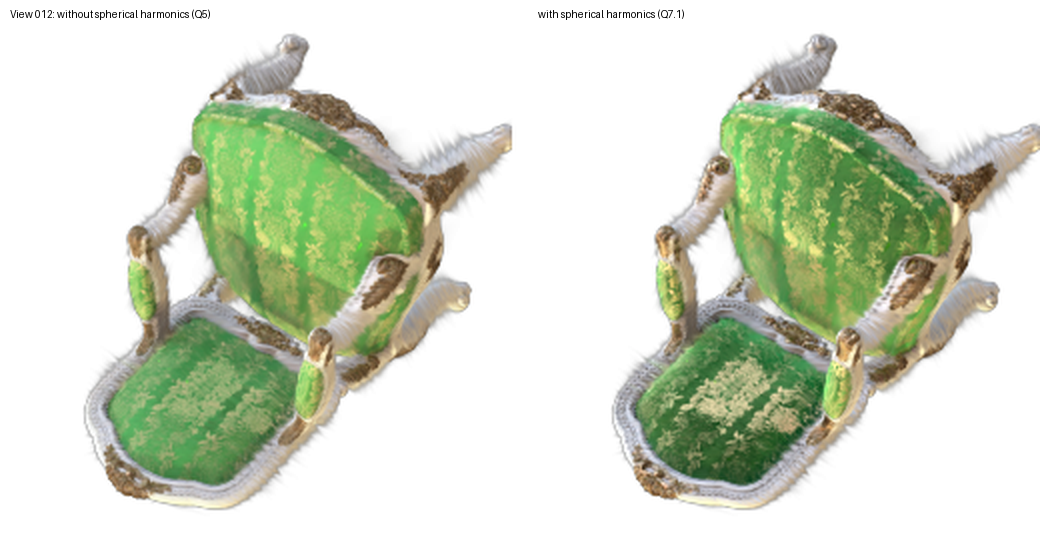
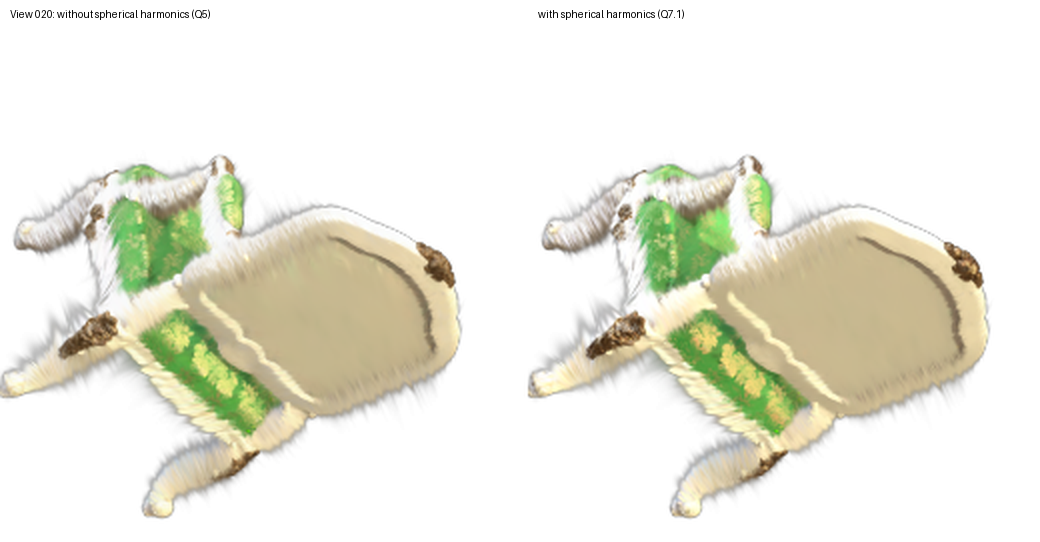
7.1 Rendering using spherical harmonics
Side-by-side (left: without SH, right: with SH)
7.2 Training on a harder scene
Materials scene with random initialization.
| Run | Iterations | Loss | Means LR | PSNR | SSIM |
|---|---|---|---|---|---|
| Baseline (6.2 setup) | 1000 | L1 | 0.0001 | 18.10 | 0.658 |
| Improved | 3000 | 0.8·L1 + 0.2·(1 − SSIM) | 0.01 → 0.0001 | 20.92 | 0.779 |
The other learning rates are the same as Q6 in every run (opacities 0.05, scales 0.005, colours 0.0025).
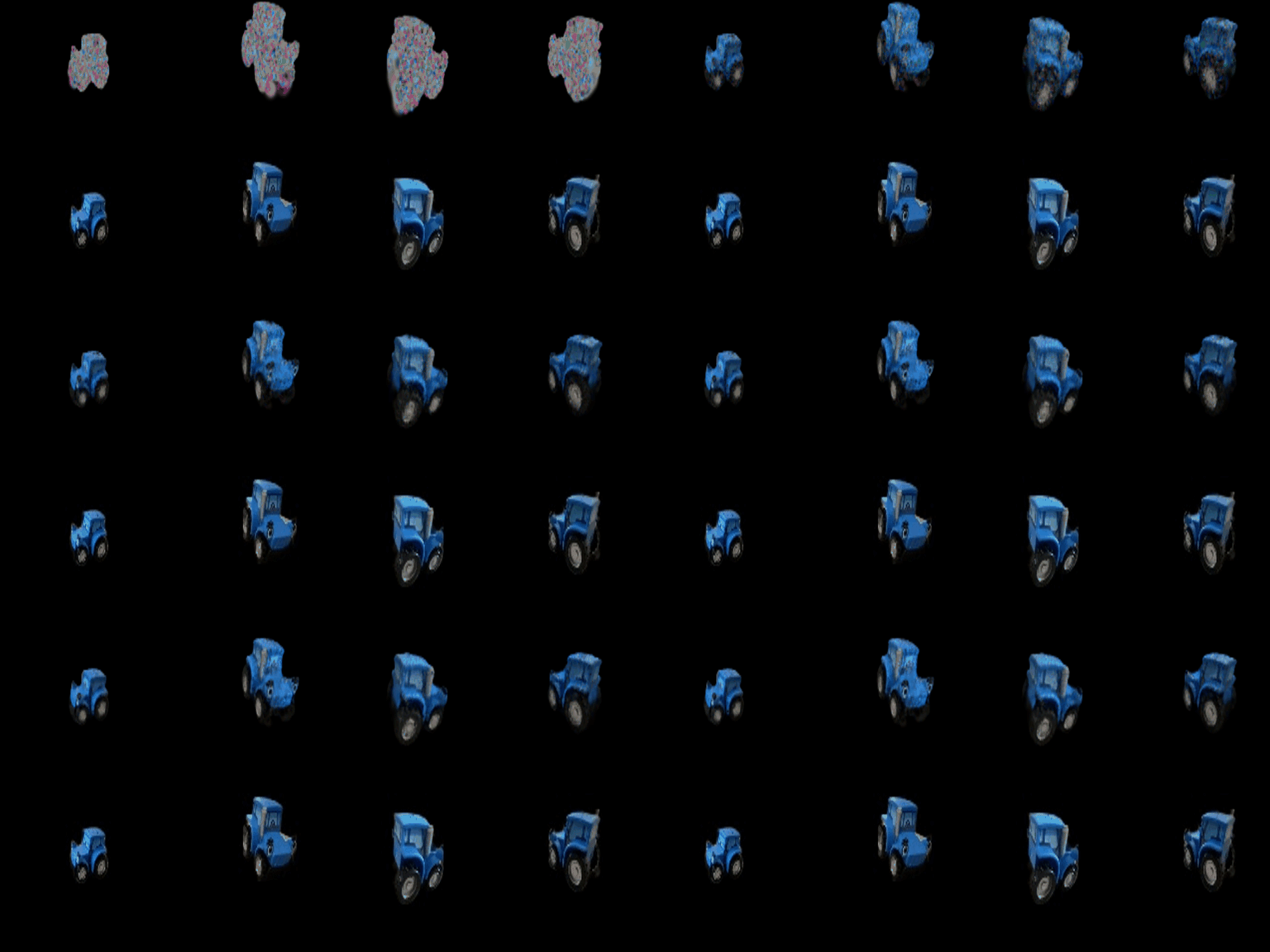
Training progress
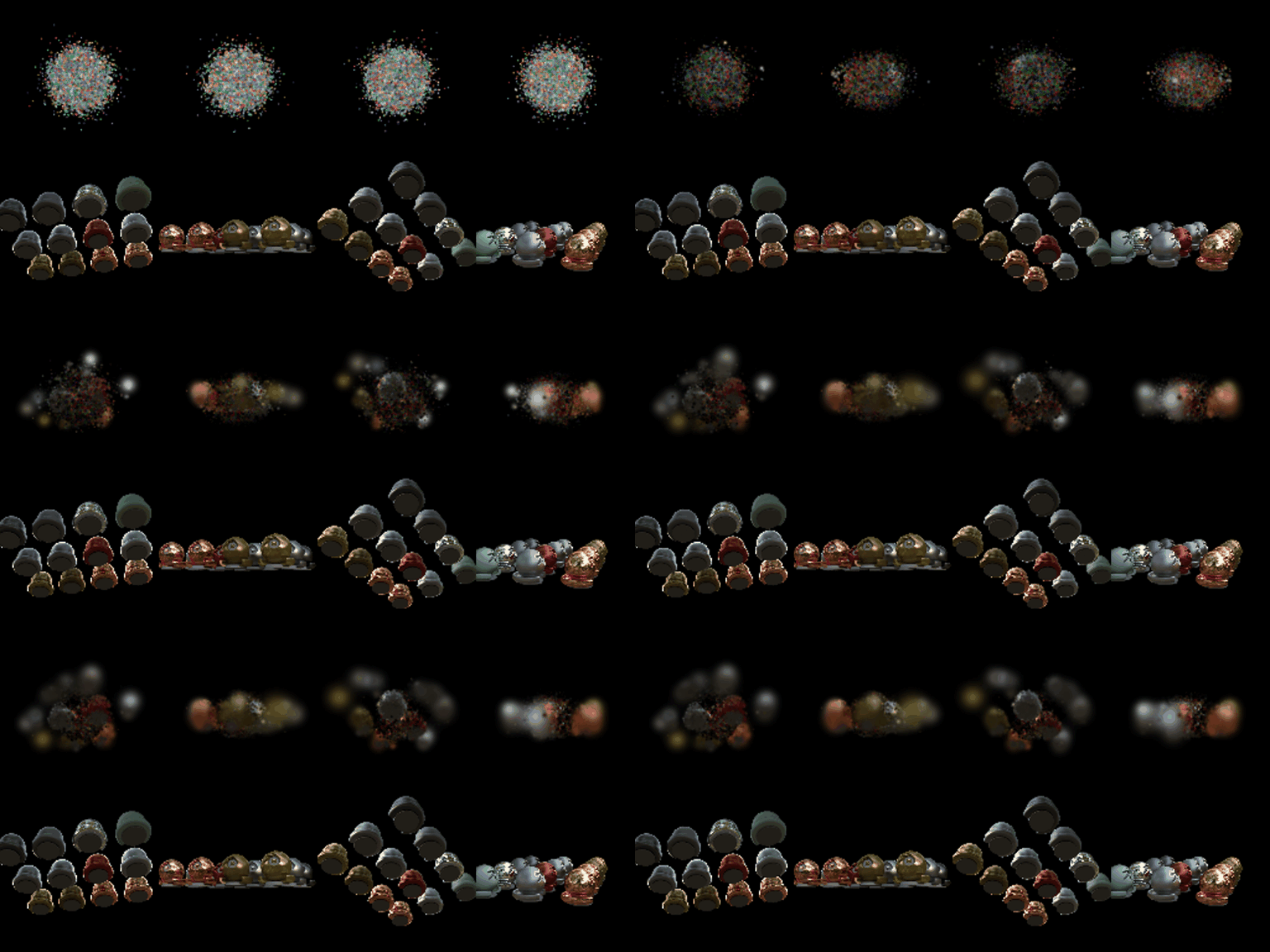
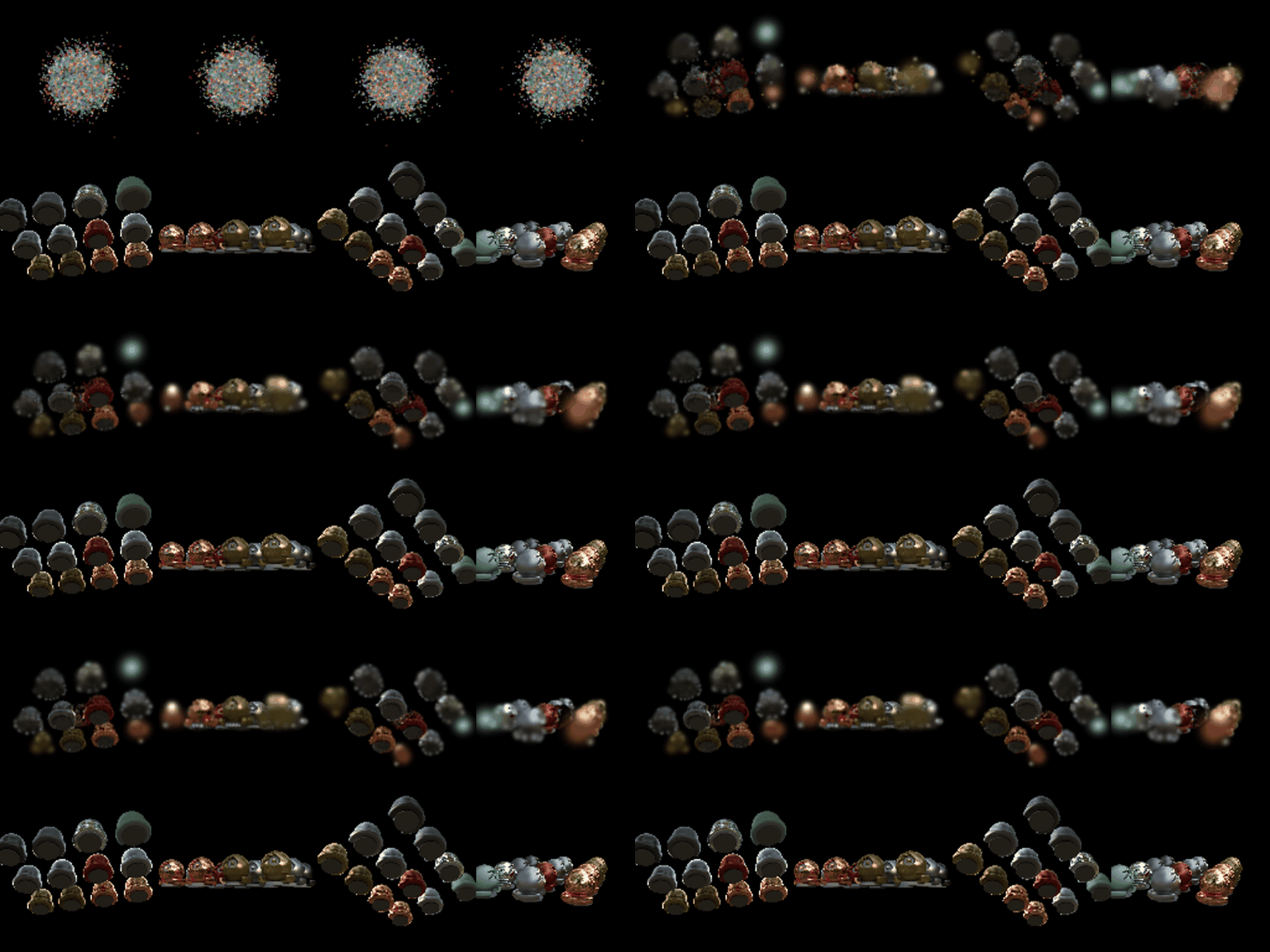
Final renders


What I changed
- Added an SSIM term to the loss (0.8·L1 + 0.2·(1 − SSIM)), like the original paper. It helps with structure and edges, not just average color.
- Higher learning rate for the means, decayed over training (0.01 down to 0.0001). The points start at random inside one sphere, so they need to move a lot early on, then settle down.
- Trained longer (3000 instead of 1000 iterations), since random init takes longer to converge.