

4 vertices, 4 faces

8 vertices, 12 faces
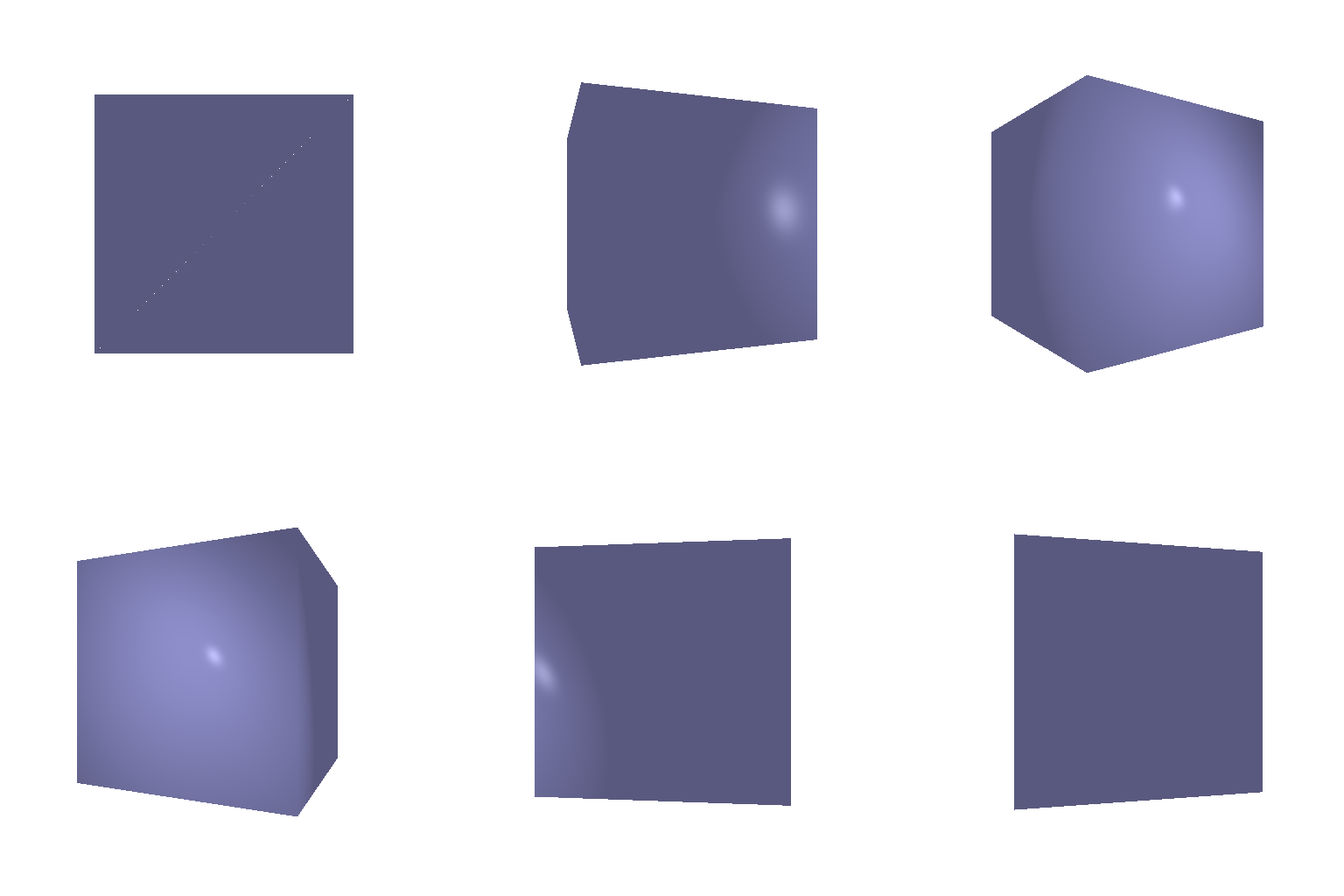
color1 = [0.0, 0.0, 1.0], color2 = [1.0, 0.0, 0.0]

R_relative is the rotation of the camera about its own axes. T_relative is the translation of the world origin in this rotated frame.
R_relative = [[0, 1, 0], [-1, 0, 0], [0, 0, 1]], T_relative = [0, 0, 0]

R_relative = [[0, 0, 1], [0, 1, 0], [-1, 0, 0]], T_relative = [-3, 0, 3]

R_relative = [[1, 0, 0], [0, 1, 0], [0, 0, 1]], T_relative = [0, 0, 2]

R_relative = [[1, 0, 0], [0, 1, 0], [0, 0, 1]], T_relative = [0.5, -0.5, 0]

(Flipped because the original clouds were upside-down)
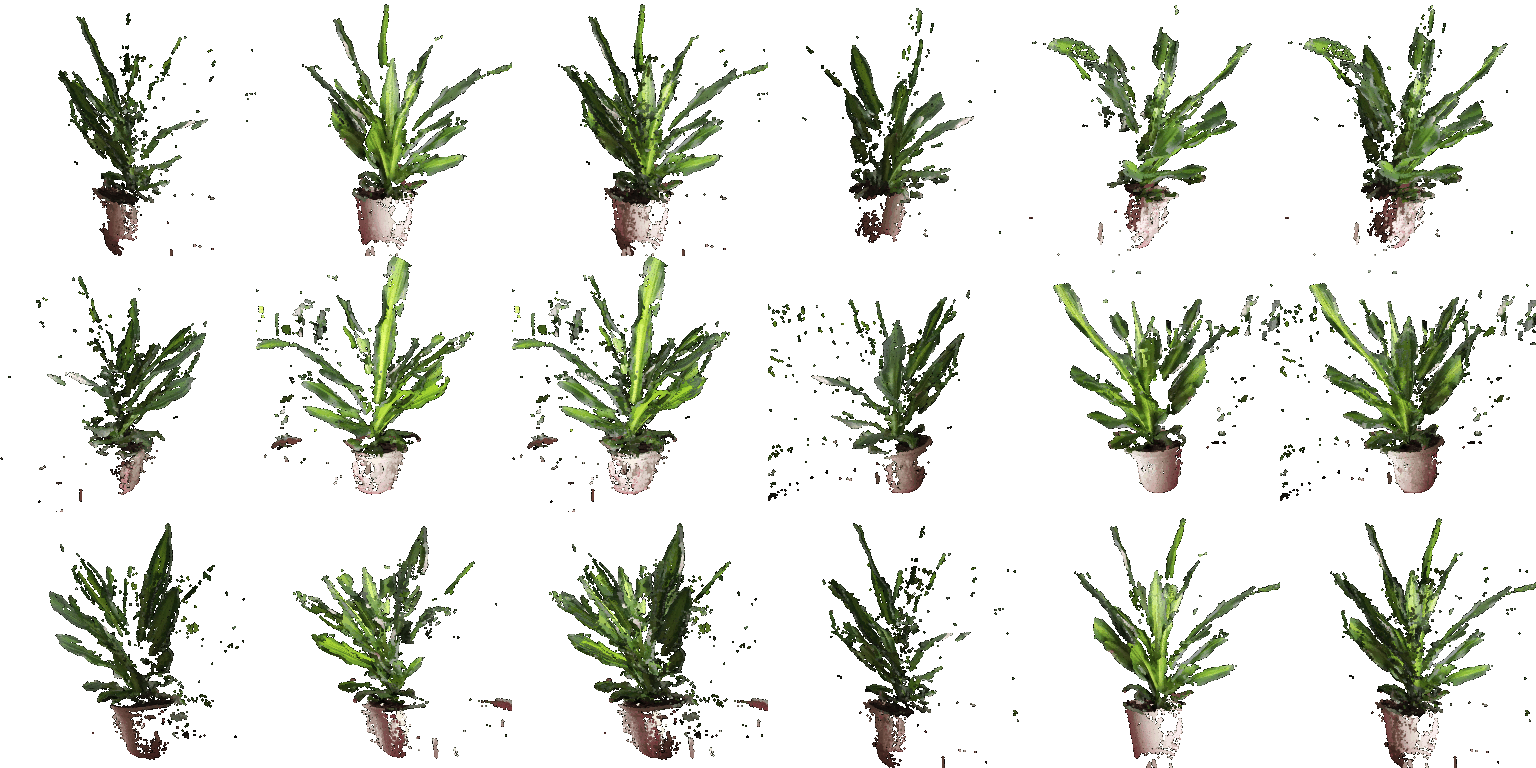
Torus
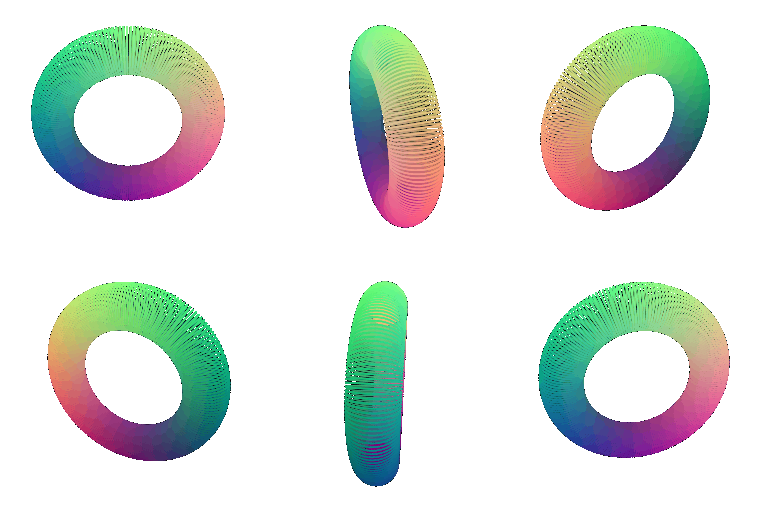
Graph of f(x, z) = sin(x^2) cos(z^2)
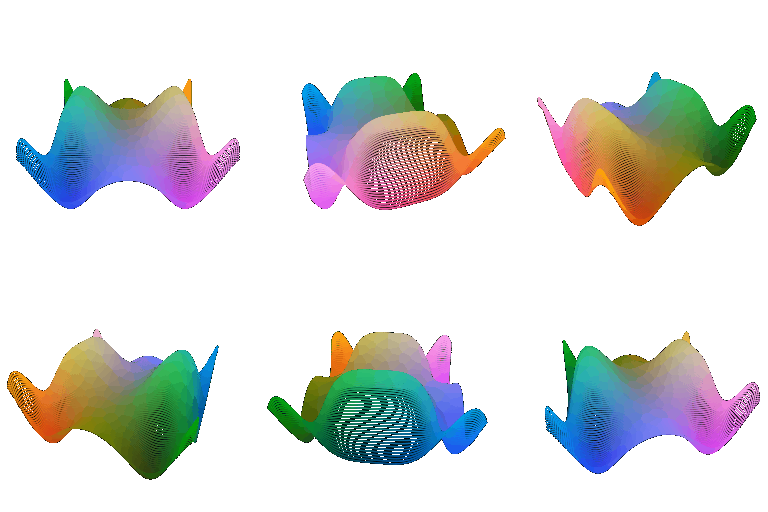
Torus

Pill

The pointcloud was easier to produce and draw (at least, for the torus). Since the pointcloud was produced via a parametric function, sampling the cloud simply involves one vectorized sampling step. There may be cases where sampling the cloud is far more expensive, for example when we are producing a cloud from a complex mesh (which may also involve no parallelizable steps - farthest point sampling). However, pointclouds are not solid, opaque objects. Meshes can represent such objects, and are capable of producing much higher quality renders (depending on the level of detail). Real-time graphics pipelines and hardware are also optimized for the rendering of meshes, as compared to point clouds.