Assignment 3: Neural Volume Rendering and 3D Gaussian Splatting
A. Neural Volume Rendering
1Differentiable Volume Rendering
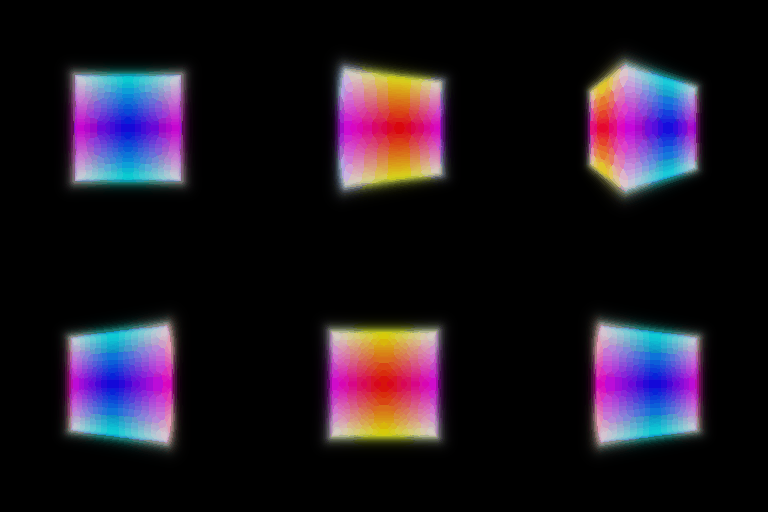
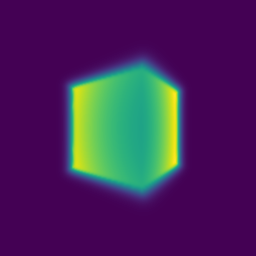
2Optimizing a basic implicit volume






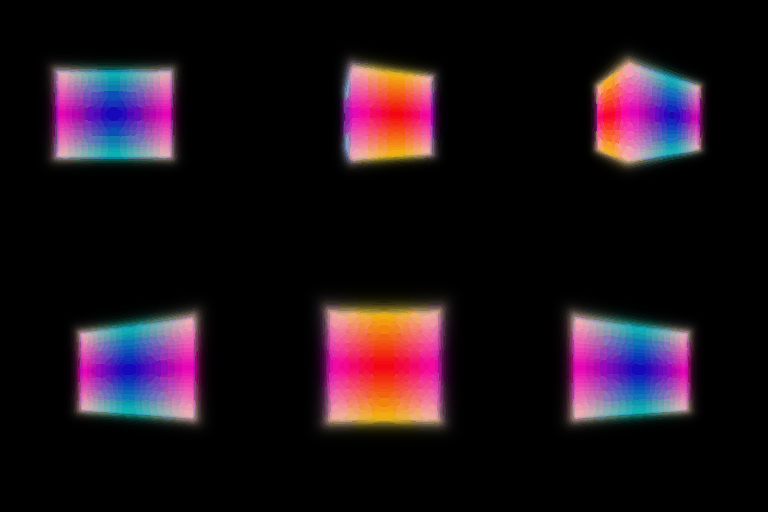
3Optimizing a Neural Radiance Field (NeRF)
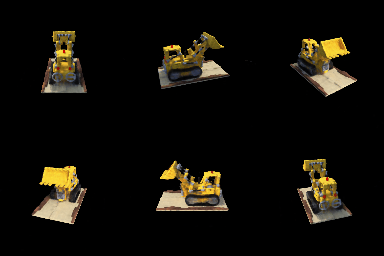
4.3NeRF Extras: VolSDF
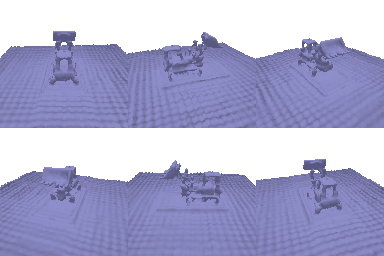
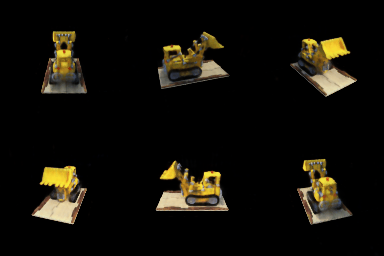
alpha = 20.0, beta = 0.05, and eikonal_weight=0.05 gives me the result below. beta is chosen as 0.05 because it s about as sharp as possible while the density transition still covers several samples per ray; alpha is chosen as 1/beta because it makes rays opaque within about 0.1 units of the surface, so surfaces look solid and thin parts aren't see-through; eikonal_weight of 0.05 keeps the network a reasonable distance function as it keeps the surface smooth and it's weak enough to preserve the details.
- High
betamakes density spread over a wide region around the surface of the model, which will result the model to match the image with blurry, thick shells. The learned surface will be overly smooth, which results in the loss of details. On the other hand, lowbetamakes density concentrated right at the zero-level set, which biases the SDF towards a thin, accurate surface. However, small SDF errors can also turn into holes or floating artifacts. - SDF will be easier to train with volume rendering and high
beta, because points away from the surface still have non-zero density so they can contribute useful gradients. This makes training easier as the optimization can be stablized even when the starting surface is far off. With lowbeta, only samples close to the surface matter, and that makes useful gradients sparse. - I am more likely to learn an accurate surface with low
beta, because with lowbeta, the density acts like a sharp step at the point that is on the surface.
B. 3D Gaussian Splatting
53D Gaussian Rasterization
6Training 3D Gaussian Representations
| Parameter | Learning rate |
|---|---|
| Opacities | 0.05 |
| Scales | 0.005 |
| Colors | 0.01 |
| Means | 1.6e-4 |
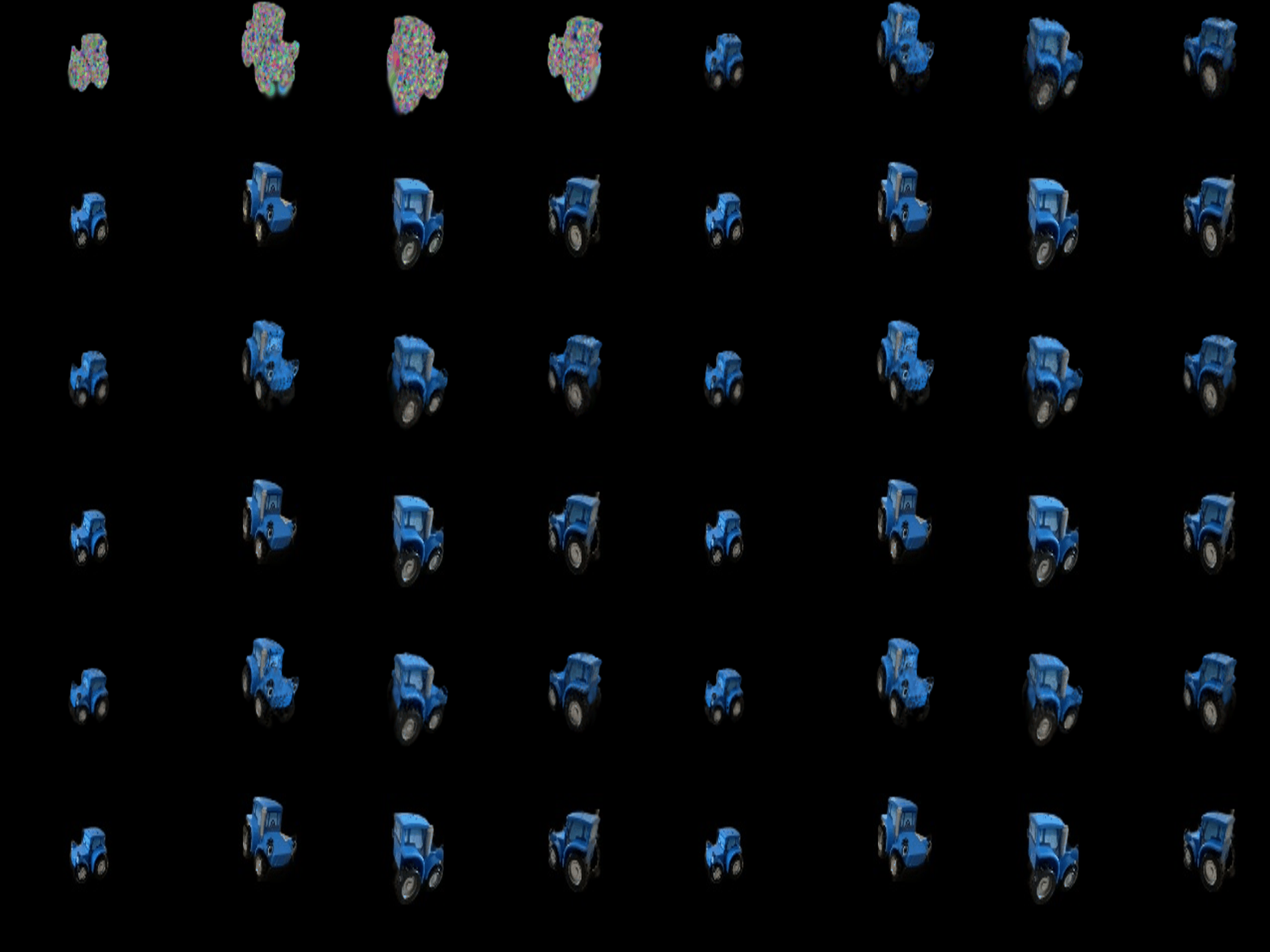
Number of iterations: 1000

7.1Extensions: Rendering Using Spherical Harmonics
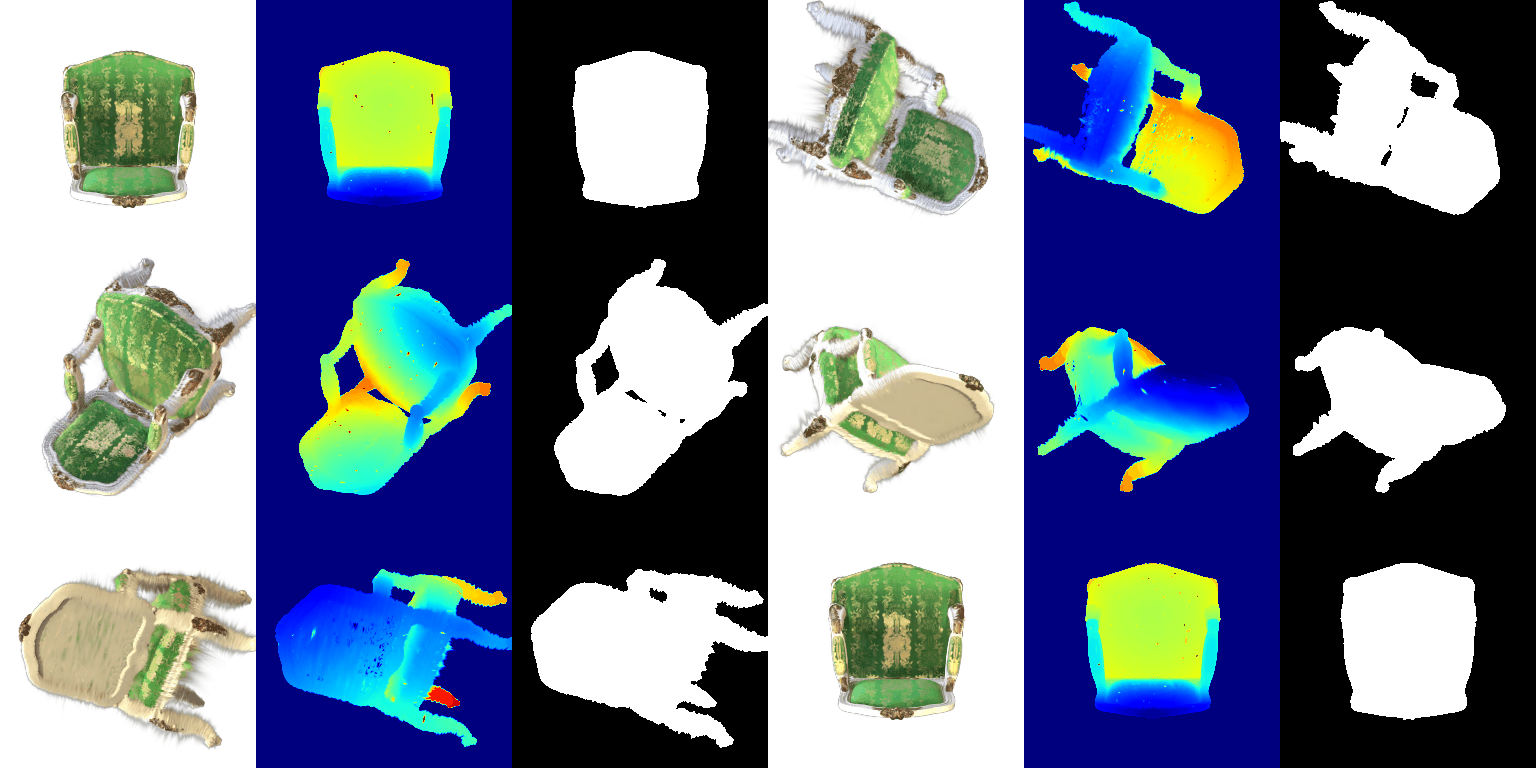
Image comparisons
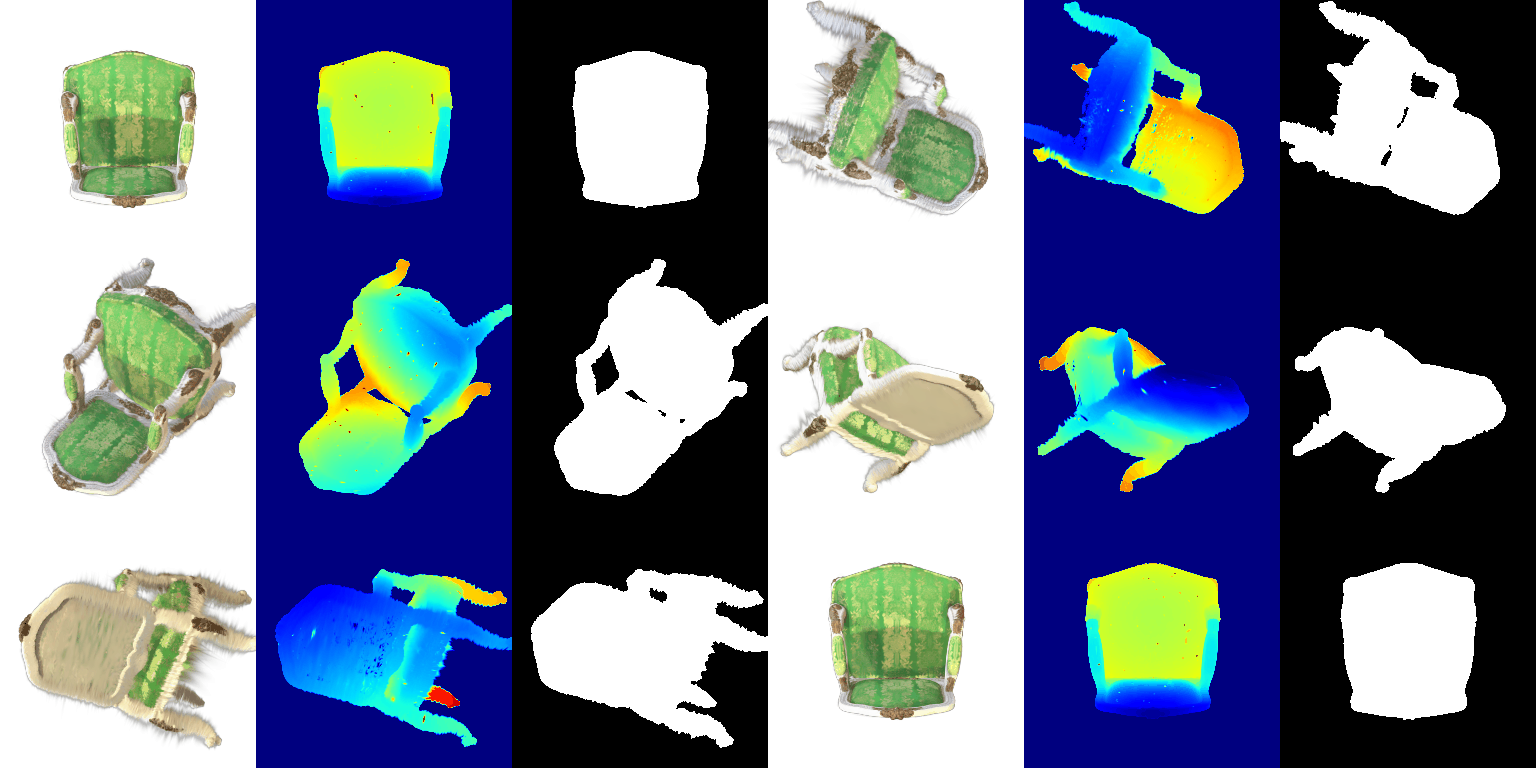
The depth maps and silhouettes are identical in every pair, because spherical harmonics change only the color of each Gaussian, not its position, shape or opacity. All differences are in the RGB image.
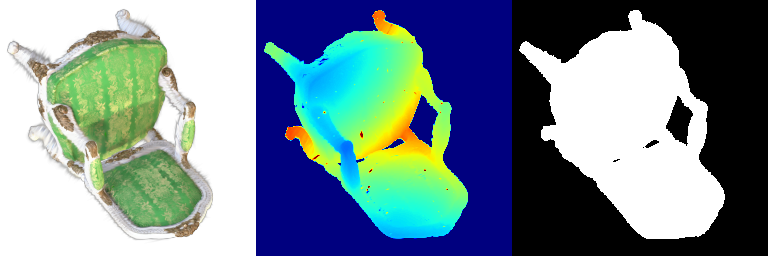

With SH, the fabric is a deeper, more saturated green and the gold floral pattern on the backrest and seat stands out clearly.
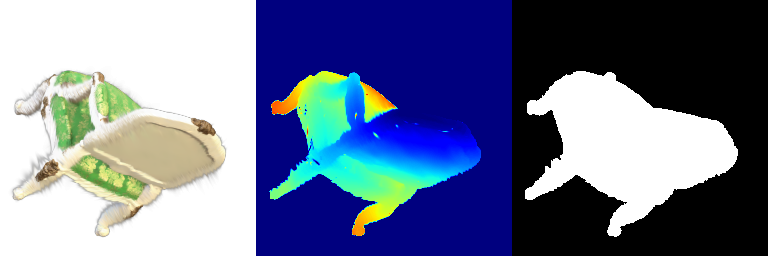

This view shows mostly the matte beige underside of the seat, which looks the same from every direction, so the two renders are very similar.
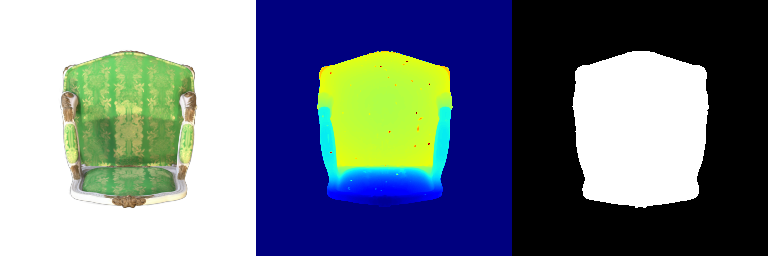

With SH, a gold ornament down the centre of the backrest is clearly visible and the gilded arm supports show bright metallic highlights. Without SH, the backrest looks nearly uniform, and the ornament is barely visible.
Why
Without SH, each Gaussian has one fixed color, so it looks the same from every angle. Real materials don't behave like that: shiny things like the gold thread and the gilded frame look brighter from some angles and darker from others. With only one color, those highlights get averaged away, so the chair looks flatter and more washed out. SH let each Gaussian's color change with the viewing direction, so the shine and contrast come back. Matte parts look the same from every angle, which is why they barely change.