Alan Chen
jianninc@andrew.cmu.edu

This mesh has 4 vertices and 4 faces.

This mesh has 8 vertices and 12 (triangular) faces.
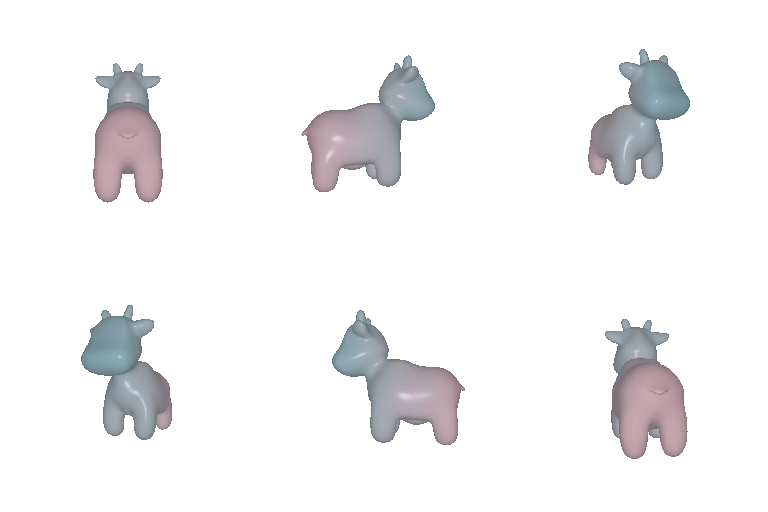
My choice of color 1 is light blue: [0.68, 0.85, 0.9], color 2 is pastel pink: [1.0, 0.82, 0.86].
R_relative is the rotation matrix on the camera frame, it decides the camera's orientation.
T_relative is the translation matrix on the camera frame, it decides where the camera is placed.

R_relative = [[0,1,0],[-1,0,0],[0,0,1]], T_relative = [0,0,0]

R_relative = [[1,0,0],[0,1,0],[0,0,1]], T_relative = [0,0,3]

R_relative = [[1,0,0],[0,1,0],[0,0,1]], T_relative = [0.5,-0.5,0]

R_relative = [[0,0,1],[0,1,0],[-1,0,0]], T_relative = [-3,0,3]


Left image: Point cloud corresponding to the first image
Middle image: Point cloud corresponding to the second image
Right image: Point cloud formed by the union of the 2 point clouds.
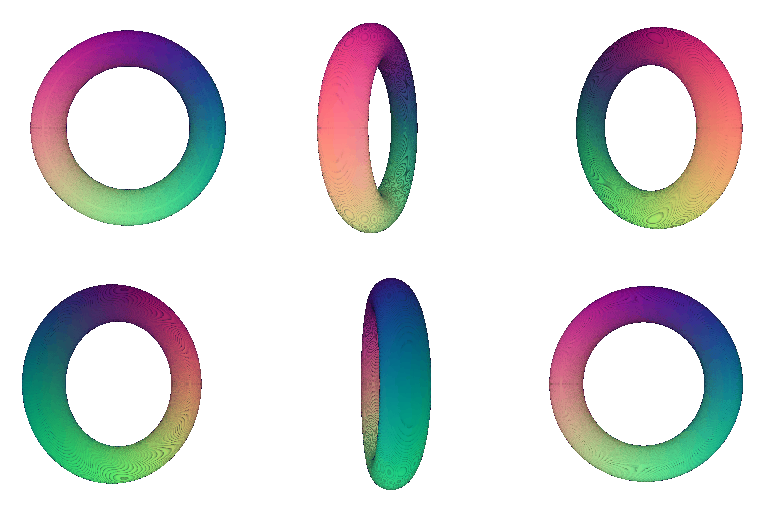
Torus
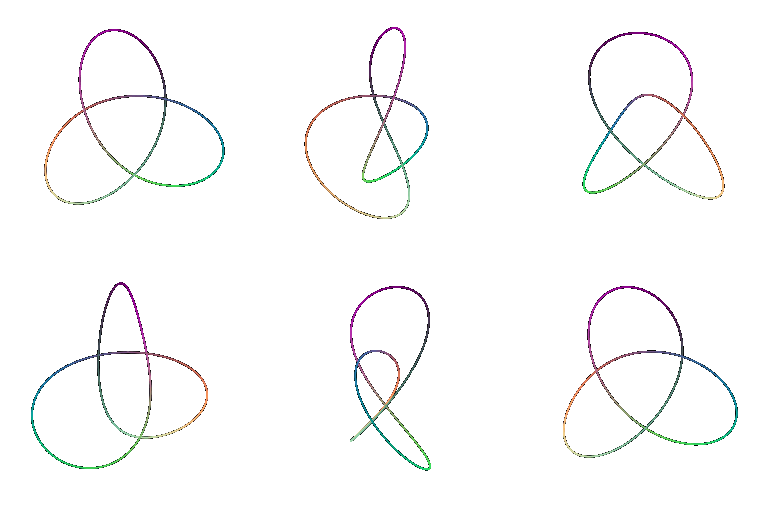
New Object of My Choice (Trefoil Knot)
Torus
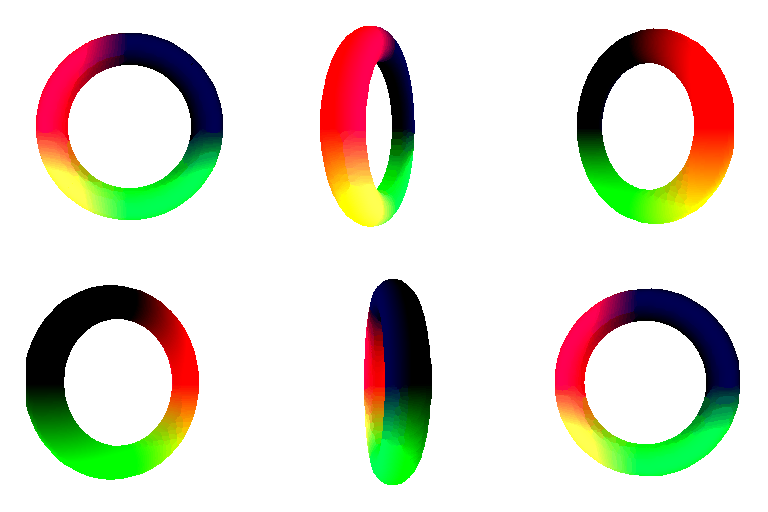
I have a GPU so all rendering runs fast on my machine. However, after a run through of rendering, rendering the torus with parametric functions (point cloud) takes 3.99 seconds, which is more than double the time taken for rendering the torus that is the same size but with implicit functions (mesh) (1.23 seconds). Besides that, the quality for the point cloud is significantly better (perhaps I used a high density of point clouds). Personally, I think parametric functions are more intuitive because it gives separate equations for x, y, z data. The point cloud torus also use nearly double the memory of the mesh torus (444 KB vs. 256 KB).
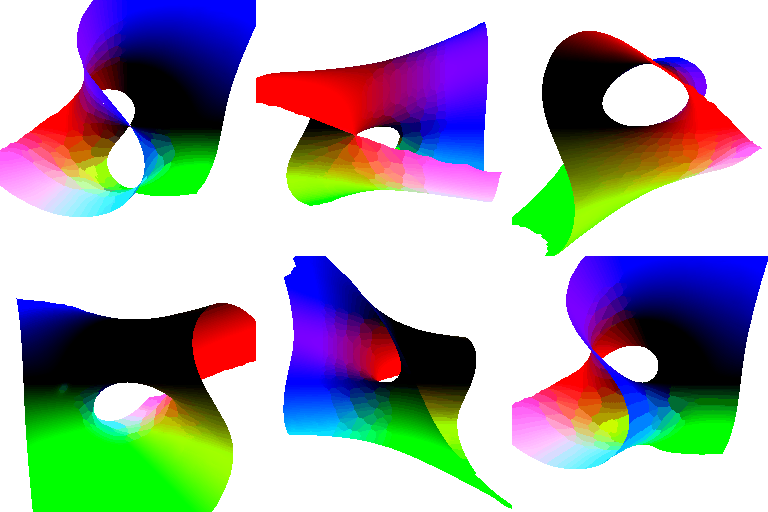
New Object of My Choice (Mobius Strip)