Name: Hiroki Mii
Andrew ID: hmii
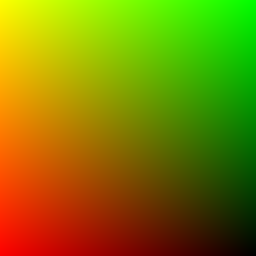
xy_grid
rays
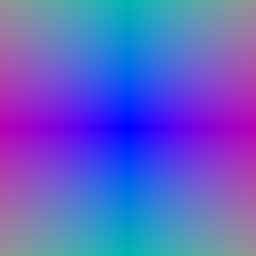
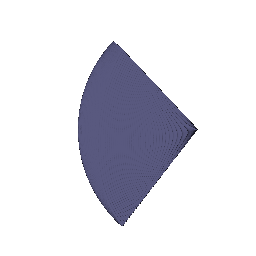
color
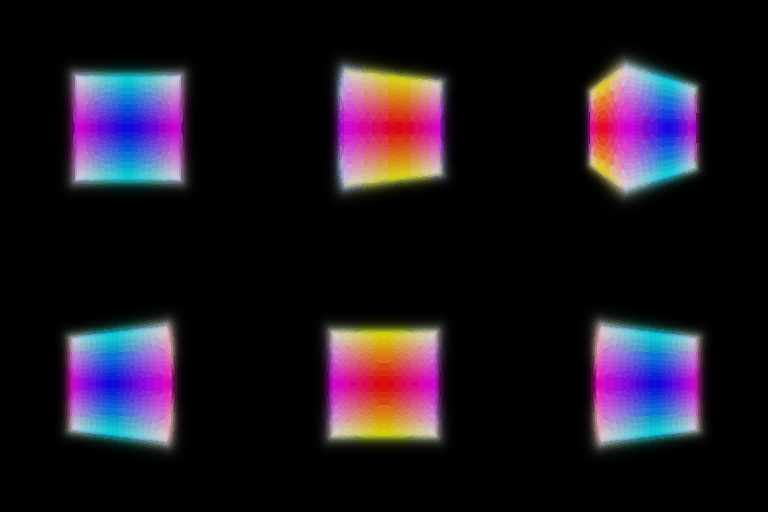
depth
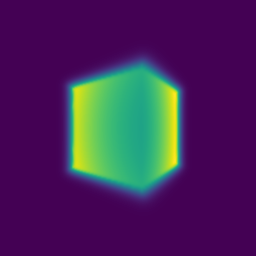
Box center: (0.25, 0.25, 0.00)
Box side lengths: (2.01, 1.50, 1.50)
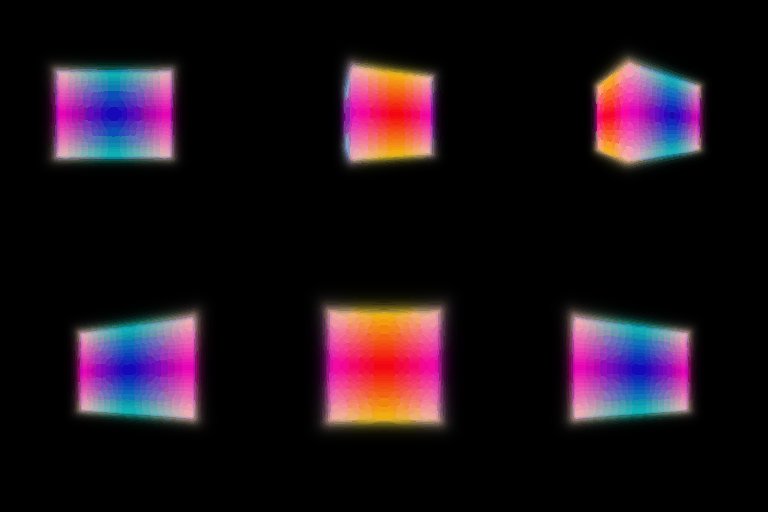


View dependence lets a point's color change with viewing angle, which helps with shiny surfaces like the materials scene. However, because color can now vary by direction, the network can overfit to the training data and not learn the 3D geometry correctly, leading to poor-quality renderings from unseen views.
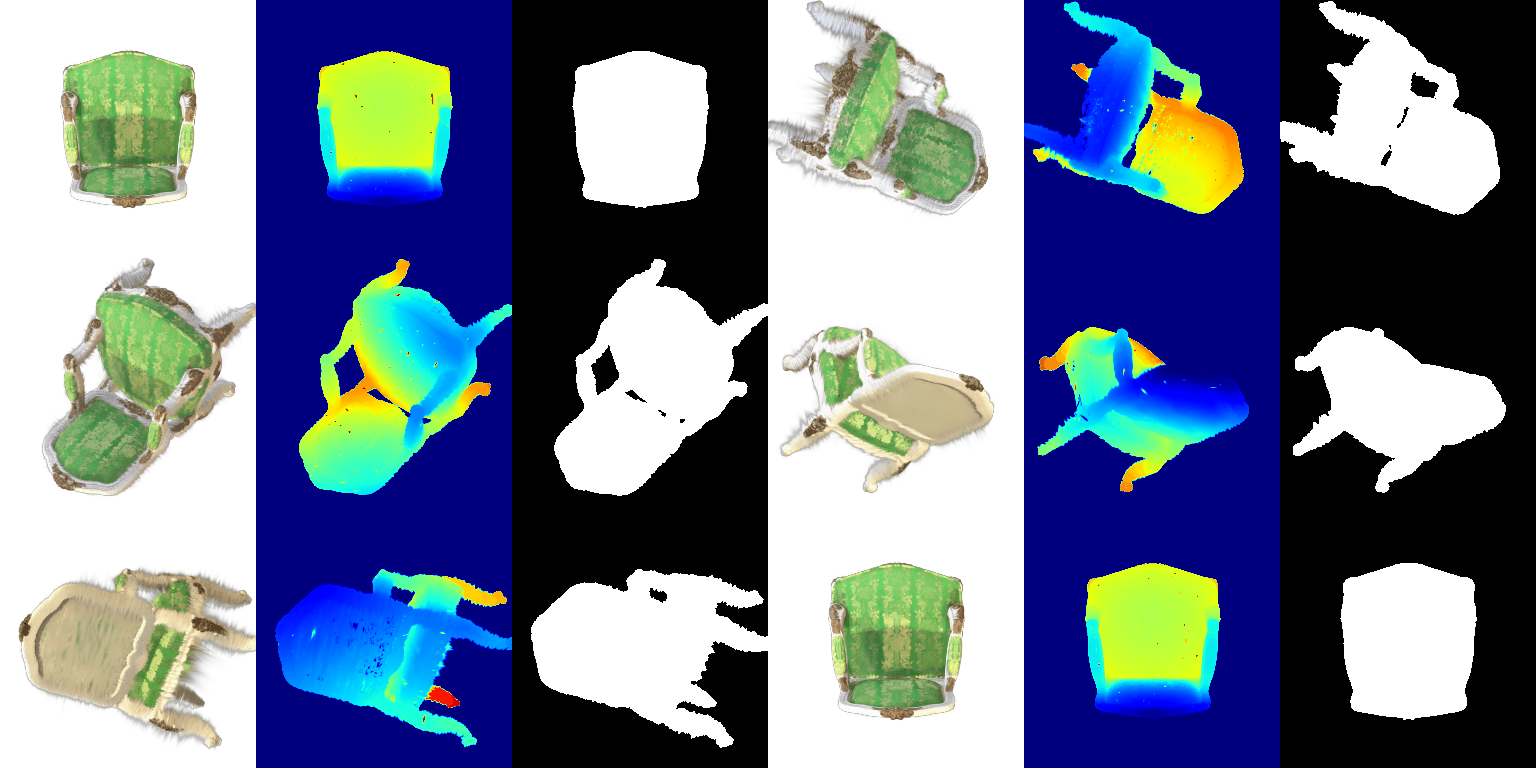
part_6_training_progress.gif
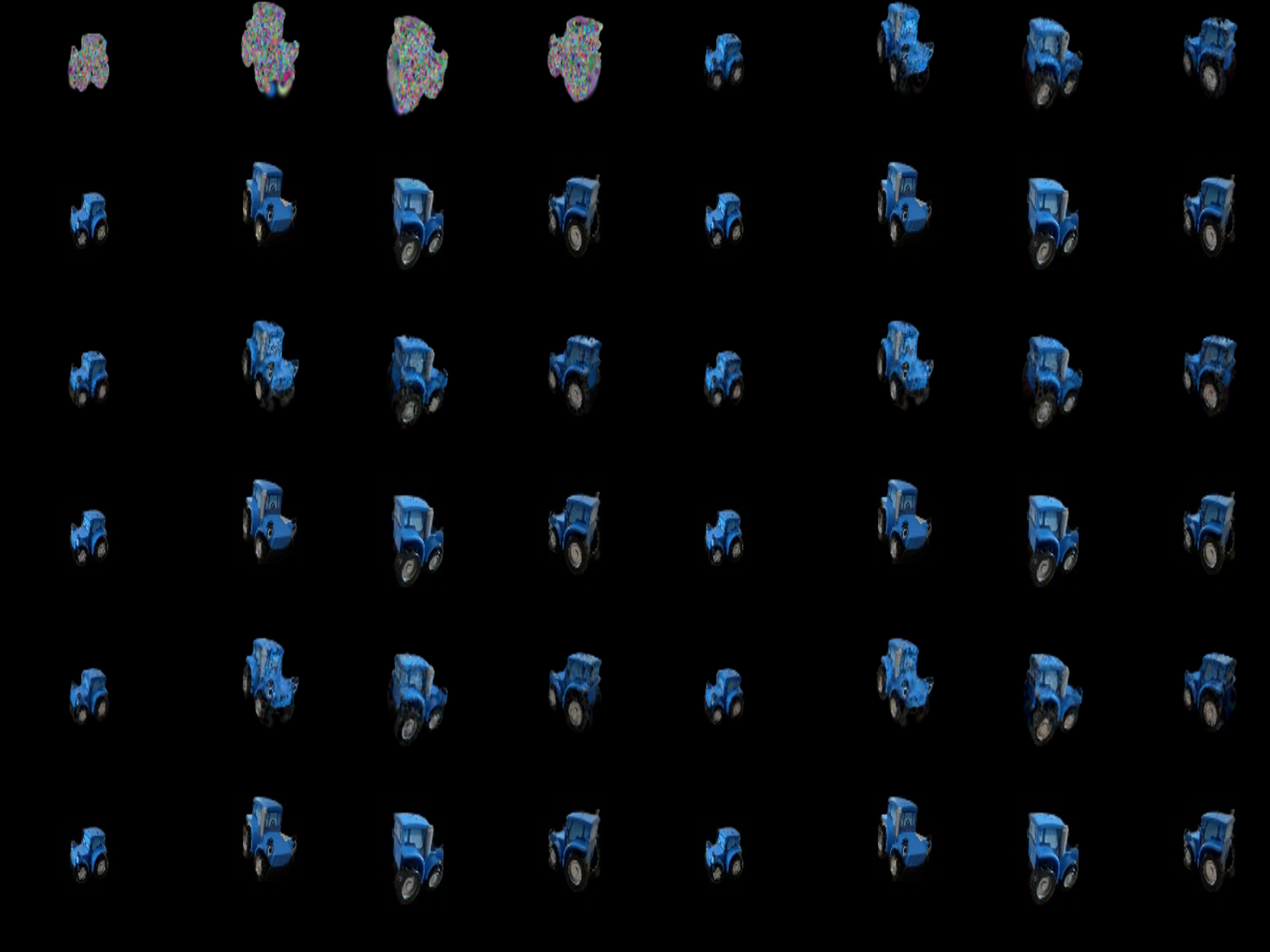
part_6_training_final_renders.gif

pre_act_opacities: lr = 0.05
pre_act_scales: lr = 0.005
colours: lr = 0.05
means: lr = 0.0005
num_iter: 1000
PSNR = 27.796, SSIM = 0.923
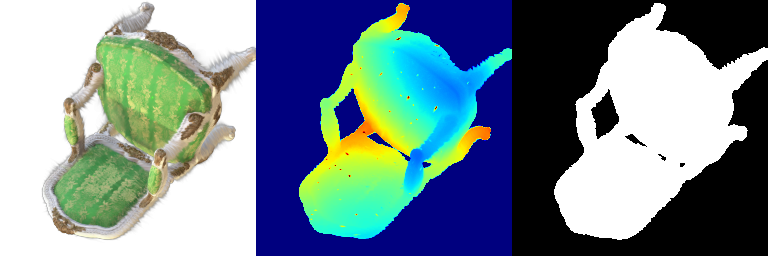
DC-Only
View 12
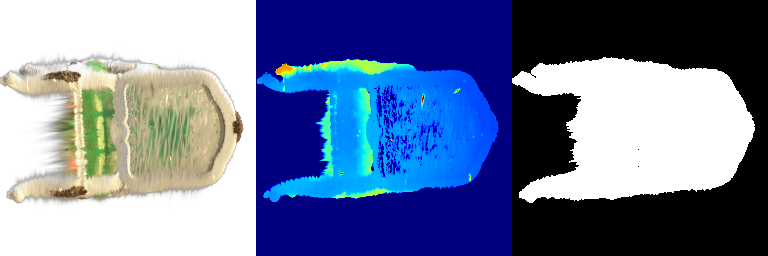
View 23
Spherical Harmonics
View 12
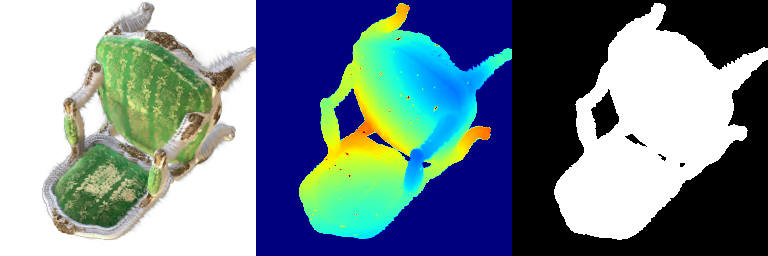
View 23
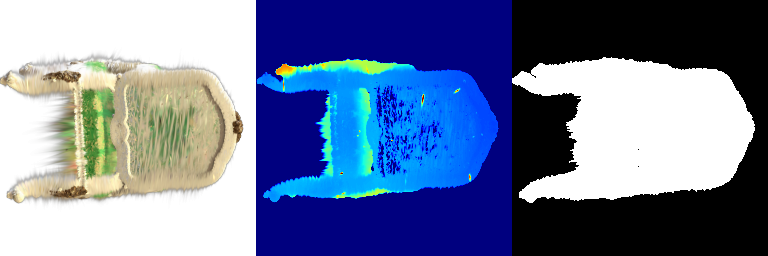
In the View 12 comparison, the spherical harmonics render has darker, more saturated green and yellow, giving better color contrast, while the DC-only render looks lighter and flatter. The DC term only gives each Gaussian its average color over all directions, while the higher-order terms add the view-dependent variation.
In the View 23 comparison, the DC-only render has orange noise on the left side near the seat, while it is more reduced in the spherical harmonics render. Again, this is because DC-only uses each Gaussian's average color, while the higher order terms of the spherical harmonics correct the color for this viewing direction.