Name: Hiroki Mii
Andrew ID: hmii


A tedrahedron has 4 vertices and 4 triangular faces.
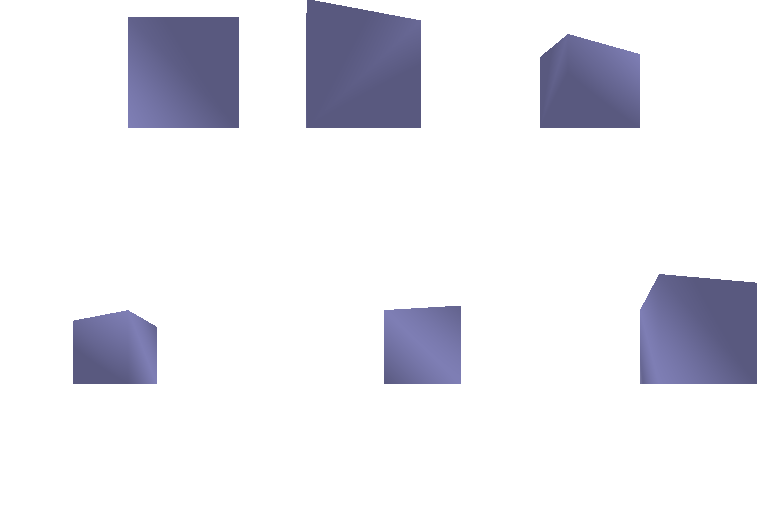
A cube has 8 vertices and 12 triangular faces.
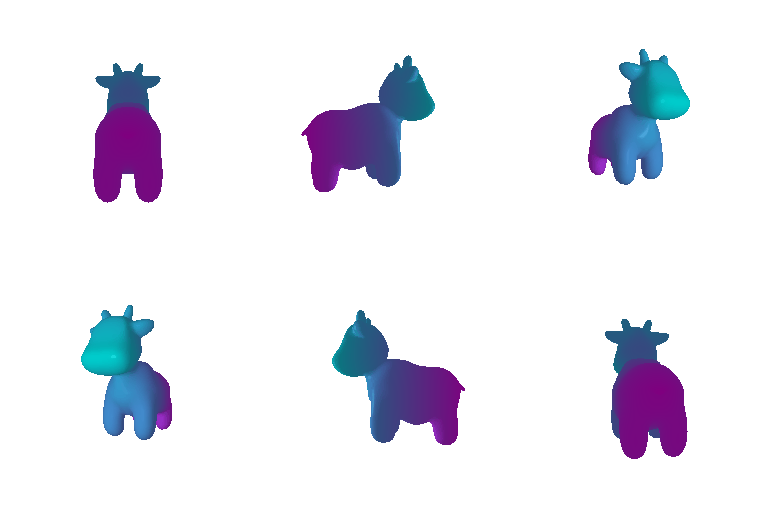
color1 = [0, 1, 1] is blue green and color2 = [1, 0, 1] is purple.
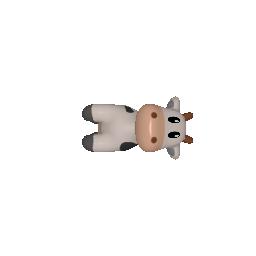
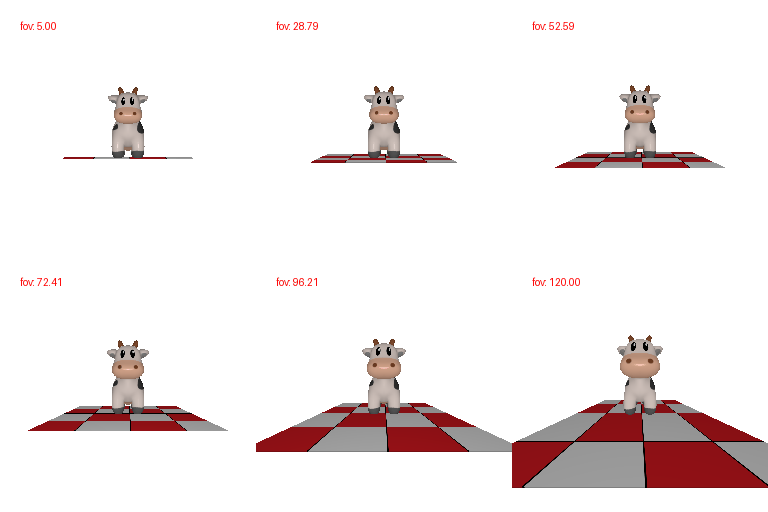
Camera Transformation 1:
R_relative - 90 degree counterclockwise rotation about z-axis (roll)
T_relative - Zoom out 0.5 units in the z-direction
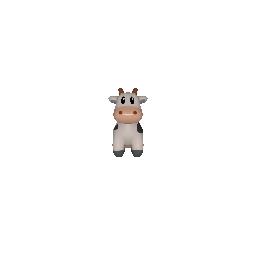
Camera Transformation 2:
R_relative - No rotation
T_relative - Zoom out 2.5 units in the z-direction
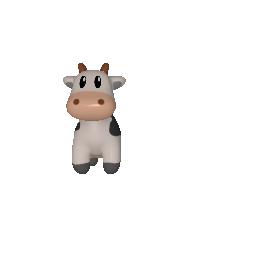
Camera Transformation 3:
R_relative - No rotation
T_relative - Move right 0.5 units in the x-direction and zoom out 0.5 units in the z-direction
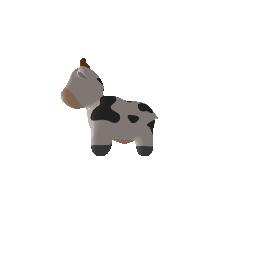
Camera Transformation 4:
R_relative - 90 degree counterclockwise rotation about the y-axis (yaw)
T_relative - Move left 2.5 units in the x-direction, move up 0.25 units in the y-direction, and zoom out 4 units in the z-direction
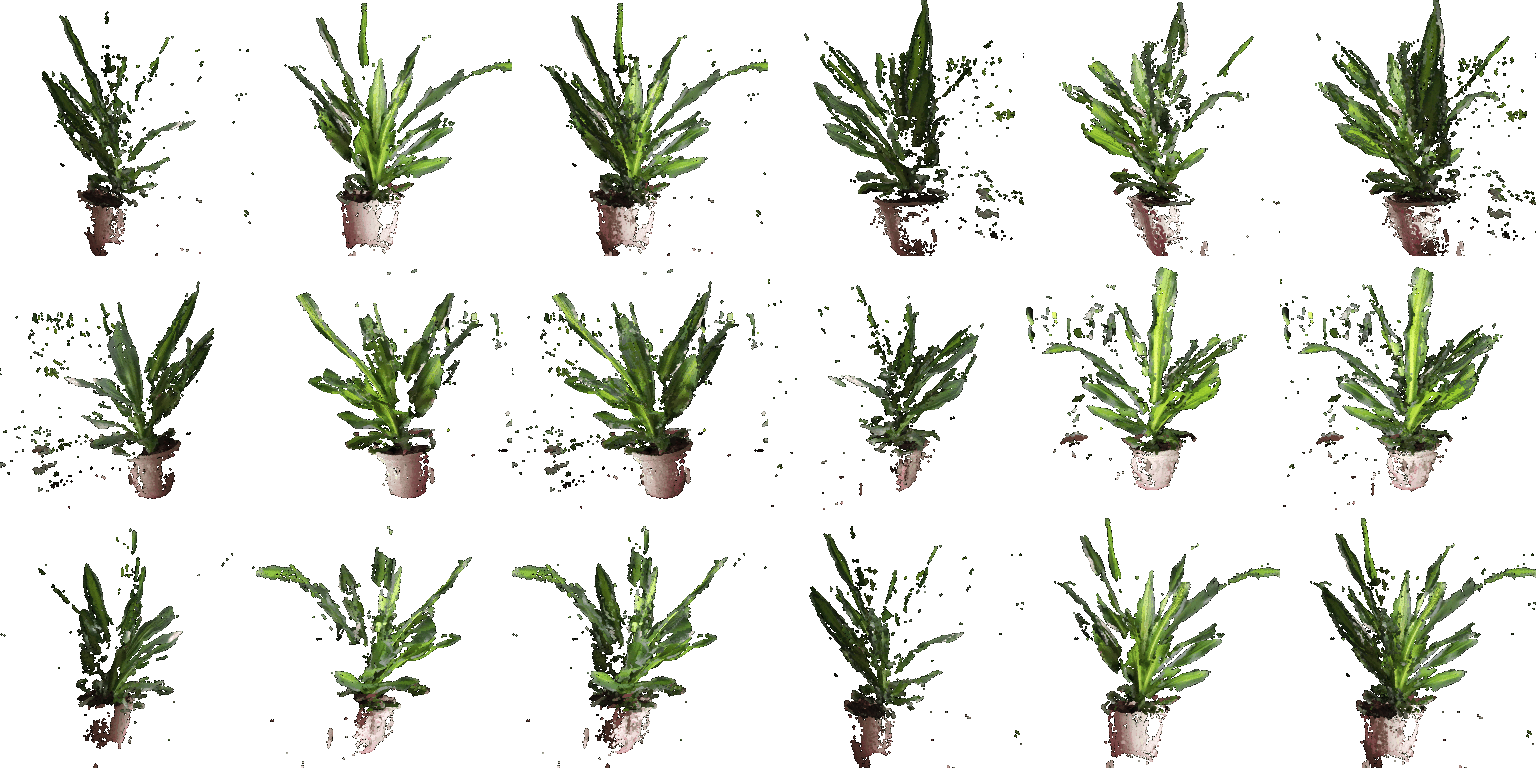
From left to right: The point cloud corresponding to the first image, the point cloud corresponding to the second image, the point cloud formed by the union of the first 2 point clouds.
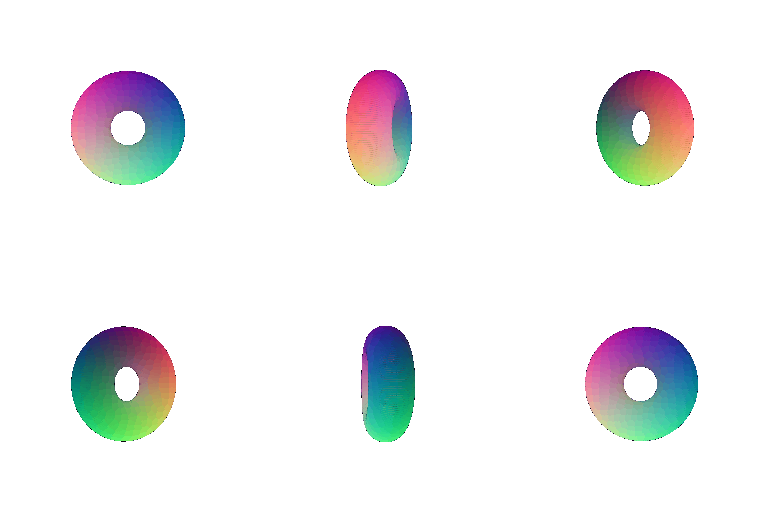
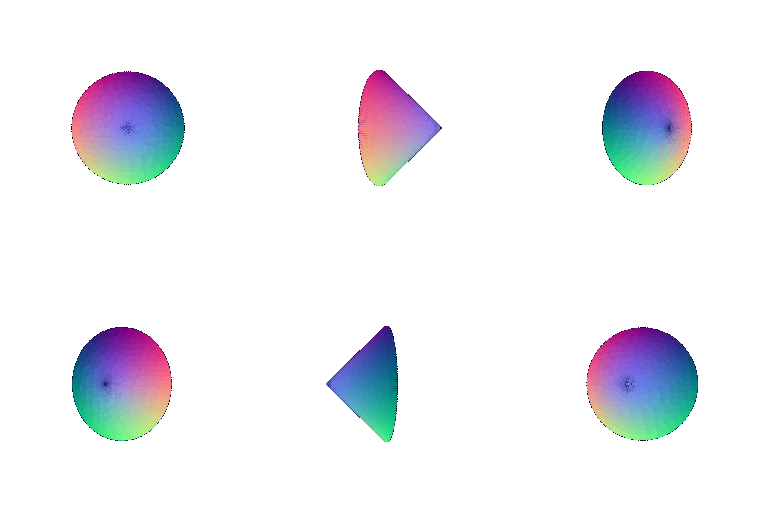
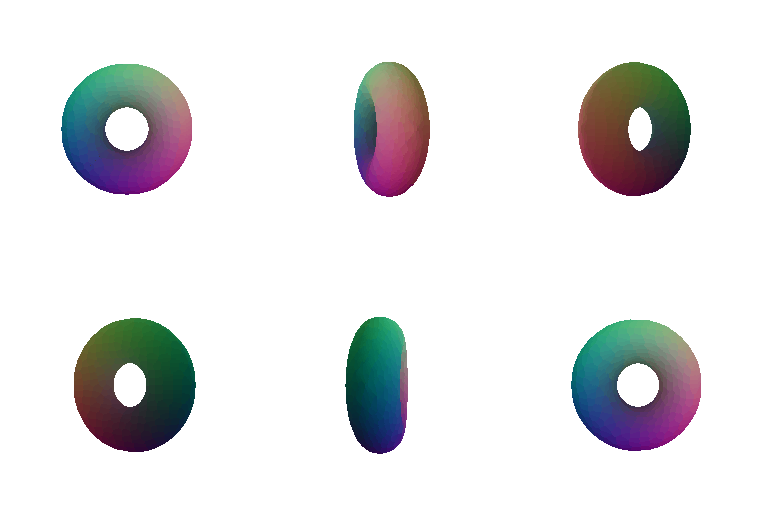
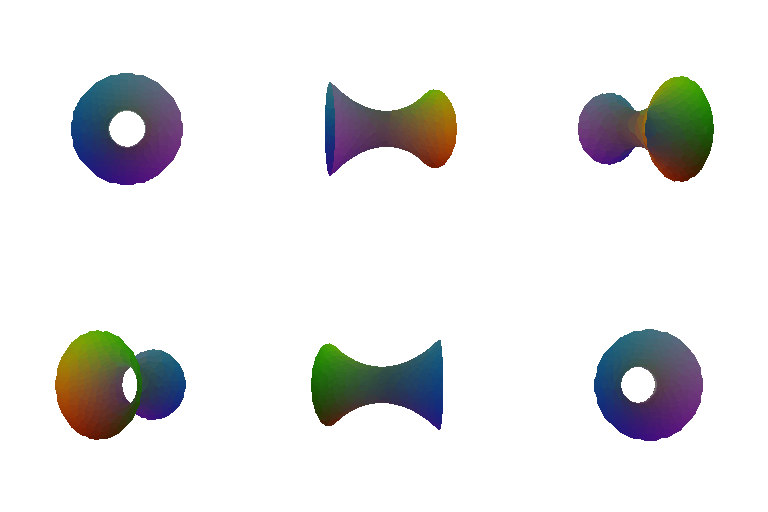
Points clouds are generally faster to render because they consist of just indendent points storing location and color. Meshes require rasterization and lighting computation making it more expensive to render. However for this reason, meshes arguably have higher quality since they have continuous surfaces whereas point clouds are made up of discrete dots. Furthermore, increasing point cloud samples to make shapes look continuous can be more memory-expensive.
Points clouds are easier to generate from parametric and implicit function directly by plugging and chugging parameter values. Meshes require an extra step of marching cubes to extract connectivity.
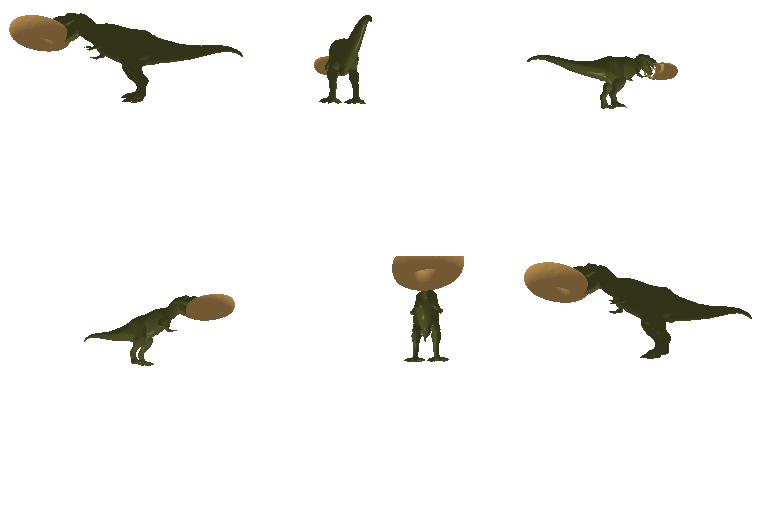
T-Rex eating a donut.