Assignment 3
Geethika Hemkumar (Andrew ID: ghemkuma)
1. Differentiable Volume Rendering
1.3 Ray Sampling
Grid Visualization

Rays Visualization

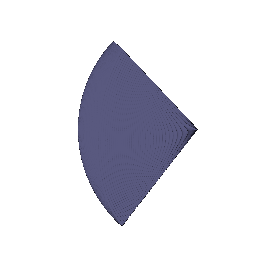
1.4 Point Sampling
Visualization of Point Samples from Camera
1.5 Volume Rendering
Visualization of Depth Map
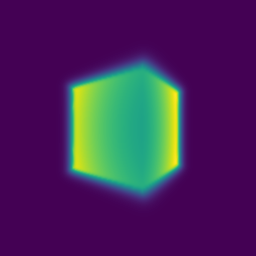
GIF of Rendered Box

2. Optimizing a Basic Implicit Volume
2.2 Optimized Box Statistics
Box Center: (0.25, 0.25, -0.00052)
Box Side Lengths: (2.01, 1.50, 1.50)
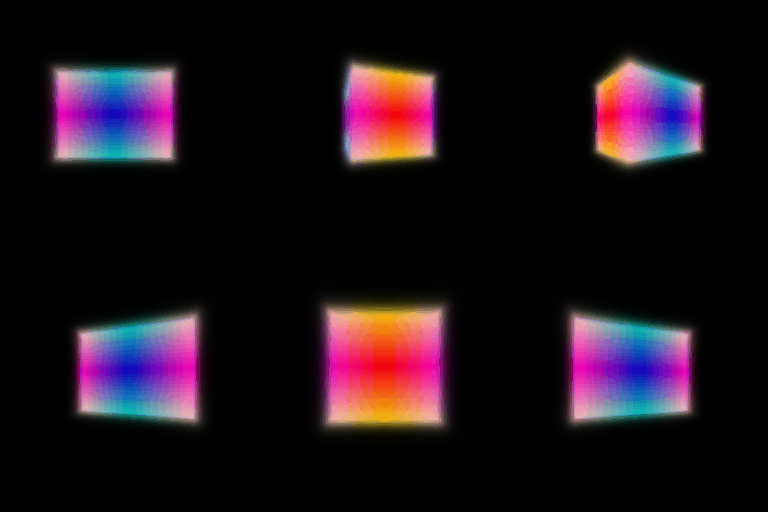
2.3 Optimized Box Visualization
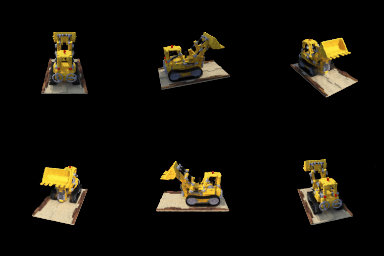
3. View Independent NeRF
4. NeRF Extras
4.1 View Dependence
Visualizations

No View Dependence

With View Dependence
Static Frames
No View Dependence
With View Dependence
Absolute Difference
Frame 3


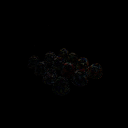
Frame 11


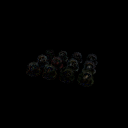
Frame 18


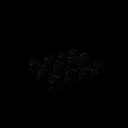
Differences between View Independent NeRF vs View Dependent NeRF
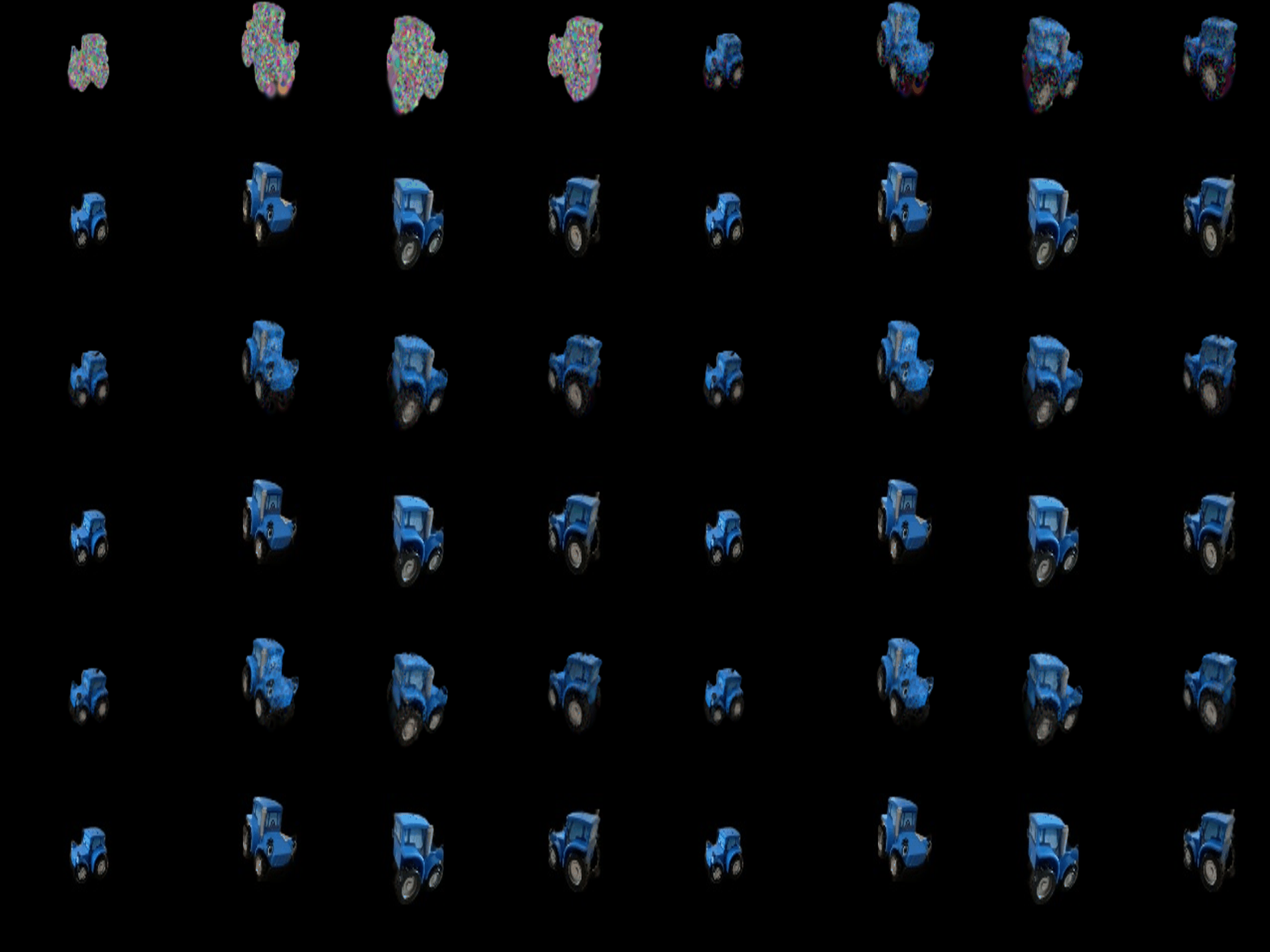
Though a little difficult to tell at a low resolution, the specularities on the spheres in the frames rendered with view dependence (middle column) are more localized (which indicates correct view-dependent rendering) compared to those in the frames rendered with no view dependence (left most column). This difference is highlighted by the difference maps (right most column), which are computed as an absolute difference in per-channel pixel values. The differences in frame 11 are most prominent.
Tradeoffs between increased view dependence and generalization quality
Increasing view dependent rendering improves the scene fidelity, as real-world effects such as specularities and reflections are modeled more realistically. However, as a result of learning these view-dependent effects, the generalization quality will decrease because the network is focusing on capturing lower-level scene details in the training dataset which are tied to specific camera views.
5. 3D Gaussian Rasterization
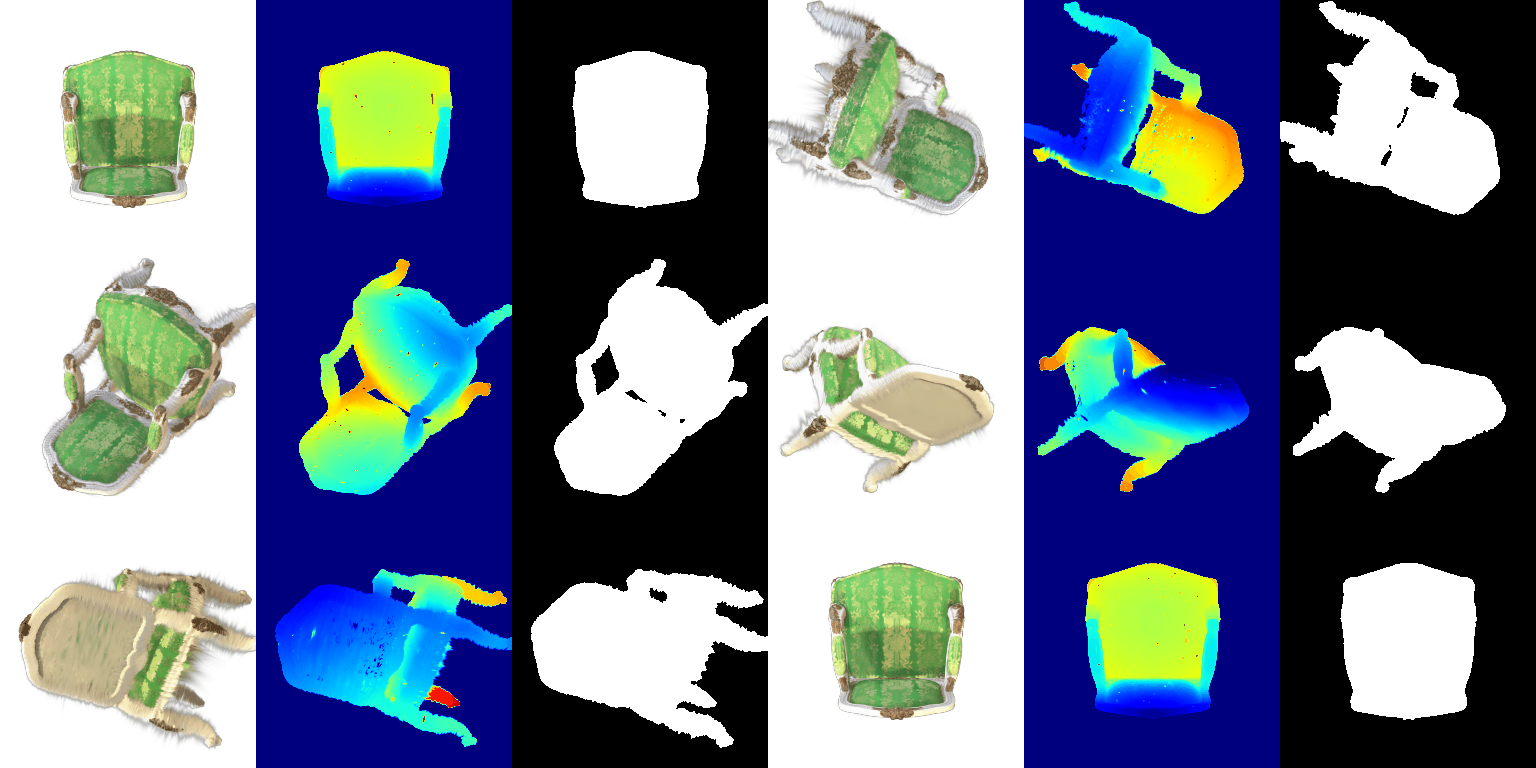
6. Training 3D Gaussian Representations

Hyperparameters
Learning rates:
pre_act_opacities: 0.01
pre_act_scales: 0.001
colours: 0.01
means: 0.001
Training iterations: 300
7. Extensions
7.1 Rendering Using Spherical Harmonics
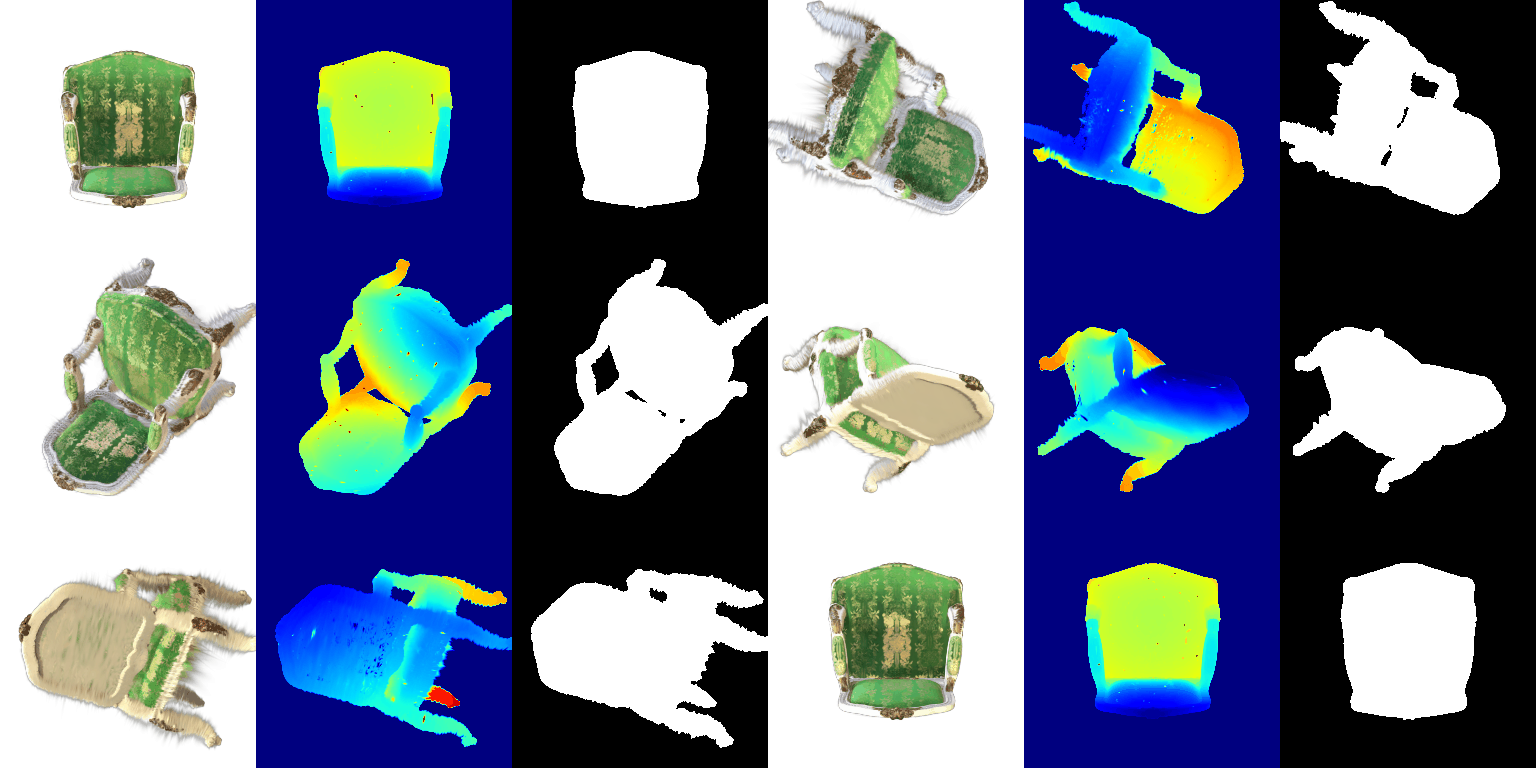
Side-by-Side RGB Renders Between Q5.5 and Q7.1
Q5.5
Q7.1
Frame 0


Frame 14


Frame 29


Analysis of Differences
Using higher order spherical harmonics helps to better model directional lighting effects. This improves the visibility of detail in the rendered chair, and the details that are more prominent in each frame depends on the camera viewpoint.
For frame 0 (first row), using higher order spherical harmonics (question 7.1, second column) highlights the details in the chair's seat fabric and its true (darker) green color. The detail on the arm rests is also shown more clearly.
For frame 14 (second row), the detail/color in the fabric on the chair's seat back is more prominent in the rendering using higher order spherical harmonics.
For frame 29 (third row), the rendering from question 7.1 shows a more prominent shadow compared to the rendering from question 5.5. This shadow corresponds to where the chair's seat back obstructs light from fully reaching the chair's seat.