
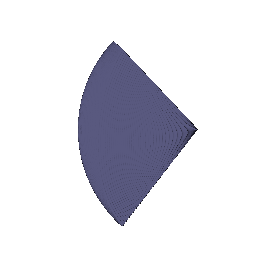


Box center: (0.25, 0.25, 0.00)
Box side lengths: (2.01, 1.50, 1.50)


Trade-offs (speed / quality): the fine pass adds a second network and 192 samples per ray instead of 64, so each iteration is slower and uses more memory. Quality improves because the extra samples concentrate on surfaces instead of empty space, which recovers thinner geometry than uniform sampling.

Learning rates
| Parameter | Learning rate |
|---|---|
| opacities | 0.05 |
| scales | 0.005 |
| colours | 0.0025 |
| means | 0.00016 |
Number of iterations: 1000
PSNR: 29.308
SSIM: 0.937
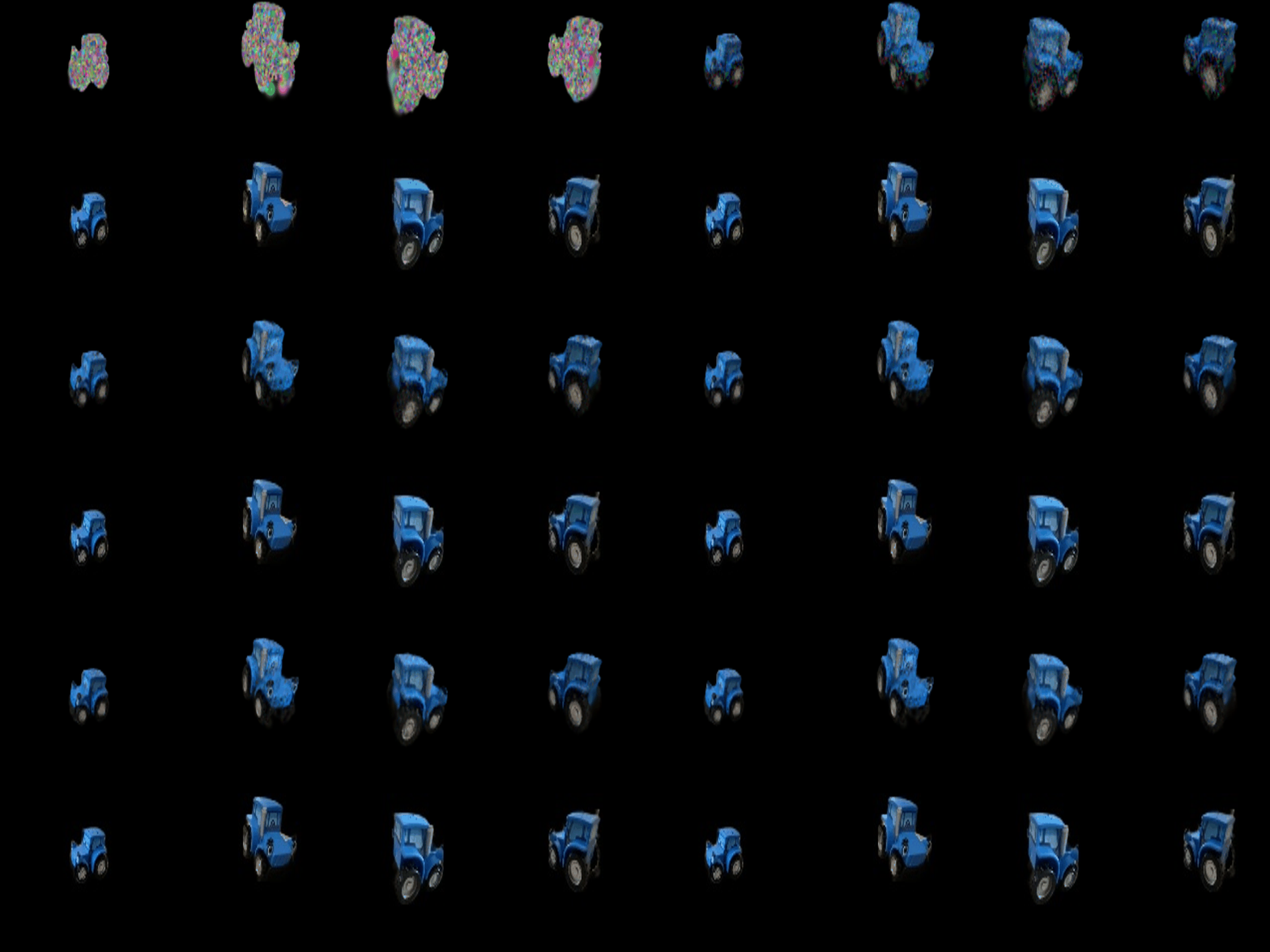


Spherical harmonics make the seat lighting more even and smoother.


Like above, the spherical harmonics make the seat lighting more even and smoother, the gold pattern on the seat is a bit more sharp.


Looks pretty similar, the spherical harmonics make the gold pattern on the seat a bit more clear.