| Lecture #29 | ||
|
||
Exam III Review |
Review for Exam III | |
![]() |
||
| The following arrangement of flasks containing
methane (MW = 16.0 g/mol), propane (MW = 44.1 g/mol) and
ethane (MW = 30.0 g/mol) is set up at 25 C. Assuming
constant temperature, zero volume for the connecting
tubes and ideal gas behavior... Determine the total
pressure after the valves are open for a long time. |
![]() |
|
| Reviewing some interesting odds and ends before EXAM III, let's look at why di-carbon does not have a quadruple bond, despite the contrary indications of the Lewis structure. | ![]() |
|
| The more rigorous molecular orbital theory approach to chemical bonding shows that di-carbon has a double bond, both being pi bonds, and that there are lone pairs of 2s electrons at each carbon atom. | ![]() |
|
| An exotic excited state of di-carbon can be hypothesized in which the total bond order is now 4, but actually making such a beast is unlikely to be successful in practice. | ![]() |
|
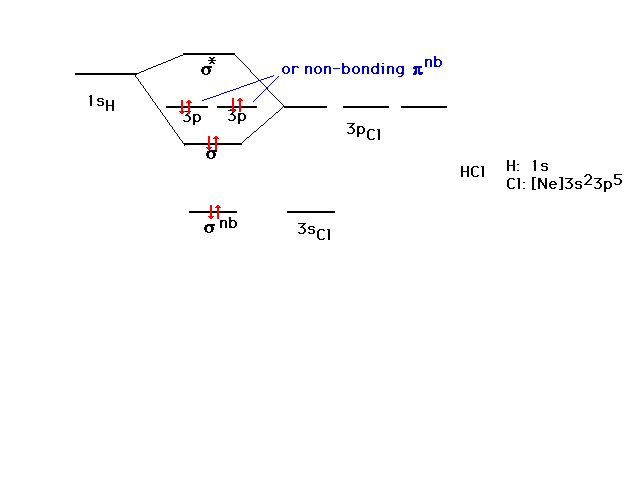
| Reviewing heteronuclear diatomic molecules and the atomic orbitals from which molecular orbitals are constructed, we examined the HCl molecule as shown. | ![]() |
|
![]() |
||
| Some heteronuclear diatomic molecules, not surprisingly, differ only slightly in their participating molecular orbitals from what we've seen for homonuclear diatomic molecules. | ||
![]() |
||
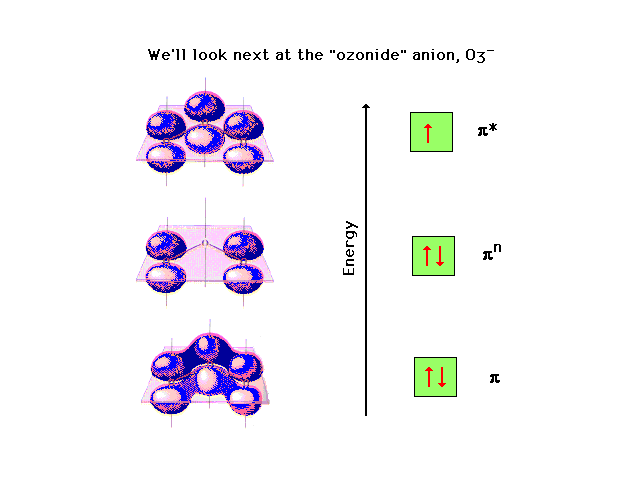
| If we add an electron to ozone to produce the ozonide ion, what happens to the total bond order? Bond length? Bond strength? | ![]() |
|
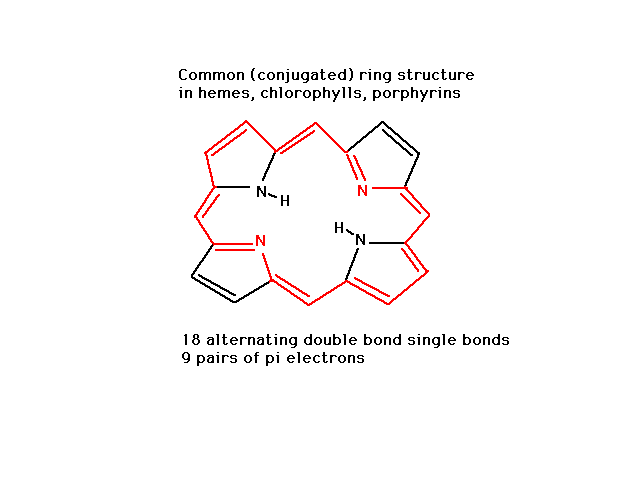
| Here is an underlying feature of a large collection of molecules of extreme importance. There is a ring of delocalized electrons, shown as the red alternating (conjugated) single bond double bond sequence. | ![]() |
|
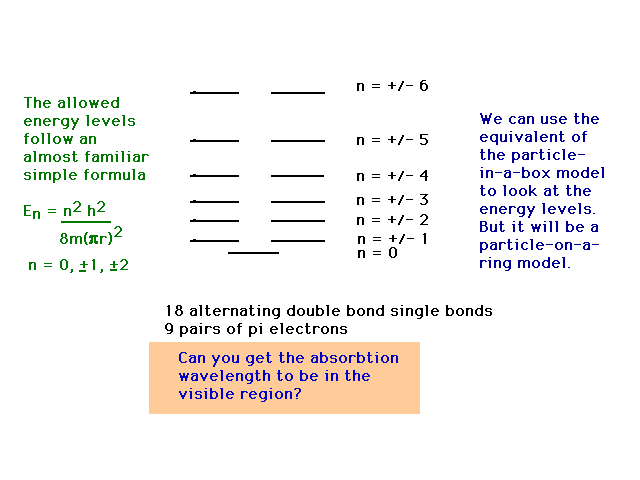
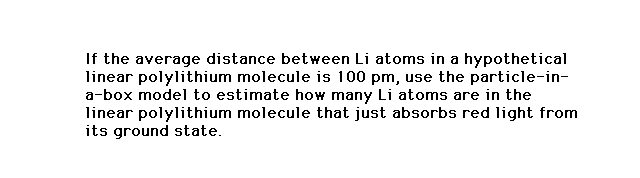
| A very simple model conceptually identical to that for the particle-in-a-box can be applied to electrons delocalized about a ring. The formula for the allowed energy levels is reminiscent of the one we had for chains of delocalized electrons and the calculations of transition energies follow exactly the same line of reasoning. The ring structure shown absorbs light of approximately 600 nm wavelength. | ![]() |
|
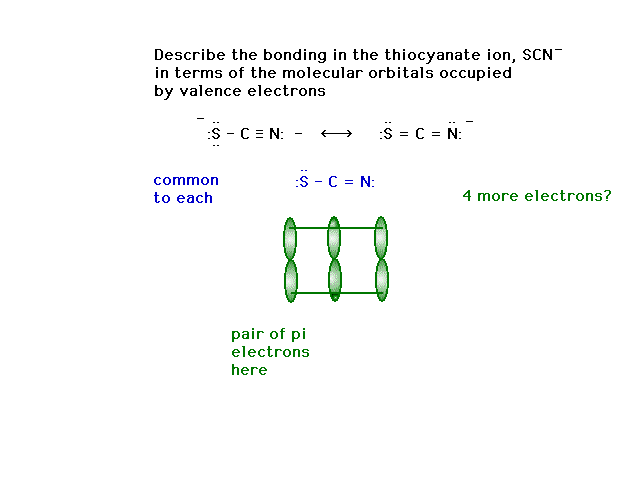
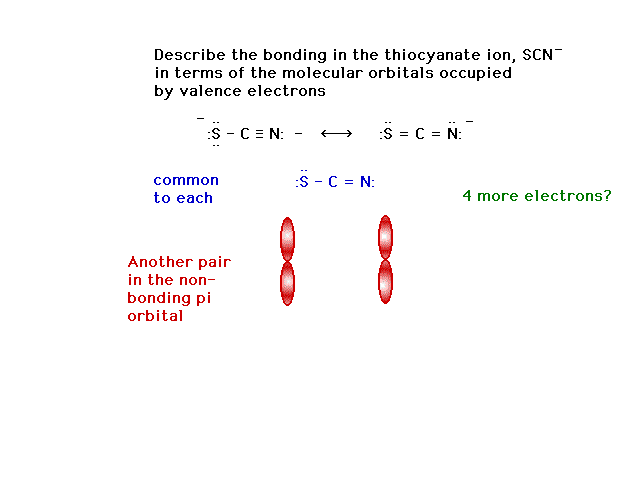
| Constructing molecular orbitals starts with a look at the alignment of the valence atomic orbitals. | ![]() |
|
![]() |
||
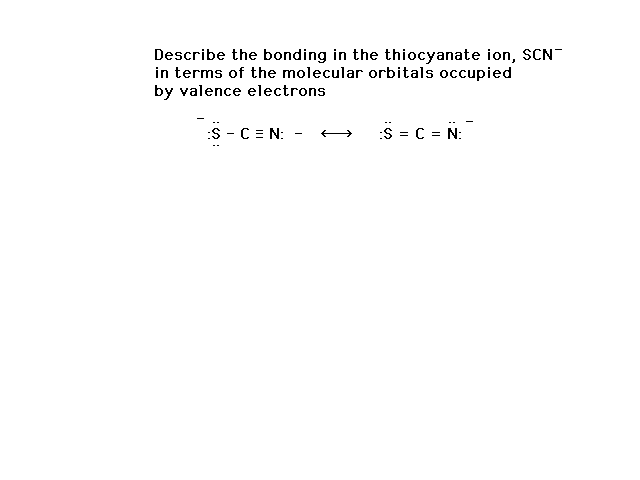
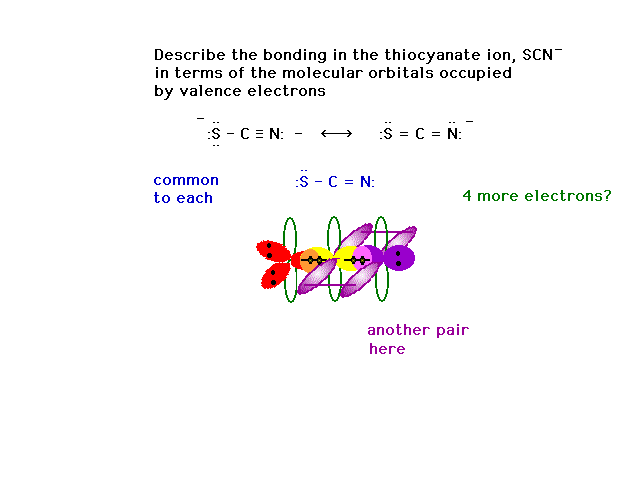
| Polyatomic orbitals starting from a Lewis structure. | ![]() |
|
![]() |
||
![]() |
||
![]() |
||
![]() |
||